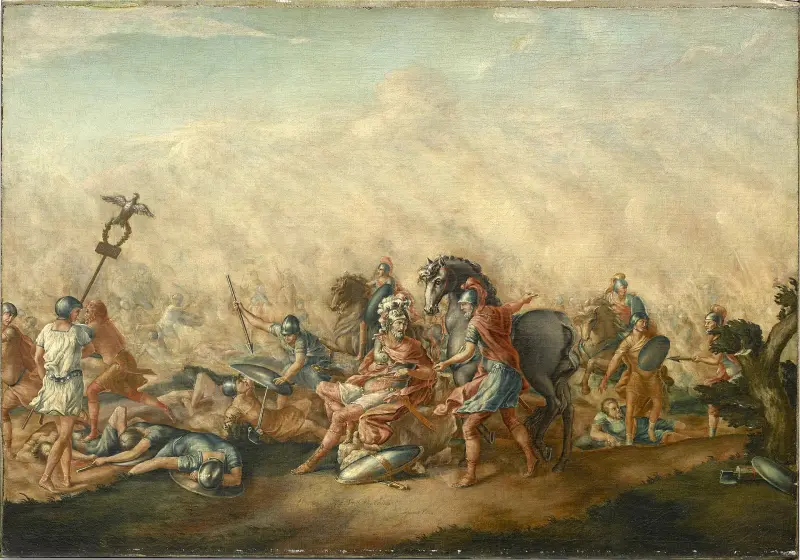
Person
Gaius Terentius Varro
Roman consul (the hawk)
The consul who chose battle by the logic of numbers, overtrusting the packed mass that became the encirclement's target.
The Roman consul who trusted numerical superiority and wanted the decisive battle. Backed by public mood and political pressure after defeats, he sought to push straight through with packed mass — the very mass that became the target of the encirclement. He survived the defeat and was blamed, but Rome did not punish him and turned to rebuilding.
Strategic signature — push through by the logic of numbers
Gaius Terentius Varro was a consul who trusted numerical superiority. Public opinion and part of the Senate, worn by successive defeats, wanted an early decisive battle; having mobilised a huge army, there was pressure to use it. He embodied that pressure and sought to push straight through with packed mass.
Recurring patterns
Offensive bent
Decide rather than wait. Turn the mobilised numbers into the force of a decisive battle.
Opinion and glory
Public mood and political pressure after defeats backed battle over caution.
The flaw of alternating command
Two consuls commanding the whole army on alternate days cancelled out caution.
Strengths and weaknesses
Decisiveness and the power to mobilise. He arrayed a vast army on the field.
He could not read the enemy's design and overtrusted the packed mass — the very mass that became the target of the encirclement.
Connection to Cannae
Varro commanded a defeat, survived, and was blamed. Yet Rome did not execute him; he was met, it is said, with thanks for "not having despaired of the Republic"[2]. The strength of an organisation that rebuilds, over the failure of an individual — that is what Rome showed after Cannae.
Appears in