Cannae — the encirclement that turned numbers into a trap
What made Cannae a masterpiece was not the shape of the double envelopment. A forward centre received and absorbed the enemy, flipping a nearly two-to-one strength into an immobile weakness — the outcome was planted inside Rome's own rational advance.
- A Roman army nearly twice the size was annihilated. The masterpiece was not the envelopment shape but the design that flipped the enemy's mass and momentum into an immobile weakness.
- Rome's decision was right as the logic of numbers — yet its greatest strength, packed density, became its greatest weakness inside the ring.
- Even a perfect tactical victory did not end the war. The brilliance of winning and the conversion of a win into a result are different abilities.
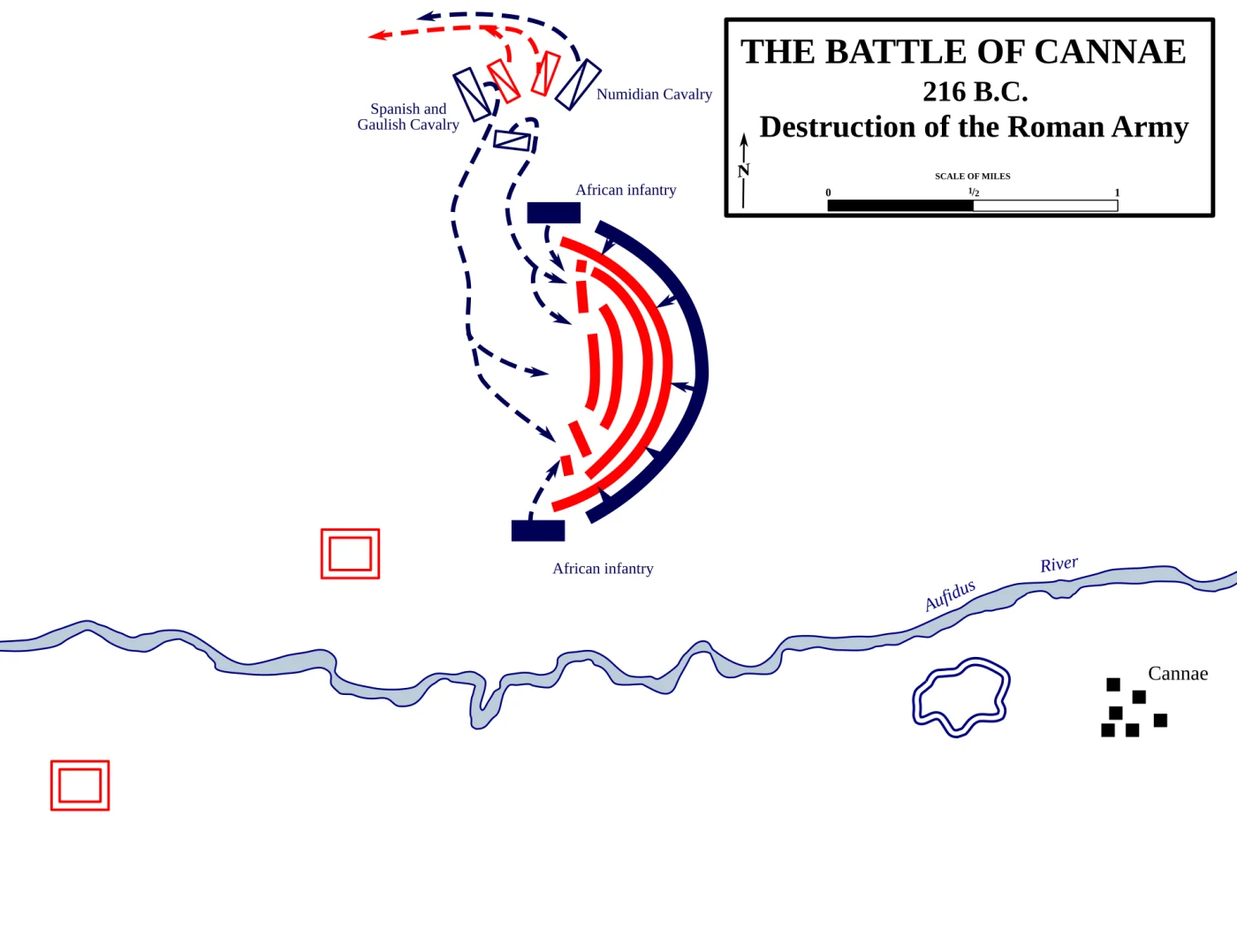
The protagonist is shown in blue, the opponent in red.
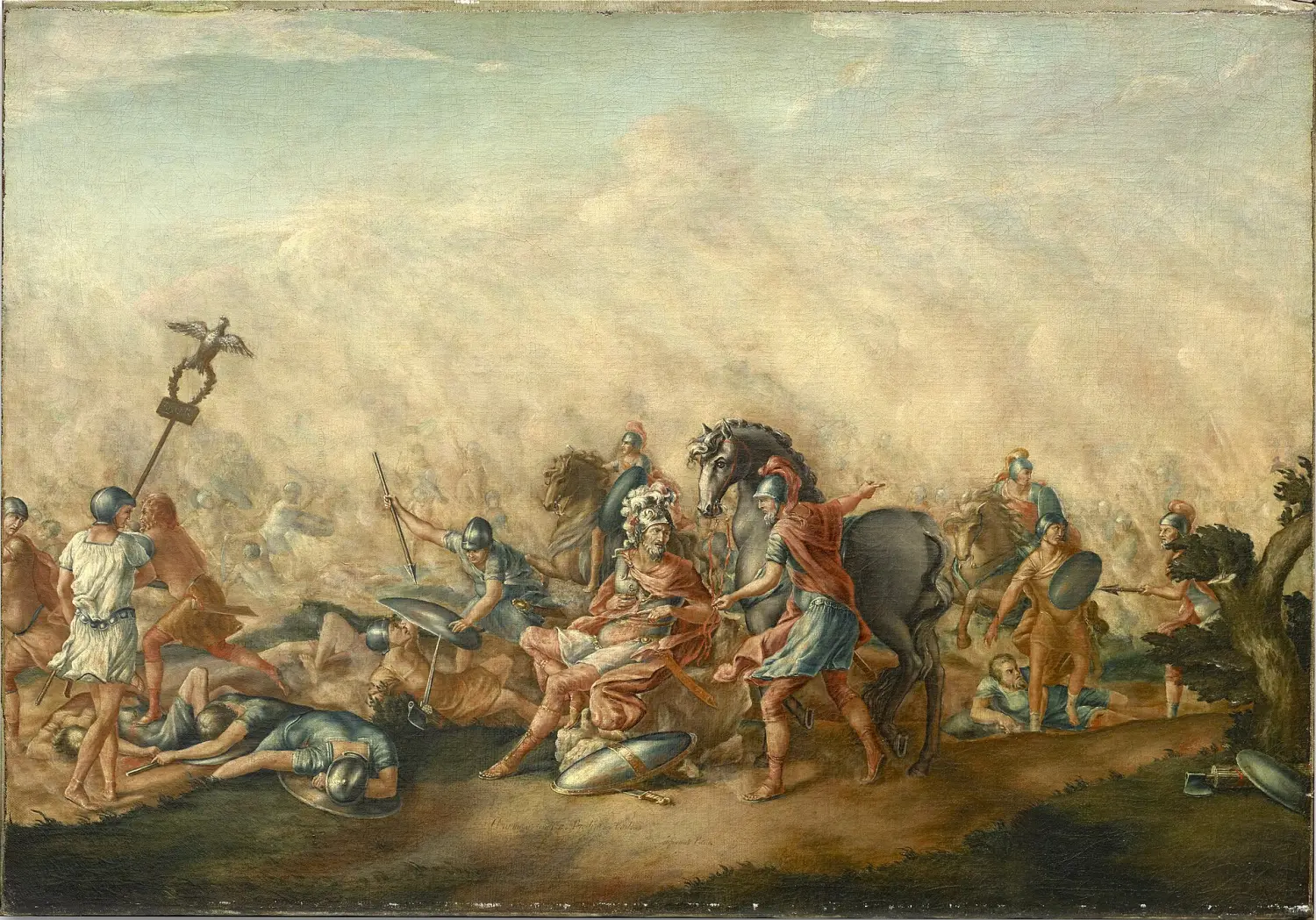
- Date
- c. 2 August 216 BC
- Place
- Cannae, Apulia (now Puglia, southern Italy)
- Parties
- 3
- Result
- Decisive Carthaginian (Hannibal) victory
Contents
- Background — why did Rome rush a decisive battle?
- Forces — Rome had the numbers
- Forces and losses, compared
- Deployment — Rome packs deep, Hannibal bows out thin
- The thesis — the forward centre was placed in order to bend
- Two layers — the surface fight and the design beneath
- The course — an envelopment completed in half a day
- Breaking down the win — what actually decided it
- Why the losers were not fools
- Aftermath — a perfect victory that did not end the war
- The story — how "Cannae" became a byword for annihilation
- Counterfactuals — remove one factor at a time
- For today — across other fields
- In closing — the greatest strength flips into the greatest weakness
Background — why did Rome rush a decisive battle?
In 218 BC Hannibal crossed the Alps into Italy. At the Trebia and Lake Trasimene, Rome lost again and again. For a time the dictator Fabius switched to "delay," avoiding battle to wear the enemy down — but that caution was unpopular at home. Public opinion disliked a commander who would not fight while the enemy ravaged the land23.
So Rome reversed course and mobilised an army of rare size. The Roman and allied force was about 80,000–87,000; Hannibal's Carthaginians only about 40,000–50,00012. Why did the side with nearly double the numbers still walk into the trap? The structure of the battle is compressed into that question.
A vast army is pointless unless used. Opinion bruised by defeats, and a mood that wanted the decisive fight, pushed Rome into a head-on clash. The command had a weakness too: two consuls — Varro, who wanted battle, and Paullus, who wanted to avoid a fight on the plain — held the whole army on alternate days. Caution had no structure through which to prevail23.
Hannibal's side was cornered too. Reinforcement from Carthage was thin, and his army in Italy had no footing except to keep winning and draw in local allies. Rome leaned on "numbers and time," Hannibal on "the decisiveness of a single battle" — and that asymmetry drove both toward a head-on clash. The one who has can wait; the one who has not must decide. Ironically, the Rome that could have waited was pushed by opinion onto the side of battle3.
Forces — Rome had the numbers
Sources vary. The Romans numbered about 80,000–87,000, the Carthaginians about 40,000–50,00012. But Carthage held the cavalry edge, about 10,000 horse to Rome's 6,000 — the point that decided the day13.
Forces and losses, compared
| Carthage (protagonist) | Rome (opponent) | |
|---|---|---|
| Strength | ~40,000–50,000 | ~80,000–87,000 |
| Cavalry | ~10,000 | ~6,000 |
| Killed | ~5,700–8,000 | ~48,000–70,000 |
| Captured | — | ~4,500–10,000 |
Figures vary, especially Roman dead (Polybius ~70,000; Livy ~48,000). The point is the asymmetry: the larger army took losses of a wholly different order than it inflicted12.
Deployment — Rome packs deep, Hannibal bows out thin
The field was a plain by the Aufidus river in Apulia. To use its numbers, Rome packed its infantry to an unusually great depth, massing weight on a narrow front to drive straight through the centre — the orthodox shove of the side with more men13.
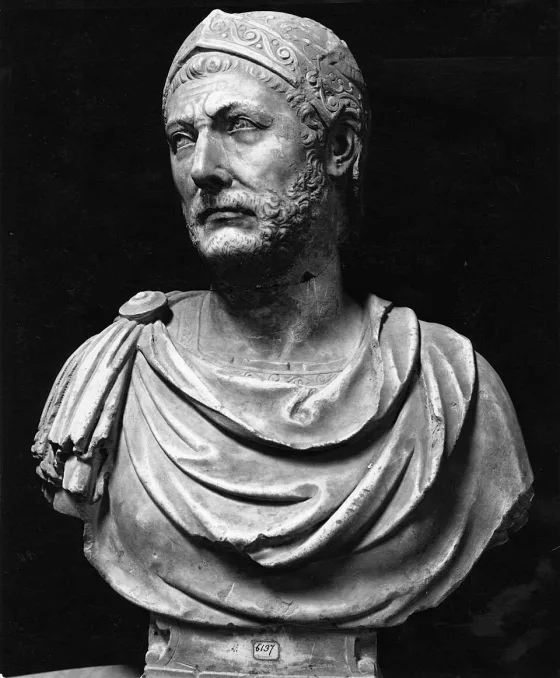
Hannibal's deployment was the opposite. He spread his infantry thin and wide, and bowed the centre forward, convex toward the enemy. His least reliable troops — newly joined Gauls and Iberians — went into that protruding centre. Veteran Libyan heavy infantry waited at each end; Spanish and Gallic cavalry stood by the river, light Numidian horse on the open side13.
At a glance the thin centre is a weakness. To Rome, strike here and the enemy splits. So Hannibal offered, of his own accord, exactly the target the enemy would want to hit. He built the strong side's obvious move into the entrance of his design3.
The river mattered too. The Aufidus closed off one of Rome's flanks, so Rome had itself narrowed the room to spread sideways. Far from using its numbers on the open plain, the packed depth only grew more cramped. Terrain is never neutral: the same river is a shield for defence and the wall of a cage that denies escape. Hannibal read the conditions so that Rome would settle into a deployment that narrowed its own movement3.
The thesis — the forward centre was placed in order to bend
When battle joined, Rome's packed infantry surged into the forward centre. Hannibal's centre gave ground, foot by foot. The convex crescent flattened, then bowed inward to concave. The Romans felt they could break through, and pushed in harder13.
But the retreat was not collapse. The centre had been placed forward not to break, but to receive and absorb. The more Rome pressed, the deeper its mass drove between the Libyan veterans on either side. The wings did not break; they came naturally into position to take the flanks of the enemy that had pushed in13.
Most accounts praise the "double envelopment" that then formed. But the envelopment worked only because the enemy drove itself into the depths of the sack. The set piece is the ring; what decided the battle was the inducement that made the enemy push in. The masterpiece is not the shape but the design that made the enemy build it themselves3.
This "receive and give ground" centre was also a knife-edge gamble. One step too fast in the retreat and control is lost and it truly collapses, turning design into accident. That is why Hannibal, placing his most fragile new troops there, is said to have stayed in the centre himself to hold the rate of withdrawal13. What separates collapse from absorption is not the shape of the line but the command that keeps controlling the speed of retreat. A design becomes a design only when it is held on the spot.
The centre was placed forward not to break but to receive. The enemy's own momentum became the force that closed the ring.
Thesis
Two layers — the surface fight and the design beneath
Rome's packed infantry pressed the centre, and the Carthaginian centre retreated.
By the river the Spanish and Gallic cavalry broke the Roman horse and swept across the field.
The Libyan veterans at each end bit into the flanks of the Romans who had pushed in.
The forward centre swallows the enemy; the husbanded veterans close from the sides. Division of roles turned a deficit into envelopment3.
The course — an envelopment completed in half a day
The armies face off on the plain. Rome aims to break the centre and advances its packed infantry1.
By the river Hannibal's Spanish and Gallic cavalry break the Roman horse; on the open side the Numidians pin the allied cavalry13.
The Carthaginian centre retreats by degrees. Feeling a breakthrough, the Romans press in harder, and the mass packs tighter still13.
The husbanded Libyan veterans bite into the flanks of the Romans who have driven in3.
Breaking down the win — what actually decided it
Elasticity of the centre
The forward centre was designed to receive and retreat without breaking. The gap between absorbing and collapsing separated a trap from an accident3.
Cavalry superiority
Cavalry superior in number and quality won the flanks and, having won, did not chase but wheeled to the rear. The cavalry closed the lid13.
Division of roles
Separate the receiving centre from the deciding wings and cavalry. Let weak troops receive; husband the veterans to close — the heart of it3.
Why the losers were not fools
Pause here. Rome's decision was rational on its terms. With nearly double the men, mass weight on a narrow front and drive straight through the centre — the orthodox move for the stronger side3. They were not reckless; they followed the logic of numbers faithfully.
What broke was that logic's premise. "Mass wins head-on" reverses when the enemy has a design to receive that mass and close the wings and rear. Rome's command was brittle too: Paullus's wish to avoid battle on the plain was overruled by Varro and the alternating-command system23. When a false premise met a command that could not stop it, numerical superiority simply became the scale of annihilation.
Here is the core of "structural defeat." Rome did not lose because it was weak or incompetent. It executed a judgment that was right as the logic of numbers — on top of the enemy's design, and inside a command that could not turn back. That is why the defeat is not someone else's problem: your greatest strength can flip into your greatest weakness inside another's design — a question that lives well beyond the battlefield3.
Aftermath — a perfect victory that did not end the war
Cannae became the worst day in Roman history; tens of thousands of citizens and allies vanished in one battle. By convention, peace or surrender should follow. Indeed Hannibal's cavalry commander Maharbal urged an immediate march on Rome and, refused, is said to have remarked, "You know how to win a victory, but not how to use one"2.
But Rome did not surrender. It did not punish the consul Varro, refused to ransom prisoners, and chose to rebuild — and never again fought Hannibal head-on on open ground, returning to Fabius's strategy of delay. A total tactical victory is not the same as a strategic one — Cannae is the sharpest illustration in history of that distance3.
Turn to Hannibal's side and his limit shows. The highest battle-design in antiquity, lacking siege, supply and support from home, could not convert victory into a state's submission. The brilliance of how you win and the conversion of a win into a result are different abilities. Cannae's very perfection threw that separation into relief3.
Rome could recover because of the depth of its institutions and population. Its base of citizens and allied manpower was deep enough to raise another army after losing one; Hannibal had no such depth. A battle is a contest of mass and design; a war is a contest of replacement and endurance. The winner of a battle is not necessarily the winner of the war, because the two are different arenas3.
The story — how "Cannae" became a byword for annihilation
To later ages Cannae stopped being merely one battle. The shape — the smaller side enclosing and annihilating the larger — was handed down as the ideal of war. In modern times Germany's Schlieffen famously idealised it as the model "battle of annihilation," making it the spiritual backbone of his planning3.
But idealisation needs care. The Cannae envelopment came about only when a specific terrain, a cavalry edge, the enemy's premise and a weak command all coincided. Copy the shape alone and it will not reproduce without the same conditions. Longing for the result — the "double envelopment" — loses the chain of premises that made it possible: cavalry superiority, the inducement to push in, the elasticity of the receiving centre. This is why we read design, not shape.
Ironically, later commanders who chased "a battle of annihilation like Cannae" often tried to reproduce the shape alone while terrain, the cavalry edge and the enemy's premise all differed — and sank into a quagmire instead. The image of one perfect victory draws the eye away from the reality of a long war. The ideal form is not a target to aim at from the start, but something that emerges as a result when the conditions align. Cannae itself proves this quietly: even a victory beyond improvement did not end the war.
Counterfactuals — remove one factor at a time
A: If the Carthaginian centre had truly collapsed rather than retreated. Absorption turns into collapse, Rome's breakthrough stands, and the numbers decide. The line between receiving and breaking was the core of the design.
B: If Rome had won the cavalry fight. There is no lid to seal the rear, and the envelopment ends on one side only. The Roman infantry keep a way out to the rear, and annihilation likely does not follow.
C: If Rome had not packed so deep. The front is thinner, but there is room to move inside the ring. The degree to which mass flips into weakness is smaller.
Each is an untestable thought experiment, not a claim about what was. Only by removing a factor does its weight become visible.
For today — across other fields
Markets: absorb the all-in mass
When a rival concentrates capital and people in one push, receive it head-on while securing the periphery and rear (complements, distribution, switching paths). Why this example: the same structure of flipping the rival's greatest strength — mass — into an immobile weakness.
Sport: invite into the centre and surround
Deliberately let the ball through the centre, then surround the packed point with several players to win it back. Why this example: the same division of receiving and surrounding that turns the advance itself into the engine of the trap.
Negotiation: absorb momentum to take control
Receive the other side's strong demand, let them push in, then secure the flanking points and take control. Why this example: a design that does not stop the momentum but redirects it.
In closing — the greatest strength flips into the greatest weakness
Summarise Cannae as "a masterpiece of double envelopment" and you miss the core. What was masterful was not the ring but the design that made the enemy drive itself into the depths of the sack. Receive in the forward centre, swallow the momentum, close the lid with cavalry — the outcome was already planted inside Rome's own rational advance.
The stronger side did not win. The side that flipped the enemy's greatest strength into its greatest weakness, inside its own design, won. Numerical superiority became an immobile press; the momentum of the advance became the force that closed the ring. That structure of reversal is why Cannae is still read two thousand years on.
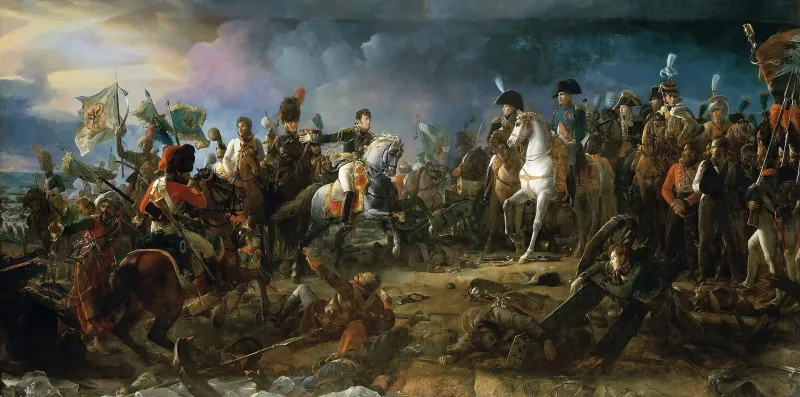
And the same day left a second lesson: even a perfect tactical victory did not end the war. The brilliance of how you win and the conversion of a win into a result are different abilities. If Austerlitz showed that "the outcome is decided before the blades meet," Cannae shows that "even a decisive victory is not, by itself, decisive." The two cases light up the two faces of the word victory.
Frequently asked questions
Sources
- Polybius The Histories,primary source(c. 150 BC)
- Livy Ab Urbe Condita (History of Rome),primary source(c. 20 BC)
- Gregory Daly Cannae: The Experience of Battle in the Second Punic War,Routledge(2002)
Related cases — read in comparison