Person
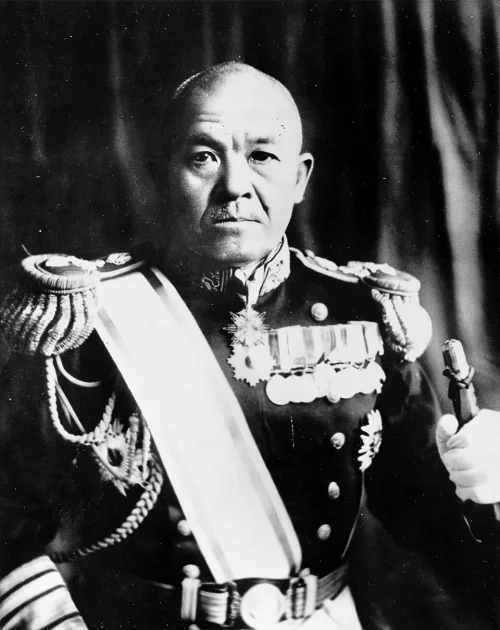
Chūichi Nagumo
Commander, First Air Fleet
Life: 1887–1944
A commander who kept to a sound procedure — one that presumed continuous time, and collapsed when the time was taken.
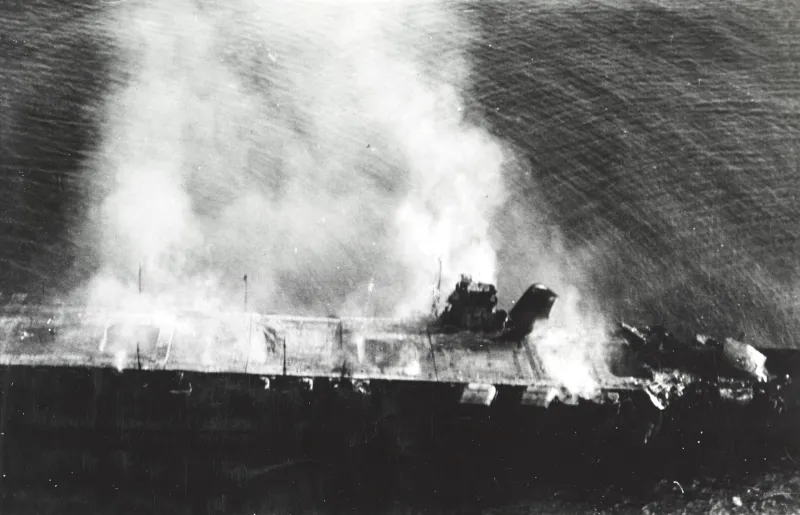
Led the carrier striking force from Pearl Harbor to the Indian Ocean. At Midway he held two tasks at once — suppressing the atoll and answering an American fleet — and was interrupted again and again in the middle of recovering aircraft, changing over armament and re-spotting his decks. The procedure itself was sound by the practice of the day, but it assumed uninterrupted time. His defeat reads more accurately as a design that goes rigid when the clock is taken away than as slowness of decision.
Strategic signature — command by procedure
Nagumo executed the given procedure reliably, and it had worked from Pearl Harbor to the Indian Ocean. Operating a carrier force is an accumulation of exact steps for getting many aircraft off and back aboard; improvised shortcuts translate directly into accidents and losses.
On 4 June he carried two tasks at once: suppress Midway, and deal with an American fleet that had appeared. By the book, he would recover the returning strike, change over the armament, spot the full deckload, and launch. The enemy never gave him the unbroken time those steps required.
Recurring patterns
Strike with everything at once
No piecemeal launches; a full deckload maximises weight of attack — and takes a long, uninterrupted preparation.
Prefer the complete procedure
Better to launch properly than to launch half-ready. Sound in normal conditions; rigid when time is being taken away.
Keep search thin
Reconnaissance was treated as a tax on striking power. The cost of not seeing arrives all at once, at the worst moment.
Strengths and limits
Could run a large carrier force without wrecking it.
That operation presumes continuous time, and fails when the time is chopped up.
Procedure kept his decisions steady.
It also made it hard to abandon the procedure once its premises had collapsed.
Where the signature showed — Midway
It is easy to summarise Nagumo's failure as hesitation. But his procedure was reasonable by the practice of the day. A reasonable procedure turns into a weakness once the clock is taken from it — that is what happened.
Chūichi Nagumo, commander of the First Air Fleet. Photographed circa 1941–42. U.S. Naval History and Heritage Command (NH 63423). Public Domain, via Wikimedia Commons
Appears in