Person
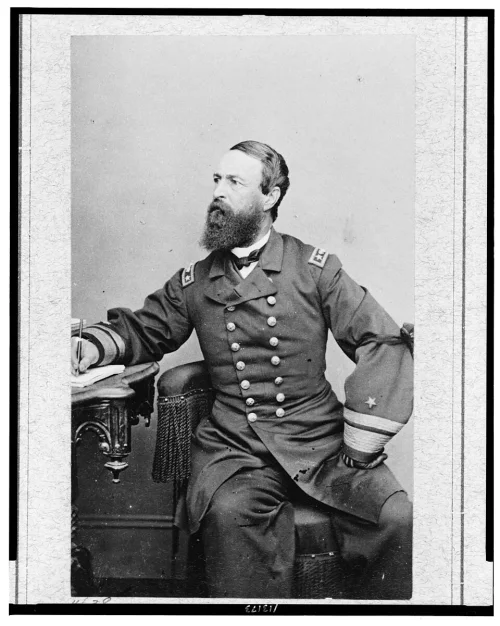
David D. Porter
Commanding the Mississippi River Squadron, US Navy
Life: 1813–1891
The admiral who broke the defender's premise that no fleet could pass — once, in the dark, and one-way.
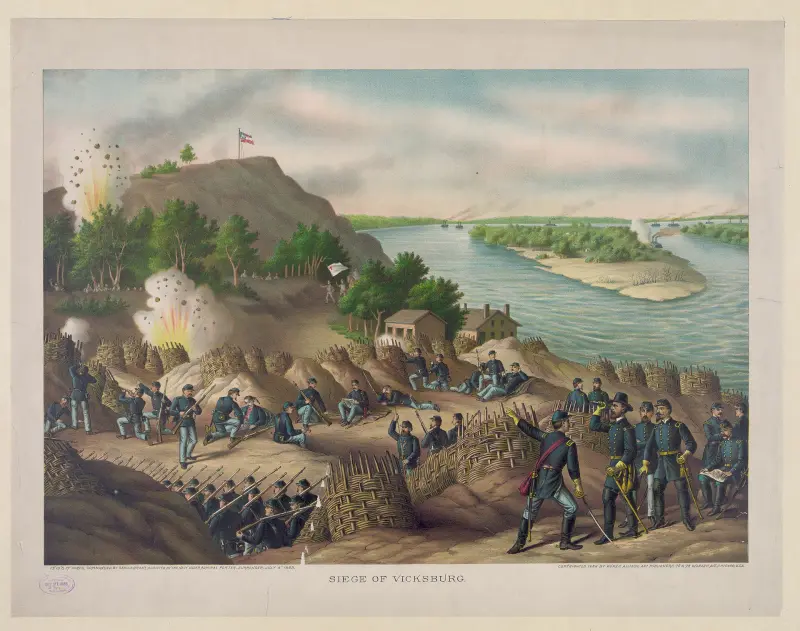
The Vicksburg batteries stood some sixty metres above the water and the defender's premise was that a fleet could not pass. On the night of 16 April 1863, Porter broke that premise with about twelve vessels. What matters is that it was one-way: ships that ran past could not come back up. It is the same decision Grant made about his supply line, taken on water.
Strategic signature — break the "impossible" exactly once
The Vicksburg batteries stood on a bluff some 60 metres above the water and fired down. The defender's premise was that a fleet could not pass. On the night of 16 April, Porter broke that premise with some 12 vessels13.
What matters is that this was a one-way passage. Ships that ran past could not come back up. On that night the fleet gave up its line of retreat and moved south — the same decision Grant made about his supply line, taken on water.
Recurring patterns
A premise can be broken once
"Impossible to pass" does not mean impossible every day. Line up darkness, smoke and speed and it is possible once.
Accept that it is one-way
Whether you can choose a move you cannot undo is what separates supporting an operation from being part of it.
Be a component of the land campaign
He moved not for naval credit but to manufacture a crossing point. He could take the smaller role.
Strengths and limits
Actually performs the thing the enemy has written off as impossible.
It works once, and failure costs the fleet. It is not a repeatable method.
Connection to Vicksburg
Without that one night there is no crossing downstream and no campaign at all. The hinge of an operation is usually not a spectacular battle but a single irreversible passage like this one.
Civil War glass negative, Library of Congress. Public Domain, via Wikimedia Commons
Appears in