Person
Federico Gravina
Spanish squadron commander (the rear)
Life: 1756–1806
The admiral who saw the odds and argued against sailing, and was overruled. In a coalition, a voice is not a vote.
The Spanish admiral who is reported to have argued against sailing at the council of war, on the grounds of the weather. As one of the two parties to the alliance he had standing to object, but not the weight to reverse the decision. In the battle he was in the rear, took the British lee column's first blow, was badly wounded, and died of it the following year. Sound caution losing to a structure has the same shape here as it does for Kutuzov at Austerlitz and Paullus at Cannae.
Strategic signature — the man who could say not to sail
Gravina, who commanded the Spanish ships, is reported to have argued against sailing at the council of war, on the grounds of the weather. As one of the two parties to the alliance he had standing to object, and he objected. The fleet sailed anyway.
In the battle he was in the rear, on the receiving end of the British lee column's first blow. He was badly wounded and died of it the following year. A structure in which sound caution cannot prevail has the same shape here as it does for Kutuzov at Austerlitz and Paullus at Cannae.
Recurring patterns
Reads the conditions and tries to stop
From the weather and the state of the crews he judged the sortie unfavourable. The reading itself was sound.
A minority voice inside a coalition
Commanding one partner's ships gives you a voice but not a vote.
Once decided, commits fully
Overruled, he took the rear — the position that would be struck first — and fought there.
Strengths and limits
Saw the unfavourable conditions and said so out loud.
Within the coalition's decision-making his voice did not carry the weight to reverse it.
Connection to Trafalgar
The Spanish squadron took some of the heaviest losses of the day, and its story is usually absorbed into the British legend and disappears. There were people on the losing side who judged correctly.
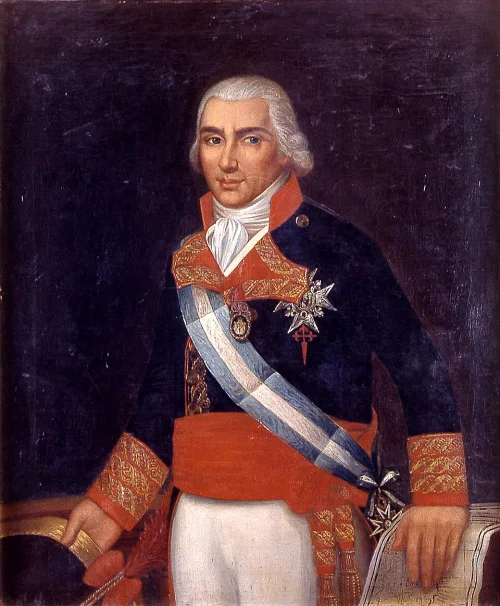
Federico Gravina (1756–1806). Artist unknown, 19th century. Public Domain, via Wikimedia Commons
Appears in