Person
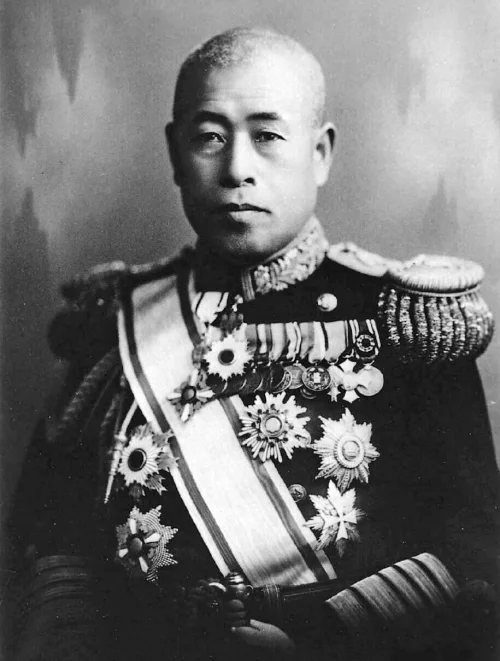
Isoroku Yamamoto
Commander-in-Chief, Combined Fleet
Life: 1884–1943
Chose a short-war gamble, then dismantled its own conditions — concentration and secrecy.
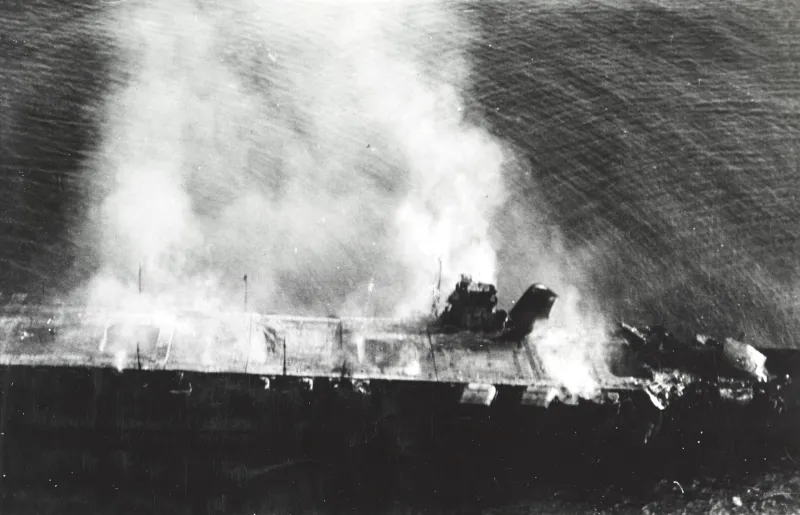
Facing the gap in industrial power squarely, Yamamoto bet on a short war and designed Midway as the decisive battle that would draw out and destroy the American carriers. The plan then split his strength between an Aleutian diversion, an invasion force, a battleship main body and the carriers — a deployment that could not concentrate where the decision would fall. Its schedule rested on assumptions about the enemy, with little to fall back on when they proved wrong.
Strategic signature — settling the war in a single battle
Yamamoto understood better than most that Japan could not outlast American industry. That is precisely why he bet on a short war. Pearl Harbor and Midway follow the same logic: if time is the enemy, the matter has to be decided without using time.
Yet the Midway plan contradicted that logic. A diversion to the Aleutians, an invasion force, a battleship main body and the carriers were spread so widely that they could not support one another. He sought a decisive battle with a deployment that could not concentrate for one.
Recurring patterns
Open by surprise
Strike before the opponent is ready. The same pattern becomes the greatest weakness the moment the opponent is reading your mail.
Complex simultaneity
Widely separated forces meant to mesh according to the enemy's reaction. It assumes the plan runs as written and is brittle when it does not.
Put the enemy's behaviour in the assumptions
The schedule assumed the American carriers would not appear, or would appear late. There was little left if the assumption failed.
Strengths and limits
Faced the disparity in national power squarely and held a consistent short-war strategy.
A short-war bet has no recovery move once it fails. There was no design for losing.
Pushed carrier aviation as the main arm.
And then dispersed that arm inside an elaborate plan. Doctrine and execution did not match.
Where the signature showed — Midway
He wanted a decisive battle and personally undermined its two conditions: concentration of force, and secrecy. The shape he wanted and the shape he prepared were not the same.
Isoroku Yamamoto, Commander-in-Chief of the Combined Fleet. Author unknown. Public Domain, via Wikimedia Commons
Appears in