Person
Kobayakawa Hideaki
Deployed with the Western army (Matsuoyama)
Life: 1582–1602
The young lord who belonged to neither side, was needed by both, and cashed that position in exactly once.
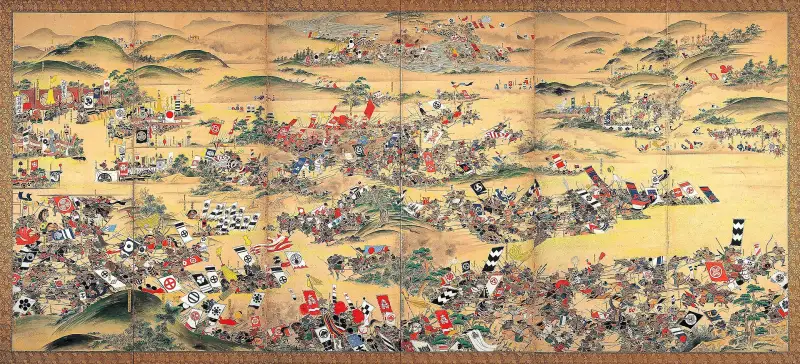
Nineteen years old at Sekigahara, holding Matsuoyama with about 15,000 men. Deployed as part of the Western army while negotiating with the Eastern one. The later picture of an irresolute youth who wavered until midday is not supported by recent scholarship: the negotiations were under way before the battle. He received a domain of 550,000 koku and died two years later at twenty-one, the house ending with him.
Strategic signature — belong to neither side and be needed by both
Kobayakawa Hideaki was nineteen at Sekigahara, holding Matsuoyama with 15,000–16,000 men. He was deployed as part of the Western army and negotiating with the Eastern one13.
Later stories cast him as an irresolute youth who wavered until midday. Recent scholarship holds that the negotiations were under way before the battle and that the change of sides came earlier in the day than the tradition says1. "He hesitated and then betrayed them" is months of negotiation compressed into a single day's drama.
Recurring patterns
Stand where both sides need you
Put a substantial force on high ground and both sides come to negotiate. Position and size are the bargaining power.
Not deciding has value
Terms keep improving only while you have not decided. The moment you decide, the negotiation ends.
What you gain does not last long
He received a domain of 550,000 koku and died two years later at twenty-one; the house ended with him.
Strengths and limits
Force and position alone get you written into both sides' designs.
That value exists only in the state of not having decided. It is a one-use asset that vanishes on being spent.
Connection to Sekigahara
That his name became a byword for this battle is itself the subject of this case. Told as one man's treachery it is a story about a day; what actually happened is that months of negotiation surfaced on that day.
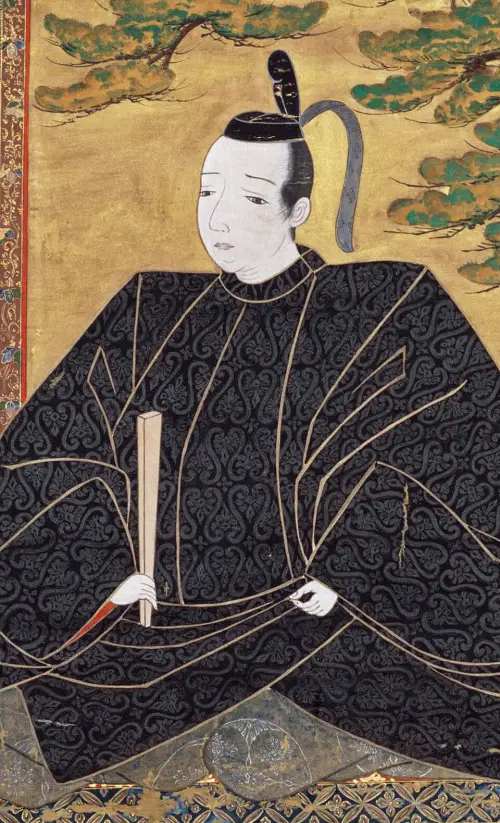
Portrait of Kobayakawa Hideaki (detail), early 17th century, Kōdai-ji (Kyoto National Museum), Important Cultural Property. He died two years after Sekigahara, aged twenty-one. Public Domain, via Wikimedia Commons
Appears in