Sekigahara — the battle settled in the correspondence
21 October 1600. What gets told is Kobayakawa Hideaki's betrayal. But of the eighty thousand or so who had come to surround the Eastern army, under half actually fought. The gap was not produced in the battle. It is the size of the letters written months earlier.
- On the deployment the Western army surrounded the Eastern one on three sides, yet under half of it fought. The gap came from negotiations concluded before the battle.
- Ieyasu spent about a month in Edo without moving and sent more than 160 letters. What he sold was not a place on the winning side but land after the war — collateral he did not yet own.
- Mitsunari could not play the same move for reasons of standing, not ability. Someone who cannot guarantee land cannot give anyone a reason to stay still.
Pattern: a design of defection →
The protagonist is shown in blue, the opponent in red.
- Date
- October 21, 1600
- Place
- Sekigahara, Mino Province (now Gifu Prefecture, Japan)
- Key figures
- 4
- Result
- Decisive victory for the Eastern army
Contents
- Background — a government in which nobody was defined as deciding
- The army as deployed and the army that fought
- Sekigahara in figures
- Deployment — surrounding on three sides with half the army not fighting
- Thesis — it was settled not in the battle but in the correspondence
- Two layers — the surface battle and the design beneath
- The course — 1600
- What actually decided it
- Why the losers were not fools
- The price of the promise is set after the winner has won
- Aftermath — what was won was the right to redistribute
- The story — compressing months into a single day
- Counterfactuals — remove one factor at a time
- What transfers — in other arenas
- In closing — a deployment map cannot draw obedience
Background — a government in which nobody was defined as deciding
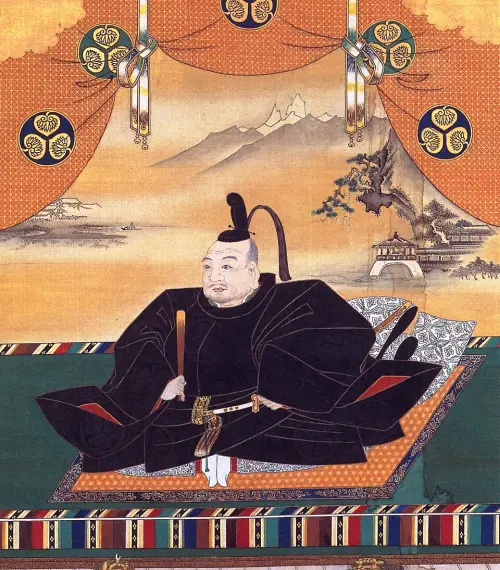
Toyotomi Hideyoshi died in 1598, leaving a framework in which five great lords and five commissioners were to support his five-year-old son. Nothing in that framework said who finally decided. Tokugawa Ieyasu was the largest of the great lords with some 2.5 million koku; Ishida Mitsunari was one of the commissioners, an administrator with 190,00024.
In 1600, while Ieyasu moved east on the pretext of punishing the Uesugi, Mitsunari raised an army in the west. The two faced each other at Sekigahara in Mino.
On the deployment alone the day favours the Western army. Roughly 80,000–85,000 against some 70,000–80,000, and the Western army held ground on three sides of the Eastern one. The formation has even been called ideal by later writers.
Which sets the question. Why did the side doing the surrounding collapse in half a day?
The army as deployed and the army that fought
The gap between these two bars is the whole case. It was not produced in the fighting. The roughly 25,000–30,000 on Nanguyama never came down, and the roughly 15,000–16,000 on Matsuoyama went over to the Eastern army during the day. Both were the result of negotiations concluded before a shot was fired13.
Sekigahara in figures
| Eastern army (protagonist) | Western army (opponent) | |
|---|---|---|
| Strength as deployed | c. 70,000–80,000 | c. 80,000–85,000 |
| Strength that actually fought | c. 70,000–80,000 | c. 30,000–35,000 |
| Strength that never moved | — | c. 25,000–30,000 (Nanguyama) |
| Strength that changed sides | — | c. 15,000–16,000 (Matsuoyama) |
| Length of the fighting | c. 6 hours | c. 6 hours |
| Lost afterwards | — | 88 houses attainted or reduced, 6,320,000 koku |
The strength figures move by source. What matters is the gap between the first two rows. The Eastern number barely changes; only the Western number halves, and it halves before the fighting.23
Deployment — surrounding on three sides with half the army not fighting
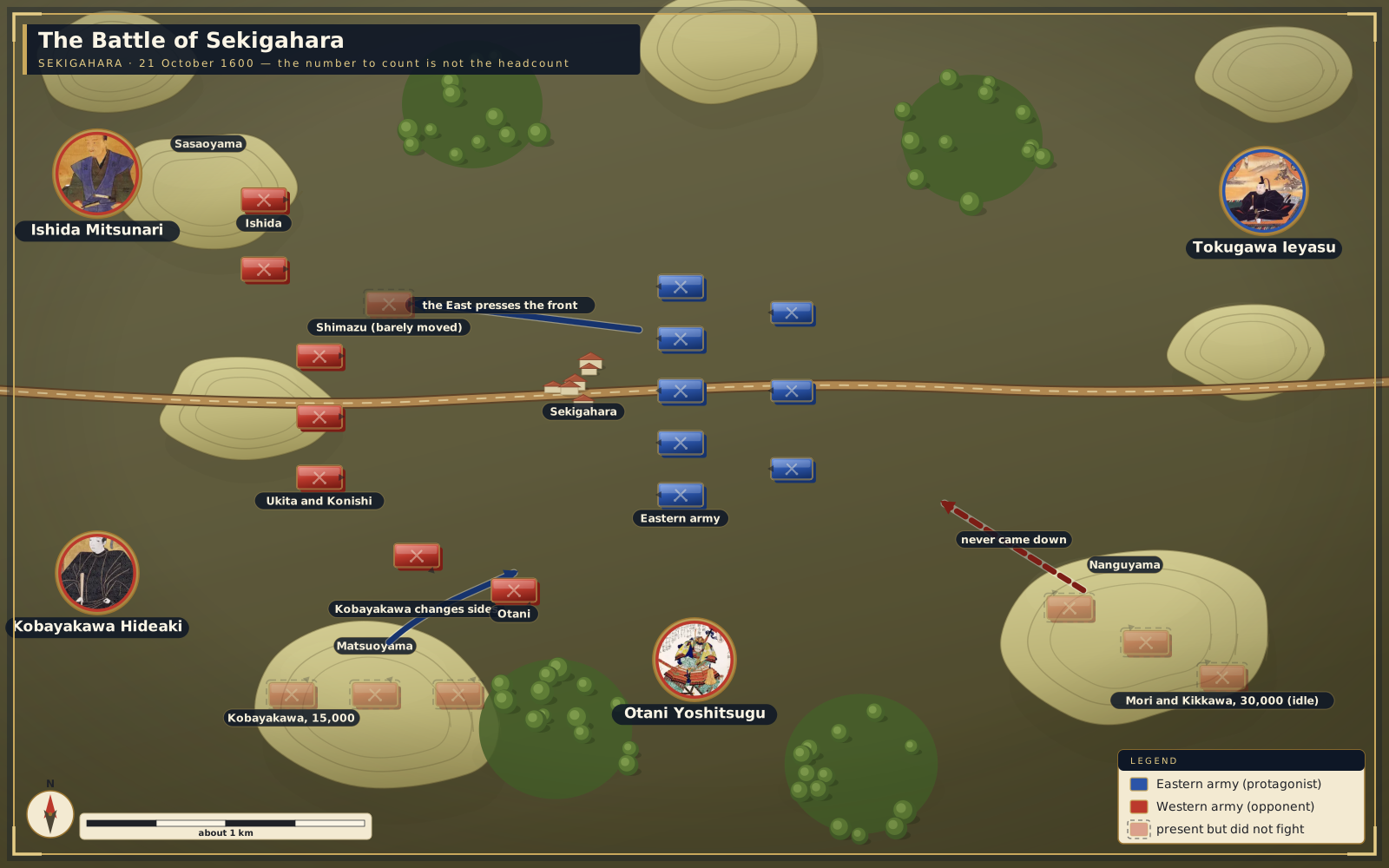
The Western army stood with Ishida Mitsunari on Sasaoyama to the north-west, Ukita and Konishi in the centre-west, Kobayakawa Hideaki on Matsuoyama to the south-west, and the Mōri, Kikkawa and Chōsokabe contingents on Nanguyama to the east. The Eastern army, which had come in from the east along the Nakasendō, was literally surrounded on three sides2.
But some of the units in that picture should be drawn faded.
The roughly 25,000–30,000 on Nanguyama. The Mōri were deployed in the name of their head, the nominal supreme commander, but Kikkawa Hiroie had made an agreement with the Eastern army not to fight, and in effect blocked his own side's route down the hill. That force never fought at all.3
The roughly 15,000–16,000 on Matsuoyama. Kobayakawa Hideaki was deployed as part of the Western army and negotiating with the Eastern one. After the battle opened he came down the hill onto the Western army's Ōtani contingent.1
Shimazu Yoshihiro's contingent barely moved either. Together it means that of the Western army on the field, only about 30,000–35,000 fought — under half of the deployment23.
Thesis — it was settled not in the battle but in the correspondence
On learning of the rising, Ieyasu did not head west. He entered Edo and stayed there some 25–30 days without moving. What he was doing was writing letters. Over 160–180 of them to the lords of Japan are documented34.
Their content is not "join the winning side". Most of it is about land after the war: your holdings confirmed, your holdings increased. Using as collateral territory that was not yet his, he bought other men's not moving now.
And the Western side could not do the same. Mitsunari was one of five commissioners, without authority to guarantee anyone's landholding. He acted in the name of the Toyotomi house, whose head was a boy of seven. This was not a difference of ability but of standing to promise.24
This is the core of the structure. When we count strength we count the people who are there. What has to be counted is the people who will obey. The Western army at Sekigahara was about 80,000–85,000 as deployed and about 30,000–35,000 as obeying — and that gap was not produced in the fighting but before it.
So the pattern this case carries is a design of defection. Before fighting, put part of the enemy's strength into the state of not moving, or of coming over. And immobilising is cheaper than converting — on the field the effect is the same.
What has to be counted is not the men who are there but the men who will obey. At Sekigahara those two numbers differed by half.
Thesis
Two layers — the surface battle and the design beneath
Ieyasu stayed in Edo for nearly a month without moving.
The Mōri on Nanguyama never moved.
An agreement not to fight had been made before the battle. Cheaper than bringing them over, and identical in effect on the field3.
Kobayakawa came down Matsuoyama onto his own side.
Not a decision taken that day but months of negotiation surfacing on it. What looks like drama is often the result of paperwork1.
The battle was over in about 6 hours.
If half your effective strength is gone before the start, an encirclement is a shape and nothing more. A deployment map cannot draw "will they obey".2
The course — 1600
Toyotomi Hideyoshi dies. Five great lords and five commissioners are to support his five-year-old son; where final authority lies is undefined24.
Ieyasu moves east on the pretext of punishing the Uesugi. Mitsunari raises an army in the west behind him4.
Ieyasu enters Edo and stays some 25–30 days without moving. In that time he sends more than 160–180 letters to the lords of Japan.34
The Eastern advance guard takes Gifu castle. The Western army concentrates at Ōgaki2.
The Western army leaves Ōgaki for Sekigahara and deploys to receive the Eastern army there23.
The battle opens in fog. Ishida, Ukita, Konishi and Ōtani fight at the front. Nanguyama and Matsuoyama do not move.12
Kobayakawa comes down Matsuoyama onto the Ōtani contingent. Recent work holds that this happened earlier in the day than the tradition says.1
Ōtani's contingent breaks and the Western front collapses in sequence. The matter is settled in about 6 hours12.
Shimazu's contingent retreats by charging straight through. The roughly 25,000–30,000 on Nanguyama have still not fought once that day3.
What actually decided it
Use the time spent not moving
The 25–30 or so days in Edo were not delay but work, and the more than 160–180 letters are their content34.
Use what you do not yet own as collateral
What was promised was land after the war. The move only exists for someone whose promises are believed24.
Immobilise rather than convert
The roughly 25,000–30,000 on Nanguyama did not join the Eastern army. They simply did not move, and on the field that is the same thing3.
Why the losers were not fools
Reading Mitsunari as an unpopular bureaucrat who rose above himself and lost is contrary to the facts. He was an able administrator who had run Hideyoshi's cadastral survey and the logistics of the Korean campaigns, and he assembled eighty thousand men quickly. The operational plan at Sekigahara — leaving Ōgaki to receive the Eastern army on that ground — was militarily sound23.
What broke was not the plan but its premise: that the body of men called the Western army would obey orders. He had no means of guaranteeing it. The authority to confirm a landholding belonged to the great lords and to the head of the house, not to a commissioner — and the head of the house was a boy of seven. He could not play Ieyasu's move because he did not have the standing to play it.
Kutuzov at Austerlitz, Paullus at Cannae, Gravina at Trafalgar, Paulus at Stalingrad, Boucicaut at Agincourt, Gérard at Waterloo, Pemberton at Vicksburg — and now Mitsunari. A correct reading losing to a structure makes its eighth appearance here. The variant this time is "the man commanding has no standing to command" — the inverse of Vicksburg's two superiors, because here there is nobody above at all.
The other man worth looking at is Ōtani Yoshitsugu. He saw the wavering on Matsuoyama and fought with troops posted to face that hill23. The reading was right. But when 15,000–16,000 men come down a slope, that was not a precaution at the required scale. Seeing it coming and being able to prepare for it are separate accounts.
The price of the promise is set after the winner has won
Seen from the receiving end of this pattern, the largest risk is not on the field but afterwards. What not moving is worth is decided by the other side, once the other side has won.
The agreement not to fight on Nanguyama was arranged by Kikkawa Hiroie, and its purpose was the survival of the Mōri house. An assurance about the main house's holdings is said to have been given. After the war the Mōri went from some 1,200,000 koku to about 370,00034. Hiroie surrendered his own domain to prevent the house being extinguished outright, but what was received was not the same as what had been described.
This is not a story about treachery but about structure. At the moment a promise falls due, you have no bargaining power left. Deciding not to move is precisely the act of giving up your only chip — the ability to move. Part of why a design of defection works so well is that asymmetry.
Aftermath — what was won was the right to redistribute
The fighting was over in about 6 hours. The value of that day appears afterwards, not on the field. 88 houses were attainted or reduced and 6,320,000 koku confiscated. Ieyasu redistributed them and rearranged the placement of every lord in Japan24.
What Sekigahara won was not a victory but the right to redistribute the land of a country. The shogunate followed 3 years later and lasted 260. In this the case resembles Vicksburg: it told outside its own arena because what changed was not the outcome of a battle but the conditions themselves.
It was not complete, though. The Toyotomi house survived, and the matter was not closed until the summer campaign at Osaka 15 years later. Even the day said to have decided the country left a remainder that took fifteen years to clear.
The story — compressing months into a single day
The story of this battle is that Kobayakawa Hideaki's betrayal decided it, usually accompanied by the tale of the "questioning volley", in which Ieyasu had muskets fired at Matsuoyama to force his hand.
Three things need correcting.
First, the defection was not improvised on the day. Negotiations with Kobayakawa were under way before the battle, and recent work holds that the change of sides came earlier in the day than the tradition says1. "He wavered until midday and then made up his mind" is months folded into a day.
Second, the "questioning volley" does not appear in contemporary sources. It appears in later compilations and survived because it works as drama1.
Third, the roughly 25,000–30,000 on Nanguyama did not even betray anyone. They had agreed not to fight, so nothing happened on the day at all. Nothing happening does not make a story.3
Here is a third kind of story-correction on this site. The frozen ponds at Austerlitz are the inflation kind, where the contents of an event grew. Vicksburg is the omission kind, where a whole event dropped out of view. Sekigahara is the compression kind — months of work retold as one man's decision on one day.
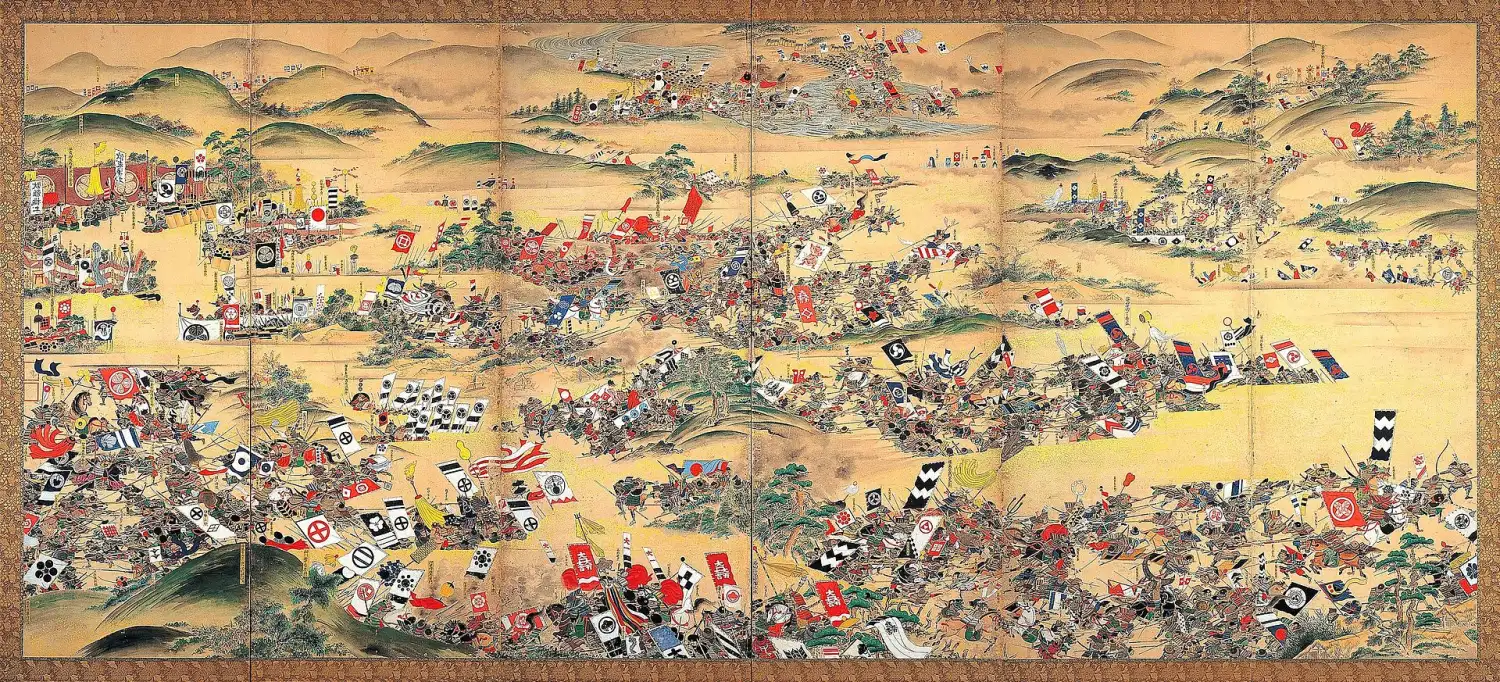
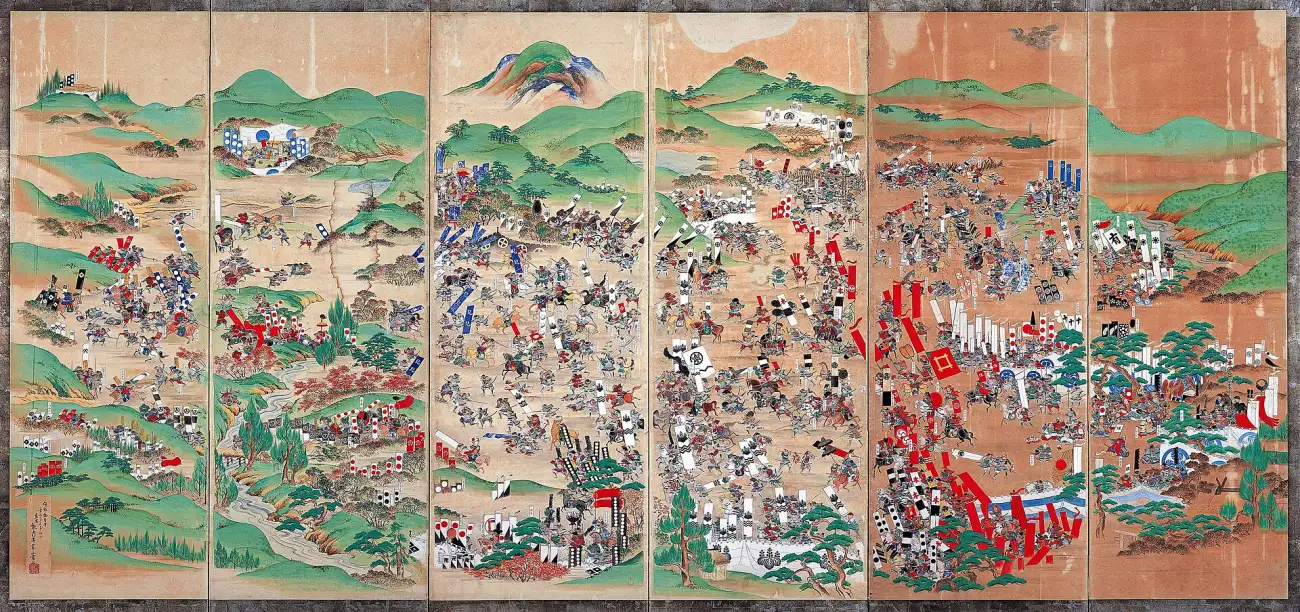
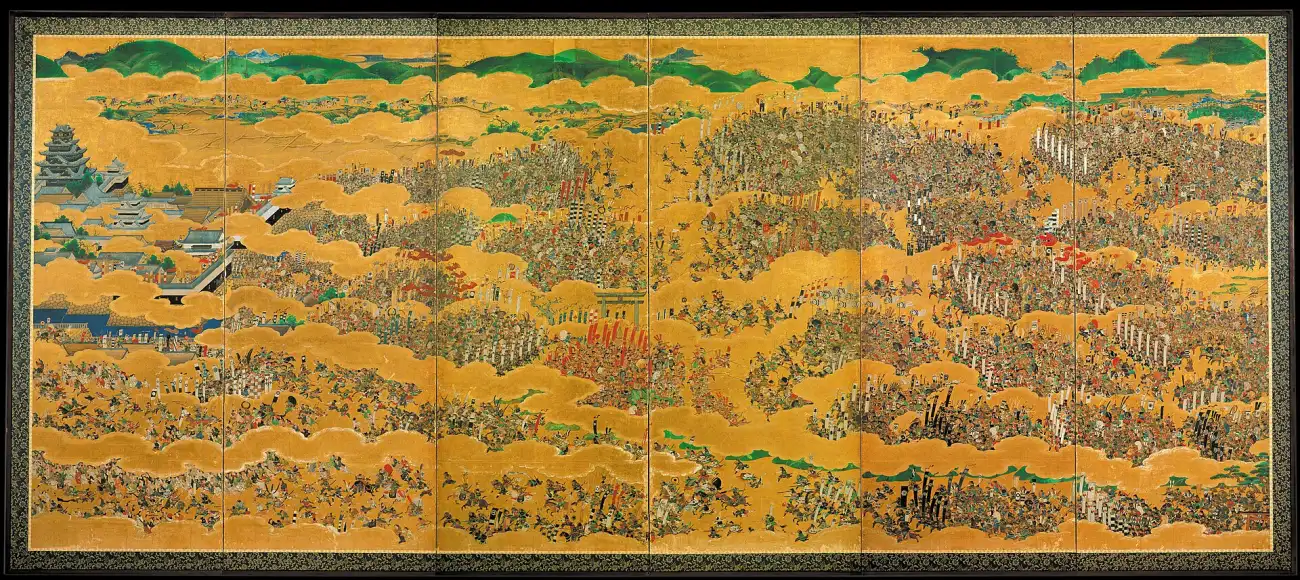
The images help it along. Inside a battle screen every bannered contingent is fighting. A screen cannot paint a unit that does nothing, because painting it leaves no picture. And the job of such a screen was not to record but to preserve a house's standing. Nobody's house wants to preserve who did not fight.
Counterfactuals — remove one factor at a time
A: if Kobayakawa had not moved. The Ōtani contingent might have held. But the roughly 25,000–30,000 on Nanguyama still do not move. The day gets longer; the arithmetic of who is fighting does not change.
B: if Ieyasu had not stopped in Edo for a month. That month is the correspondence. Arrive sooner and you fight without having reduced the enemy's strength first. Not moving was the work.
C: if Mitsunari had been in a position to promise land. He could have played the same move. But the head of the house was seven and he was a commissioner. This is a question of standing, not of ability, and effort does not close it.
Each is an untestable thought experiment, not a claim about what was. Only by removing a factor does its weight become visible.
What transfers — in other arenas
Count who will move, not who is listed
The headcount on an org chart and the number who will actually act are different. Count the votes in favour, not the seats in the room. Why this example: the Western army's two numbers differed by half.
Check what you have the standing to promise
Before the content of a negotiation comes the question of what you can actually guarantee. What you cannot guarantee is not a bargaining chip.
Neutralise rather than recruit
You do not have to persuade everyone on the other side. Having them sit it out is cheaper and the result is often the same.
Design the period of not moving as work
Time that looks like stagnation from outside can be where the outcome is built. If you can say what you are doing, it is all right to be still.
Distrust the word "betrayal"
An event told as one person's decision is usually the result of months of negotiation. The more dramatic the shape, the more time has been folded up inside it.
In closing — a deployment map cannot draw obedience
Read Sekigahara as a day decided by one man's betrayal and you miss the core. On the deployment the Western army had the Eastern one surrounded. But of the roughly 80,000–85,000 doing the surrounding, about 30,000–35,000 obeyed orders. That gap was not produced in the fighting; it is the size of the more than 160–180 letters written in Edo.
And the reason the Western side could not do the same was standing, not ability. Someone who cannot promise cannot negotiate.
What this case adds to the eight already here is a ninth type. Austerlitz was a design of space, Cannae of momentum, Midway of time, Trafalgar of command, Stalingrad of attachment, Agincourt of frontage, Waterloo of convergence, Vicksburg of supply. Sekigahara is a design of defection — take part of the enemy's strength out of the count before the fighting starts.
One last thing. What is frightening about this pattern is that you cannot tell from inside when the number you are counting has quietly stopped meaning anything. A deployment map shows every unit. The one line it does not show is which of them will obey.
Frequently asked questions
Sources
- 白峰旬, 新「関ヶ原合戦」論——定説を覆す史上最大の戦いの真実, 新人物往来社 (2011)
- 笠谷和比古, 関ヶ原合戦と大坂の陣, 吉川弘文館 (2007)
- 光成準治, 関ヶ原前夜——西軍大名たちの戦い, 角川ソフィア文庫 (2018)
- 藤井讓治, 徳川家康, 吉川弘文館 (2020)
Related cases — read in comparison