Person
Ishida Mitsunari
Effective leader of the Western army
Life: 1560–1600
The leader who made a sound plan and lacked the standing to make anyone carry it out.
An able administrator who had run the cadastral survey and the logistics of the Korean campaigns, and whose operational plan at Sekigahara was militarily sound. What broke was not the plan but the premise that the body of men called the Western army would obey orders. He was one of five commissioners, with no authority to guarantee anyone's landholding; he acted in the name of a house whose head was a boy of seven. He could not play Ieyasu's move because he did not have the standing to play it.
Strategic signature — a sound plan made without the standing to order it
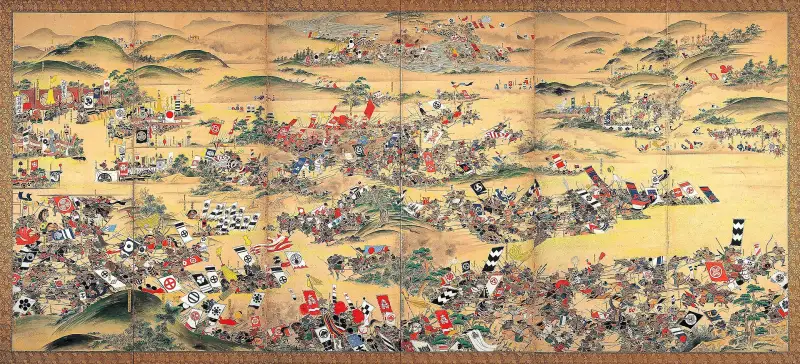
Ishida Mitsunari was not incompetent. He was an able administrator who had run Hideyoshi's cadastral survey and the logistics of the Korean campaigns, and the operational plan at Sekigahara — leaving Ōgaki castle to receive the Eastern army on that ground — was militarily sound23.
What broke was not the plan but its premise: that the body of men called the Western army would obey orders. He was one of five commissioners, without authority to guarantee anyone's landholding. He acted in the name of the Toyotomi house, whose head was a boy of seven. He could not play Ieyasu's move because he did not have the standing to play it.
Recurring patterns
A sound plan is not the standing to execute it
The quality of an operation and the authority to make people carry it out are entirely different capacities.
You cannot negotiate what you cannot promise
Someone who cannot guarantee land cannot give anyone a reason to stay still. Negotiation is a function of standing.
Borrowed legitimacy
He acted in the name of a house whose head was seven. Borrowed legitimacy collapses the moment it is pressed.
Strengths and limits
Can run administration and supply; he assembled a large army quickly.
Whether an assembled army obeys is a separate question. The power to gather numbers is not the power to move them.
Connection to Sekigahara
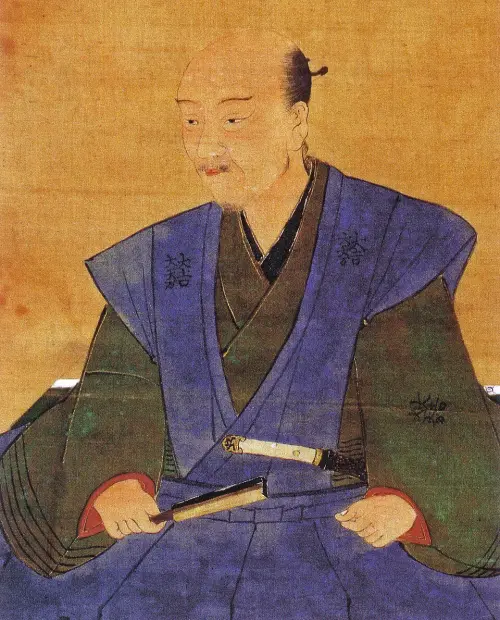
Portrait of Ishida Mitsunari (detail), 18th–19th century, held by the Sugiyama family, his descendants. Not a contemporary likeness. Public Domain, via Wikimedia Commons
Appears in