Person
Tokugawa Ieyasu
Commander of the Eastern army
Life: 1543–1616
The commander who used land he did not yet own as collateral to buy, before the fighting, other men's not moving.
On learning of Mitsunari's rising he did not head west but stayed in Edo for about a month without moving. In that time he wrote to the lords of Japan — over a hundred and sixty letters are documented. What he sold was not a place on the winning side but land after the war: using as collateral territory that was not yet his, he bought other men's not moving now. He built not strength on the field but strength that would not come to the field.
Strategic signature — there are periods in which not moving is the work
Learning of Mitsunari's rising in 1600, Ieyasu did not head west. He stayed in Edo for some 25–30 days without moving. What he was doing in that time was writing letters — over 160–180 of them are documented34.
What he was selling was not a place on the winning side. It was land after the war. Your holdings confirmed; your holdings increased — using as collateral territory that was not yet his, he bought other men's not moving now. He was not building strength on the field; he was building strength that would not come to the field.
Recurring patterns
Use the time spent not moving
A period that looks like delay is a period of negotiation. Not moving can be designed as work.
Put the future up as collateral
He promised post-war land he did not yet hold. Whether you have the standing to promise decides whether this move is available.
Cheaper to immobilise than to convert
Bringing someone over is expensive. Having them stay neutral is cheap, and on the field it has the same effect.
Redistribute after winning
He confiscated and reassigned 6,320,000 koku. What the battle won was not a victory but the right to redistribute land.
Strengths and weaknesses
Can take part of the enemy's strength out of the count before fighting.
The move only exists for someone whose promises are believed. Without standing, the letters are paper.
Designs through to the redistribution that follows the win.
The Toyotomi house survived anyway, and clearing it took 15 years. A decision does not finish in a day.
Where the signature showed — Sekigahara
Of the Western army drawn up on the field, less than half fought. That difference was not produced in the battle; it is the size of the correspondence written in Edo.
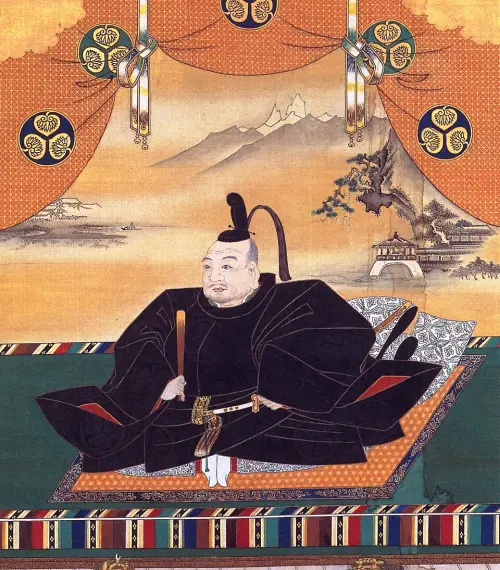
Kanō Tan'yū, Portrait of Tokugawa Ieyasu, early Edo period, Osaka Castle Museum. Public Domain, via Wikimedia Commons
Appears in