Person
Ōtani Yoshitsugu
Western army commander, facing Matsuoyama
Life: 1558–1600
The commander who correctly allowed for an allied defection and could not prepare at the scale it required.
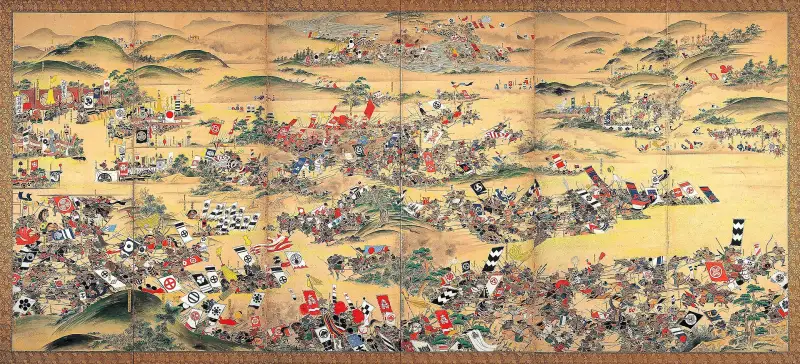
He saw the wavering on Matsuoyama and fought with troops posted to face that hill, having allowed for a change of sides. The reading was right; the scale of the precaution was not. When some 15,000 men come down a slope there is no force there to absorb them. Ill and carried in a palanquin, he commanded from it and died that day — the clearest instance on this site of correct anticipation without the resources to act on it.
Strategic signature — read it right and still fall short
Ōtani Yoshitsugu saw the wavering on Matsuoyama. He fought having allowed for the possibility that Kobayakawa would change sides, with troops posted to face that hill23. The reading was right.
The scale of the precaution was not. When 15,000–16,000 men come down the slope there is no force there to absorb them. Reading it correctly changes nothing if the resources do not follow. Ill and carried in a palanquin, he commanded from it and died that day.
Recurring patterns
Plan for the defection
Suspecting your own side is unpleasant, but without allowing for it no precaution can be built. He allowed for it.
Reading and resources are separate accounts
Seeing it coming and being able to prepare at the required scale are different. Under-resourced foresight leaves no record.
Reasons for staying with the losing side
An old associate of Mitsunari, he stayed knowing the odds. Not every decision is explained by probability of winning.
Strengths and limits
Deploys with an allied defection built into the plan.
Anticipation does not close a tenfold difference in numbers.
Connection to Sekigahara
Two men here read it correctly and were not carried. Mitsunari had no standing to order; Yoshitsugu had the standing and not the men. There is more than one way for a structure to break.
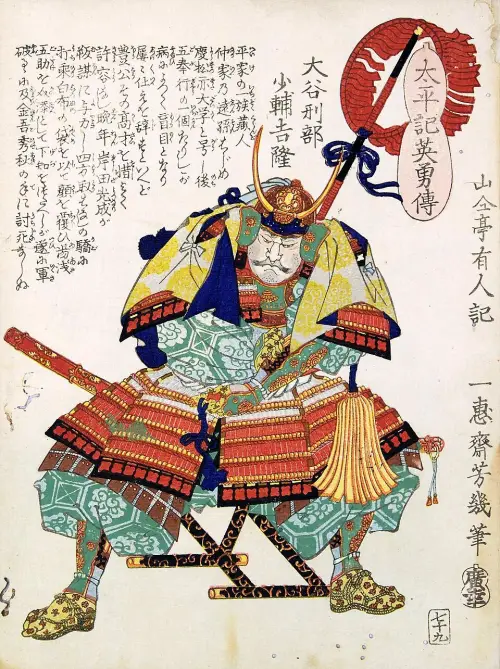
Ukiyo-e of Ōtani Yoshitsugu by Utagawa Yoshiiku, 19th century, Tokyo Metropolitan Library. An imagined likeness made more than 250 years after the battle. Public Domain, via Wikimedia Commons
Appears in