Tet: the verdict was returned off the battlefield
30 January 1968. About 77,000 troops attacked more than 100 towns at once. And lost. Not one objective was held, and the popular uprising the plan required never came. The direction of the war changed anyway — because the people ruling on who was winning sat 13,000 km from the fighting.
- Militarily the attackers were beaten outright: no objective held, losses an order of magnitude apart, and no uprising.
- The war turned anyway because the authority to rule on it was elsewhere. Presidential approval on the war fell from 39% to 26%, and on 31 March Johnson announced he would not seek re-election.
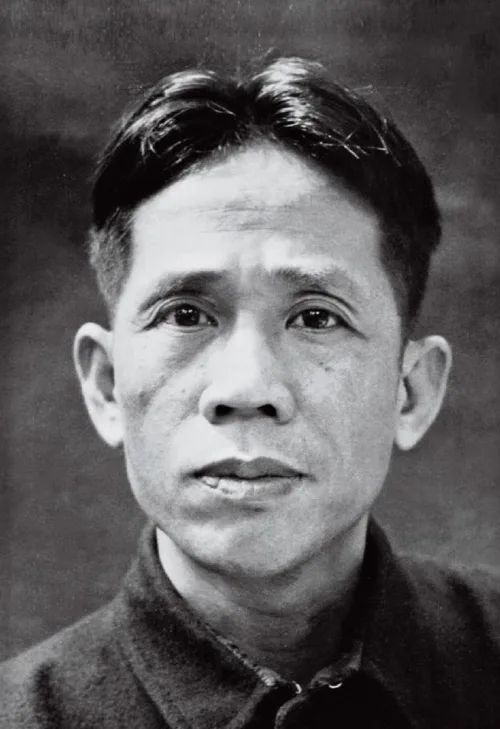
- But Hanoi had the judge wrong too. It aimed at the population of South Vietnam and was scored by the American electorate. The type's success and its failure are in the same case.
Pattern: a design of the verdict →
The protagonist is shown in blue, the opponent in red.
- Date
- January 30, 1968
- Place
- Across South Vietnam (Saigon, Huế, Khe Sanh and a hundred other towns)
- Key figures
- 4
- Result
- Tactical allied victory, strategic North Vietnamese victory
Contents
- Background: they were counting bodies, and somebody else was keeping score
- Dead in the first phase
- Tet in numbers
- Deployment: a hundred towns at once, and an uprising that did not come
- The claim: the verdict was returned by people who were not on the battlefield
- Two layers: what happened, and the structure underneath
- How it went: 1968
- Khe Sanh: both sides got the main effort wrong
- What actually did the work
- The losing side was not stupid
- The case also demonstrates the type failing
- Result: what the winning side lost
- The story: "Tet was an American defeat"
- Counterfactuals: remove one element at a time
- What carries over: on other ground
- In closing: somebody is deciding who won
Background: they were counting bodies, and somebody else was keeping score
At the start of 1968 there were about 500,000 American troops in Vietnam. There was no front. There was ground you took and gave back the following month. So the yardstick adopted for progress was the number of enemy dead. Kill faster than he can replace and eventually he breaks. The logic is sound.
And on the numbers, the war was being won. In November 1967 Westmoreland told reporters the end was coming into view24.
But the yardstick carried an unwritten premise. Who looks at these numbers and rules that the war is won? What decided whether the war in South Vietnam continued was not Saigon and not Hanoi. It was Washington, 13,000 km away, and the people who voted there.
This case turns on that single point.
Dead in the first phase
If these two bars were the whole story, the story would be over. The communist figure is the allied claim and scholarly estimates vary widely1, but the order-of-magnitude gap is not in doubt. And the battle was not scored on this yardstick.
Tet in numbers
| North Vietnam and the NLF (protagonist) | US and South Vietnam (opponent) | |
|---|---|---|
| Troops committed | about 77,000 | about 500,000 US troops in country |
| Places attacked | more than 100 towns at once | 36 of 44 provincial capitals, 72 of 245 district towns |
| Dead, first phase | over 45,000 (allied figures) | 4,124 US and allied, 4,954 South Vietnamese |
| Civilians | — | 14,300 killed, 630,000 made homeless |
| The effect that was designed | a general uprising | — |
| The effect that occurred | — | presidential approval 39% → 26% |
The last two rows are the whole case. The designed effect did not happen, and an undesigned one settled the matter123.
Deployment: a hundred towns at once, and an uprising that did not come
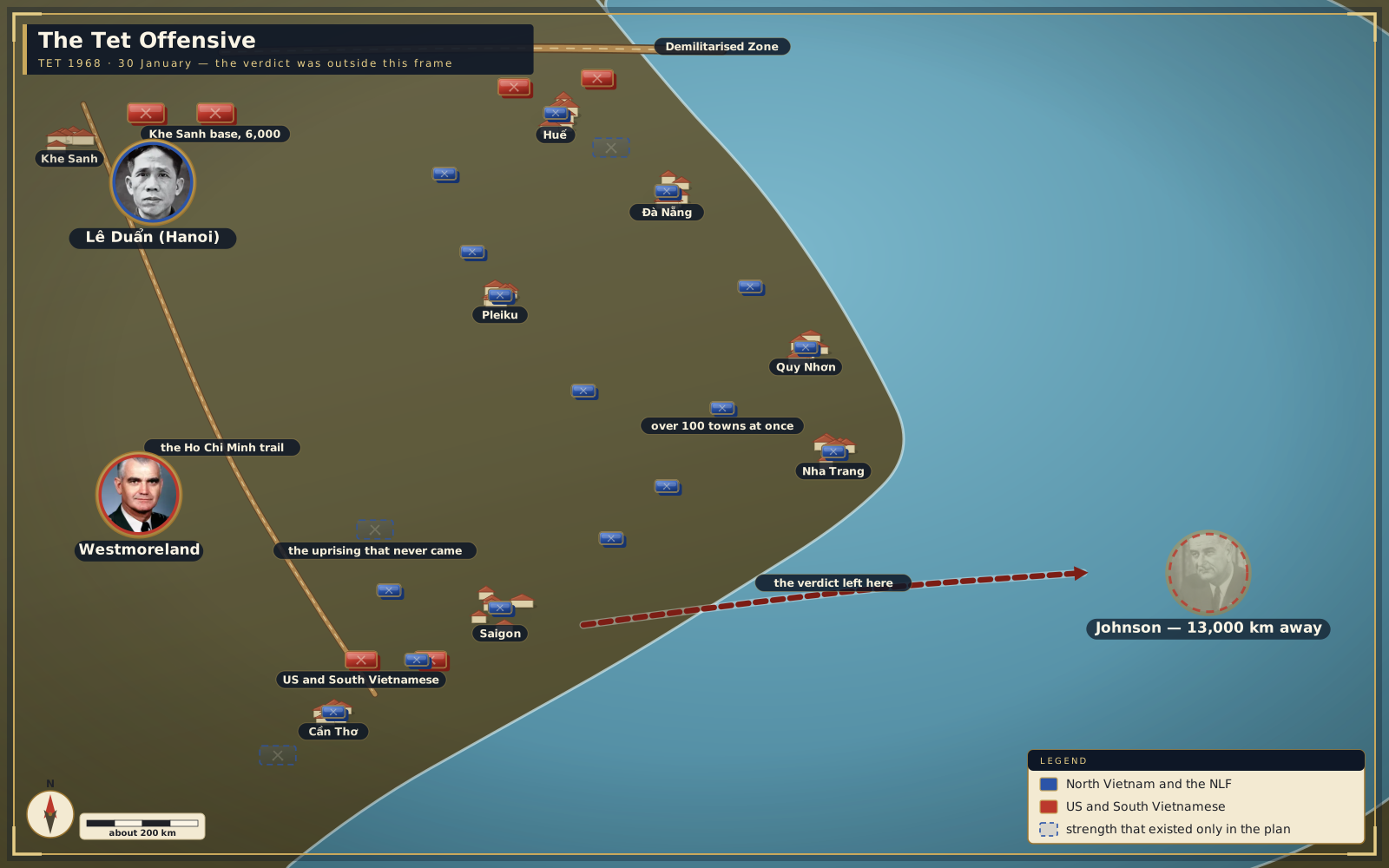
On the night of 30–31 January 1968, about 77,000 troops attacked more than 100 towns simultaneously: 36 of 44 provincial capitals, 72 of 245 district towns, and Saigon. It fell inside the Tet holiday truce, with much of the South Vietnamese army on leave1.
Nothing on that scale or that simultaneity had happened in the war. But the attacks were not the centre of the plan.
The operation's own name was General Offensive, General Uprising. Strike the cities together, the South Vietnamese army breaks, the population rises, the regime falls — the plan handed its entire second half to the civilian population.3
The uprising did not come. The urban population did not go over, and the South Vietnamese army did not break. Half the plan stayed blank while the other half was executed.
Within weeks most of the committed force was gone. The southern insurgency in particular was effectively spent in this one operation, and the war from then on was carried by North Vietnamese regulars13.
The claim: the verdict was returned by people who were not on the battlefield
Militarily, Tet was a defeat for the side that launched it. Not one objective was held, the losses were an order of magnitude apart, and the uprising never came. There is little dispute about this.
And yet the direction of the war changed afterwards. What changed it was not the battlefield.
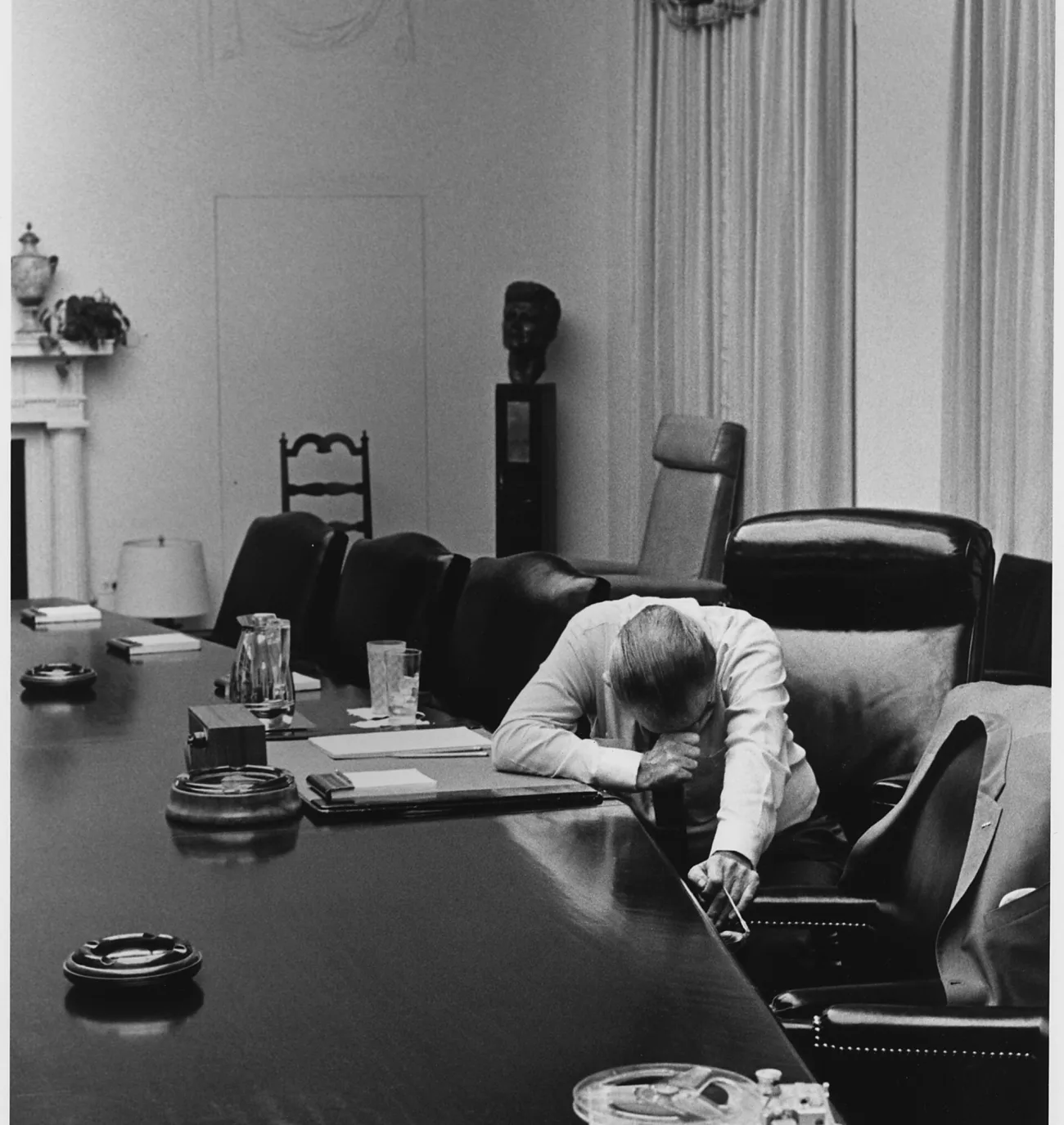
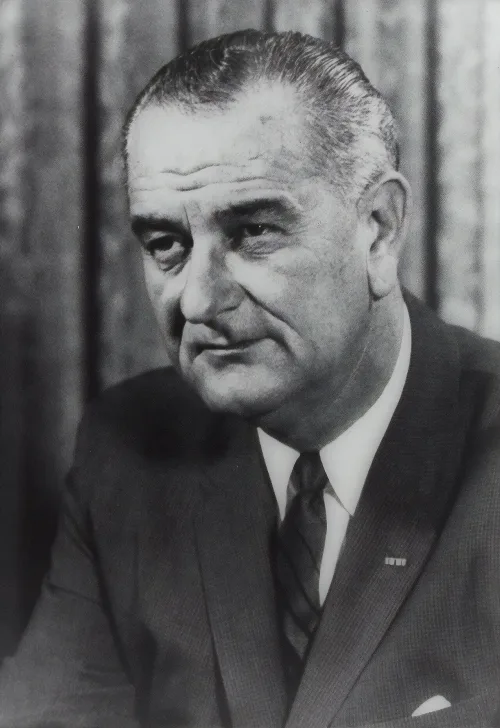
In the United States, approval of Johnson's handling of the war fell from 39% to 26%. Those calling themselves hawks fell from 60% to 41%. And on 31 March the President announced a curtailment of the bombing and, at the end of the speech, that he would not seek re-election.
Here is the eleventh type: a design of the verdict — the people who rule on winning are not the people on the field. Decide who they are before you fight.
Do not confuse it with the deception at Normandy. That manufactured what the opposing commander believed. This manufactured an event that reached the third party who was keeping score — and did so not with a lie but with real attacks. What was built was not the enemy's belief but the material of the verdict.
The people who rule on winning are not the people on the field. Mistake who they are and you can win and still lose.
The claim
Two layers: what happened, and the structure underneath
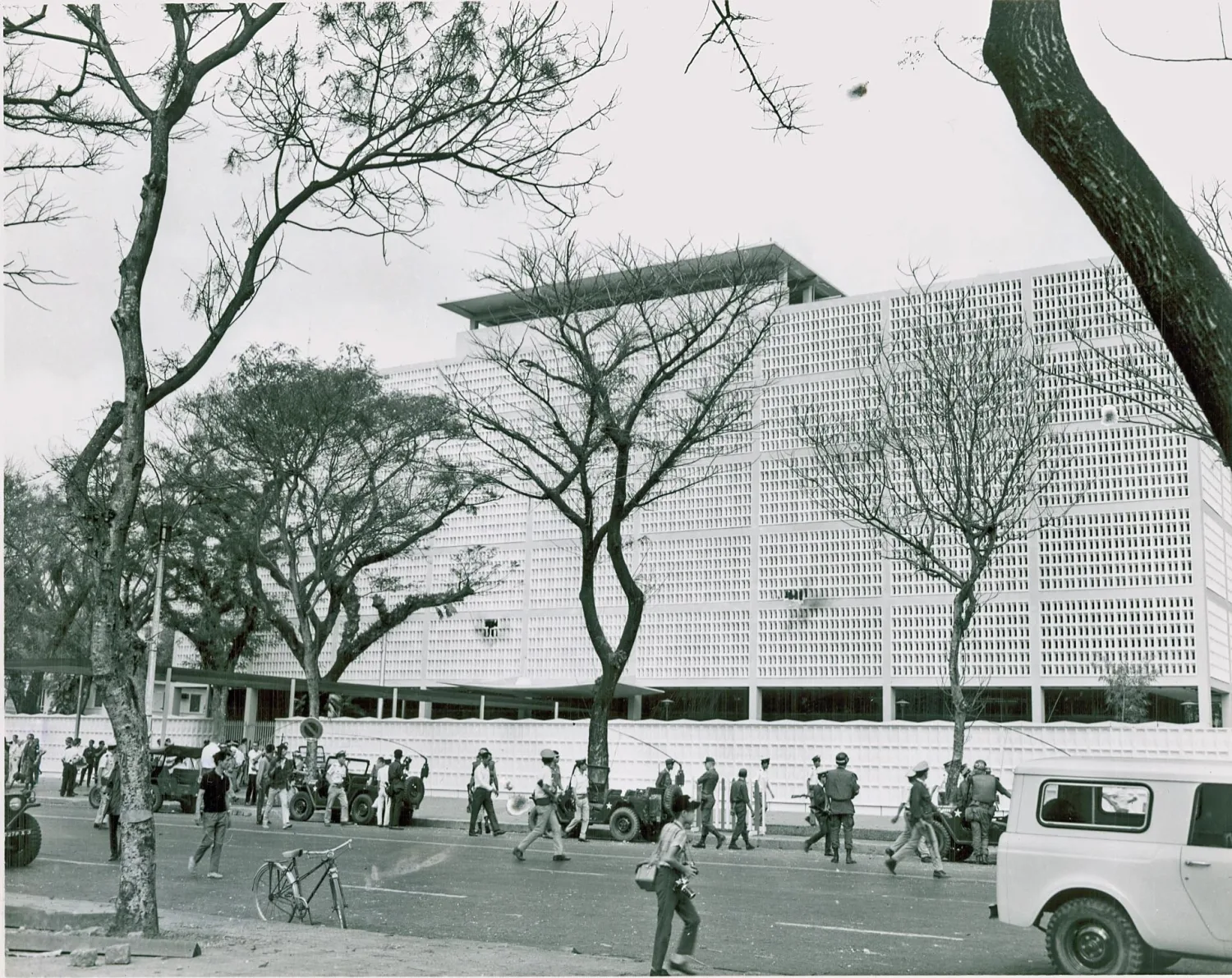
15–19 sappers got into the embassy compound and were finished in about 6 hours.
Militarily trivial. But it happened in central Saigon, where the reporters were. Distance to the judge decides how large an event is.2
The communists lost more than 45,000 dead.
That figure is an American yardstick. A ratio persuades nobody who is not scoring himself the same way.
Westmoreland believed Khe Sanh was the main effort.
He classified the attacks on the cities as the diversion. The shape of making the real thing look fake — this time produced by his own judgement rather than an enemy plan (Normandy).
How it went: 1968
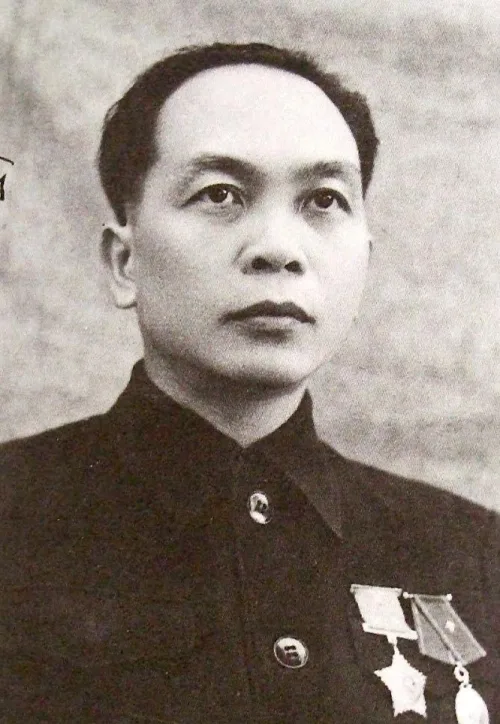
Hanoi settles on the General Offensive, General Uprising. Giáp, sceptical, is outside the centre of the planning and abroad for medical treatment3.
The siege of Khe Sanh begins, with about 6,000 Marines in the base. American attention collects there.
About 77,000 troops strike more than 100 towns at once, including 36 of 44 provincial capitals1.
15–19 sappers enter the US Embassy compound in Saigon. They never get into the chancery and are finished in about 6 hours. But the first wire bulletin said the Viet Cong had seized part of the embassy — which was wrong2.
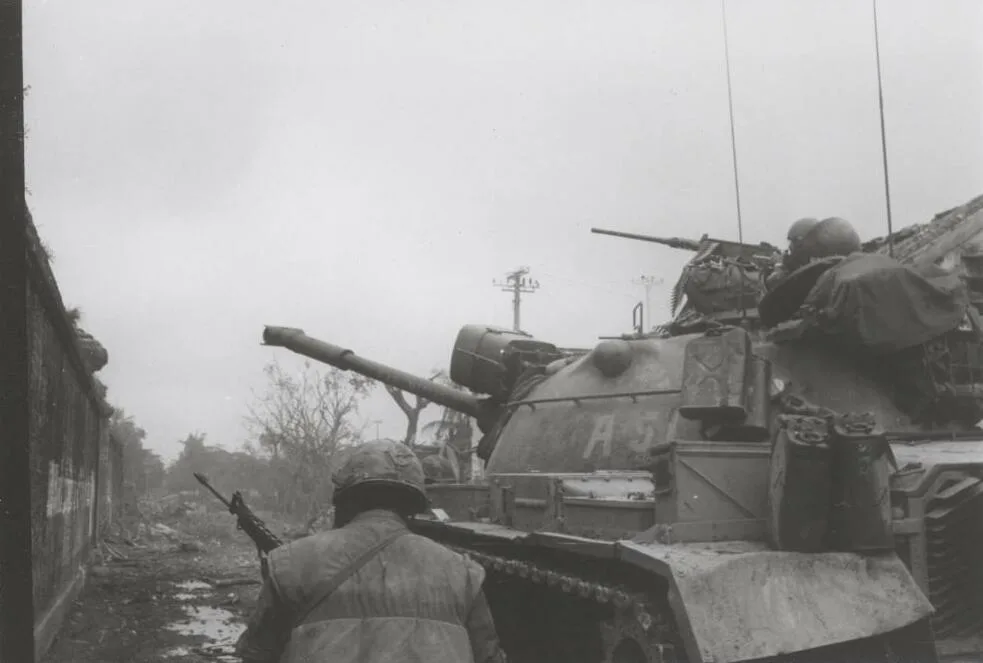
About a month of street fighting in Huế, which also saw the systematic killing of civilians by communist forces5.
Walter Cronkite calls the war a stalemate on air. The claim that this single broadcast decided matters is not supported by later scholarship.
General Wheeler's report reaches the President: a request for 206,000 more troops.
The request is reported. Needing two hundred thousand more men immediately after a victory did not fit the account of a victory24.
Johnson announces a curtailment of the bombing and, at the end, that he will not seek re-election. The war turned in the opposite direction to the fighting.
Khe Sanh: both sides got the main effort wrong
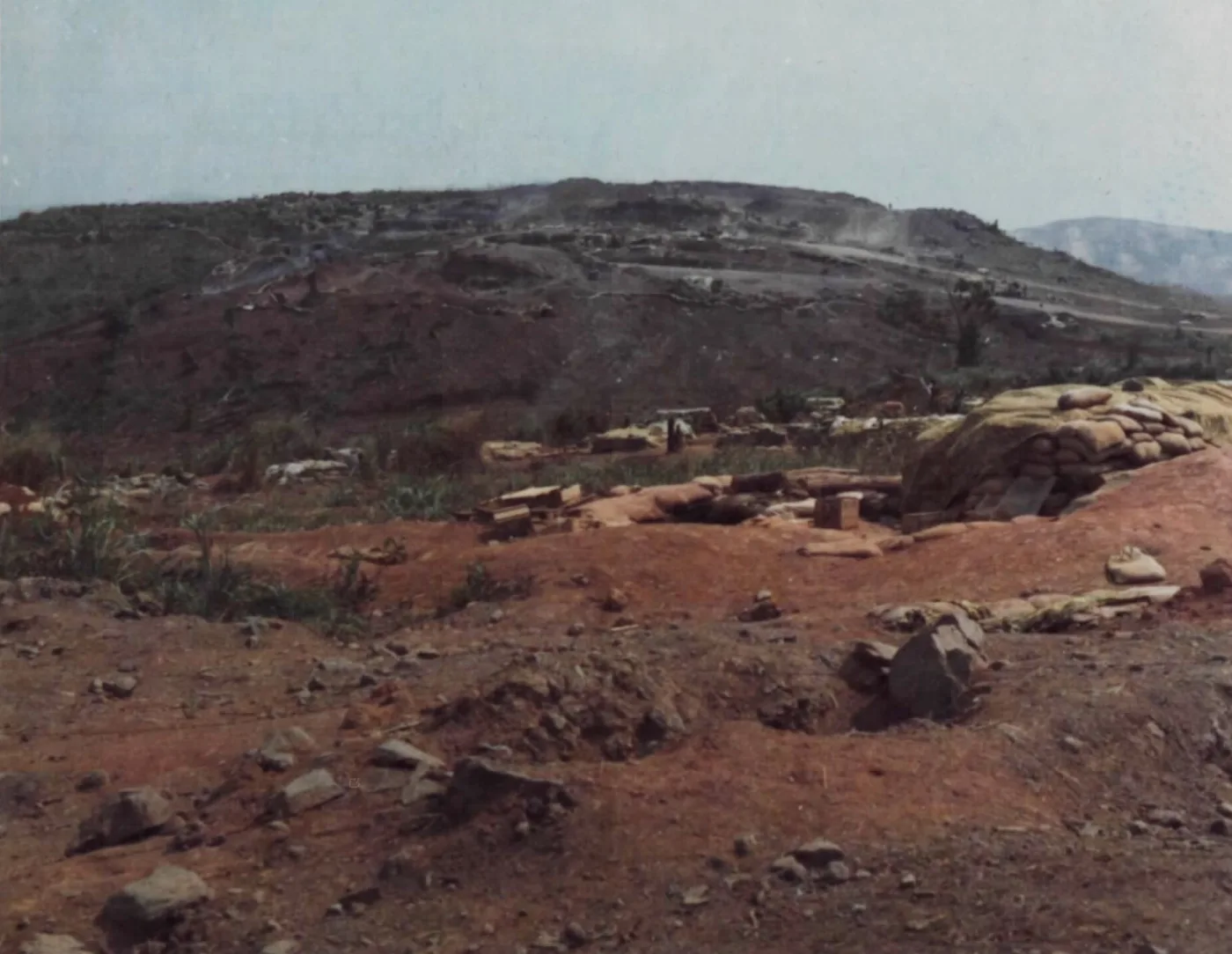
Nine days before the offensive, North Vietnamese forces surrounded the base at Khe Sanh in the far north-west. About 6,000 Marines held it, and 114,810 tons of bombs fell around it in the first three months. A repeat of Điện Biên Phủ, where the French had been surrounded and forced to surrender fourteen years earlier — that is how the Americans read it.
And not only the commander in the field. A terrain model of Khe Sanh was set up in the White House Situation Room, and the President asked the Joint Chiefs for a written assurance that there would be no second Điện Biên Phủ24. The judge's attention was collected on this one point.
And after the simultaneous attacks on the cities began, Westmoreland went on classifying them as a diversion from Khe Sanh. The same shape that the German command fell into at Normandy — with one difference. There, an enemy manufactured the error. Here it was made in-house.
To be honest about it, the question is still open. Whether Khe Sanh was a feint for the cities or a serious offensive in its own right is disputed among historians1, and Westmoreland maintained afterwards that Tet had been the diversion from Khe Sanh.
But the real point is not which answer is right. It is that answering it correctly would not have decided anything. Khe Sanh held. The attacks on the cities were thrown back. Get both battlefield questions right, and the verdict is still returned 13,000 km away.
What actually did the work
Make it happen where the judge can see it
The Saigon embassy was militarily meaningless and had reporters and a wire. The same size of fight is a different event depending on how far it travels.
Attack the account, not the position
A side that has said the end is in view is vulnerable to any scene that contradicts it. The target was the explanation.
Simultaneity is itself information
One town at a time is a local incident; a hundred at once is a single claim that this is happening everywhere. What reached the judge was not the scale but the simultaneity.
Do not use the enemy's indicator
On loss ratios it was a rout. The judge was not looking at loss ratios. "We are losing by his measure" is not always the conclusion.
The judge has to have a deadline
America had an election. This type works quickly only where the judge is on a clock. Against a judge with no deadline the same events take far longer.
The losing side was not stupid
Reading Westmoreland as incompetent does not fit the record. In a war with no front and no ground that stayed taken he built a measure of progress, sustained it, and threw the Tet attacks back in weeks. On his own yardstick he was winning.
What broke was not the judgement but the premise underneath it: that he would be scored on the yardstick he was using. The scoring was done in Washington, and Washington was not looking at loss ratios.
There is a deeper hole in attrition itself. Attrition is an instrument for measuring the limit of what the enemy will absorb. He measured that diligently. But the same clock is also counting your own limit. There was a ceiling on the human and political price America would pay, and nobody had put a number on that one. A two-way clock, read from one side only.
The same shape appears in another direction on Giáp's side. He was sceptical of a simultaneous urban uprising, and that caution was removed before the political decision was taken. A correct reading without the standing to carry it.
A correct reading losing to a structure now appears here for the tenth time: Kutuzov at Austerlitz, Paullus at Cannae, Gravina at Trafalgar, Paulus at Stalingrad, Boucicaut at Agincourt, Gérard at Waterloo, Pemberton at Vicksburg, Mitsunari at Sekigahara, Rundstedt at Normandy. This time the variant is "he was scoring the match with his own yardstick".
The case also demonstrates the type failing
Read this far and it looks as though Hanoi designed the verdict correctly. That is not what happened.
The judge the plan aimed at was the population of South Vietnam. Strike the cities together and they rise, and the regime falls from the inside: that is what "General Uprising" meant. That judge did not move. The verdict was actually returned by a body that appears nowhere in the plan — the American electorate13.
So this case contains the type's success and failure at once. The reading that the verdict comes from off the battlefield was right. The reading of who the judge was, was wrong. What made it land was not accuracy of aim but the fact that there was more than one judge off the field.
Which makes the failure conditions plain. Believing there is only one judge. And never checking that the judge you aimed at is the judge who actually scores.
Result: what the winning side lost
There is no room in this case for the reading that the winner got off cheaply.
The side that gained the strategic result paid with the near-destruction of the southern insurgency. The underground that came into the open to fight in the cities exposed itself and was rolled up. From 1968 the war was carried by North Vietnamese regulars, and the NLF barely survived as a political force into the post-war government13.
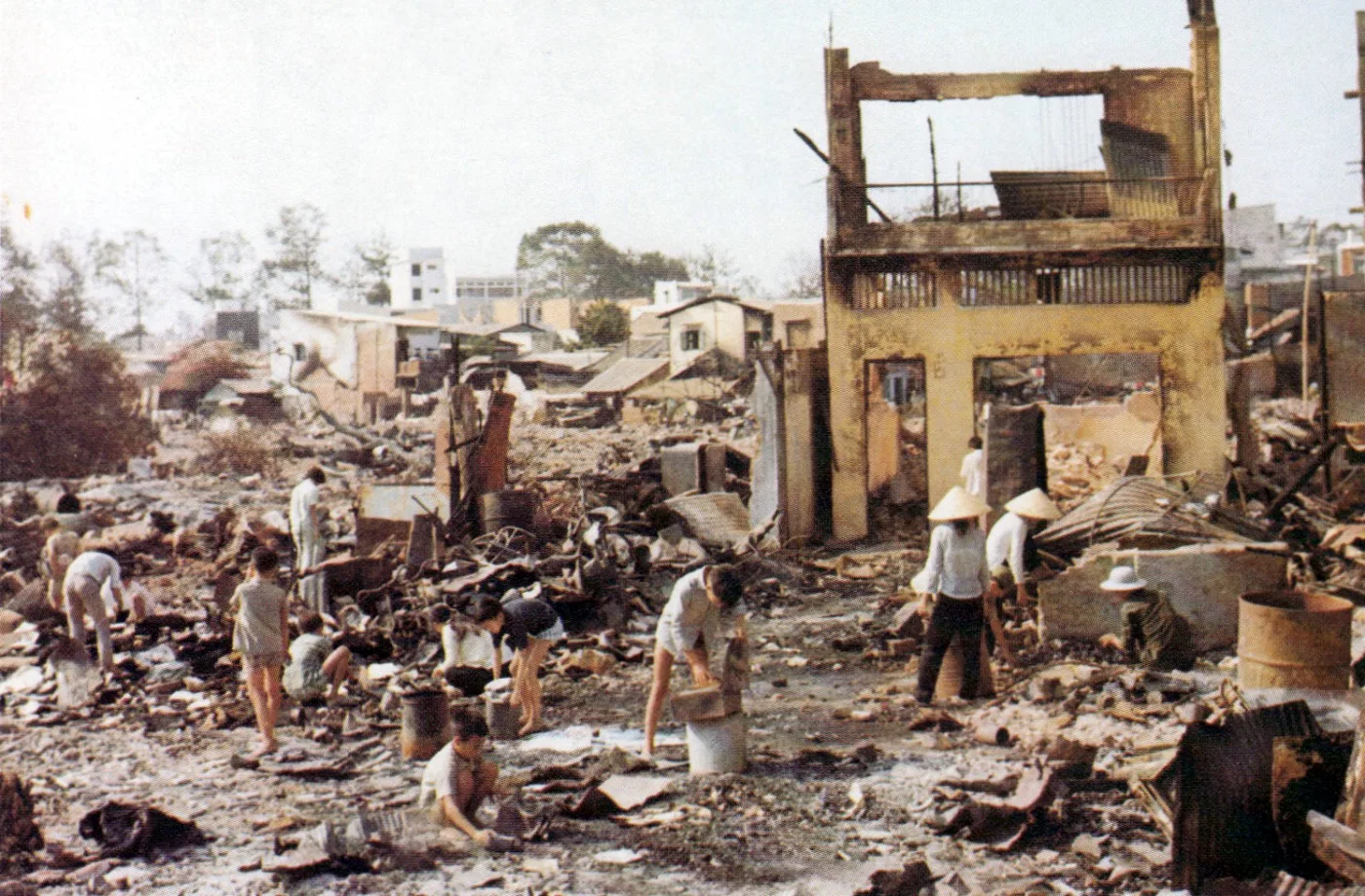
The civilian bill was heavy: 14,300 killed and 630,000 made homeless in the first phase alone. In Huế civilians were killed systematically by communist forces while the street fighting destroyed the city around them5. A way of fighting whose judge sits far away drops the bill where the judge is not.
The war ended seven years later. What was settled in these weeks was not who won, but that the premise "America keeps adding" was gone.
The story: "Tet was an American defeat"
The popular memory is that America lost at Tet. Militarily the side that lost was the side that attacked: no objective held, losses an order of magnitude apart, the southern organisation destroyed.
There is a mirror-image correction too — that the war was being won and was lost by the press. That does not stand either. The request for 206,000 men came from the army, not from a newsroom, and support had been falling before Tet.
Both stories make the same mistake. They assume winning can be measured on one scale. This battle had at least three scorecards — loss ratios, ground, and the patience of the American electorate. Only the third had the authority to decide whether the war continued.
In the site's taxonomy of story corrections this is the fifth kind. There is the inflated kind (the frozen pond at Austerlitz), the missing kind (Vicksburg), the compressed kind (Sekigahara) and the substituted kind (the rubber tanks at Normandy). Tet is the unit kind: the result is argued about while nobody has agreed what counts as winning.
Counterfactuals: remove one element at a time
A: no attack on the embassy. Militarily nothing changes. But the event that happened closest to the judge disappears. In this case that is plausibly the single most effective point of the whole offensive.
B: no request for reinforcements. The account of having thrown the attack back at least stays internally consistent. Asking for more men days after declaring victory is what broke it.
C: no American election in 1968. The judge loses his deadline. The shift in opinion is the same, but the speed at which it converts into policy falls. This type borrows the judge's clock.
These are unverifiable thought experiments, not claims about what happened. Removing one element is how you see what it weighed.
What carries over: on other ground
Write down who is scoring, first
Before starting, name the person or body that will rule on success. Leave that blank and doing the work well but going unrecognised is the ordinary outcome, not the unlucky one.
There is rarely only one scorecard
The numbers, the felt experience of the people involved, the impression of whoever signs off. When there are several, establish which one carries the authority.
Do not let the measurable become the aim
Indicators are necessary for management, but forget that they only stand in for the aim and you win on the indicator while losing on the aim.
Your own account binds you
Every "on track" you issue makes a contradictory request harder later. Explanations are an asset that spends future options.
Reach changes the size of an event
The same-sized thing is treated differently depending on whether it happened inside the decision-maker's field of view. This is unfair, and it is better to design around it than to resent it.
In closing: somebody is deciding who won
Read Tet as "the battle America lost" and you miss the centre. On the battlefield the attacker lost. The direction of the war changed anyway, because the authority to rule on winning was not on the battlefield.
And Hanoi could not name that authority either. The judge it aimed at did not move; a judge it had not aimed at did. The value of this case is not that it is a clean example of the type but that it shows, on the same page, what happens when you get the type wrong.
That makes eleven. Austerlitz — space; Cannae — momentum; Midway — time; Trafalgar — command; Stalingrad — fixation; Agincourt — frontage; Waterloo — junction; Vicksburg — supply; Sekigahara — defection; Normandy — deception. Tet shows a design of the verdict: who won is usually decided by somebody who was not fighting.
One last thing. Unlike the other ten, this type asks a question back of whoever uses it. Reaching the judge also means making the bill fall where the judge is not. The people standing in front of the rubble in Cholon appear on none of this battle's scorecards.

Frequently asked questions
Sources
- James H. Willbanks, The Tet Offensive: A Concise History, Columbia University Press (2007)
- Don Oberdorfer, Tet! The Turning Point in the Vietnam War, Johns Hopkins University Press (2001)
- Lien-Hang T. Nguyen, Hanoi's War: An International History of the War for Peace in Vietnam, University of North Carolina Press (2012)
- Stanley Karnow, Vietnam: A History, Viking (1983)
- Mark Bowden, Huế 1968: A Turning Point of the American War in Vietnam, Atlantic Monthly Press (2017)
Related cases — read in comparison