Person
Lyndon B. Johnson
President of the United States
Life: 1908–1973
The president who returned the verdict in this case and was being judged while he did it.
The president who built the Great Society at home while fighting Vietnam abroad and could step off neither. After Tet he was handed a request for another two hundred thousand men: granting it would break the account in which the war was being won, refusing it would mean overruling his commanders. On 31 March 1968 he announced a curtailment of the bombing and, at the end of the speech, that he would not seek re-election. He delivered the verdict in this case, and was himself being scored.
Strategic signature — hold two fronts at once
Johnson was building the Great Society at home while fighting Vietnam abroad. He could not step off either. Escalating cost him the budget and the coalition for domestic reform; withdrawing made him the president who lost to communism.
After Tet he was handed a request for 206,000 more men. Grant it and the account in which he was winning collapses; refuse it and he has overruled his commanders. On 31 March he announced a curtailment of the bombing — and, at the end of the speech, that he would not seek re-election.
Recurring patterns
Pursue two aims at once
He tried to hold domestic reform and a foreign war together. Failure in one drew directly on the resources of the other.
Be bound by your own account
Having explained that the war was being won, he could not reconcile that with a request for reinforcements. Past explanations reduce future options.
Be the judge and be judged
He returned the verdict on the operation and was himself being scored by an electorate. The chain of judgement does not stop at one link.
Strengths and weaknesses
Formidable at domestic political bargaining.
That strength only works when the other party is domestic. The enemy in a war does not vote.
Was able, in the end, to take himself out.
By then the position of deciding how the war ended had already left his hands.
Connection to Tet
What decided this case was nobody on the battlefield. It was this man 13,000 km away, and the electorate behind him. The side that launched the offensive had not been aiming at him.
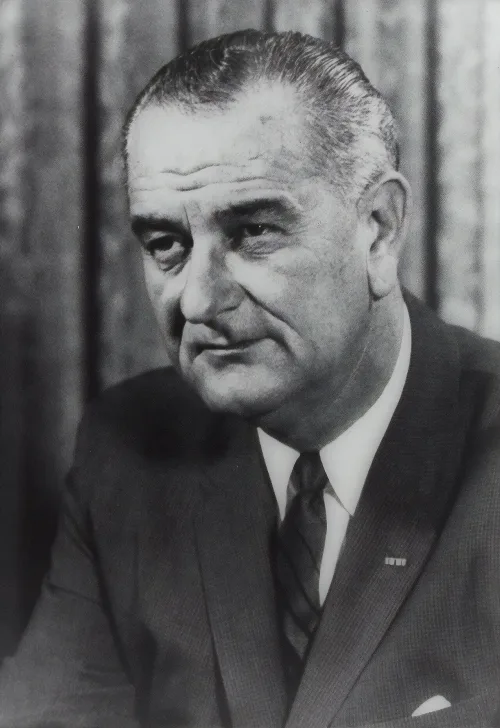
Lyndon B. Johnson, official White House portrait, 1964. Public Domain, via Wikimedia Commons
Appears in