Stalingrad — the ring that closed at the seams
From August 1942 to February 1943, a battle of 163 days. What gets told is the horror of the street fighting. But the decision did not happen inside the city. The street fighting was an investment in holding Germany's best troops where their advantages could not be used, and the ring closed without the city being attacked at all — at the flanks held by allied armies.
- The decision fell outside the city, not in it. The counter-offensive never attacked the city: it struck the flanks held by worse-equipped allied armies and closed the ring in four days.
- The street fighting changed meaning partway through. From September the Soviets deliberately rationed reinforcement into the city and banked the surplus for the flanks — the attrition was not evidence of defeat but the price of pinning.
- The Germans knew the flanks were weak. What broke was not the tactics but the intelligence judgment that no Soviet reserves remained — and on top of it, the name of the city kept driving up the price of leaving.
Pattern: a design of attachment →
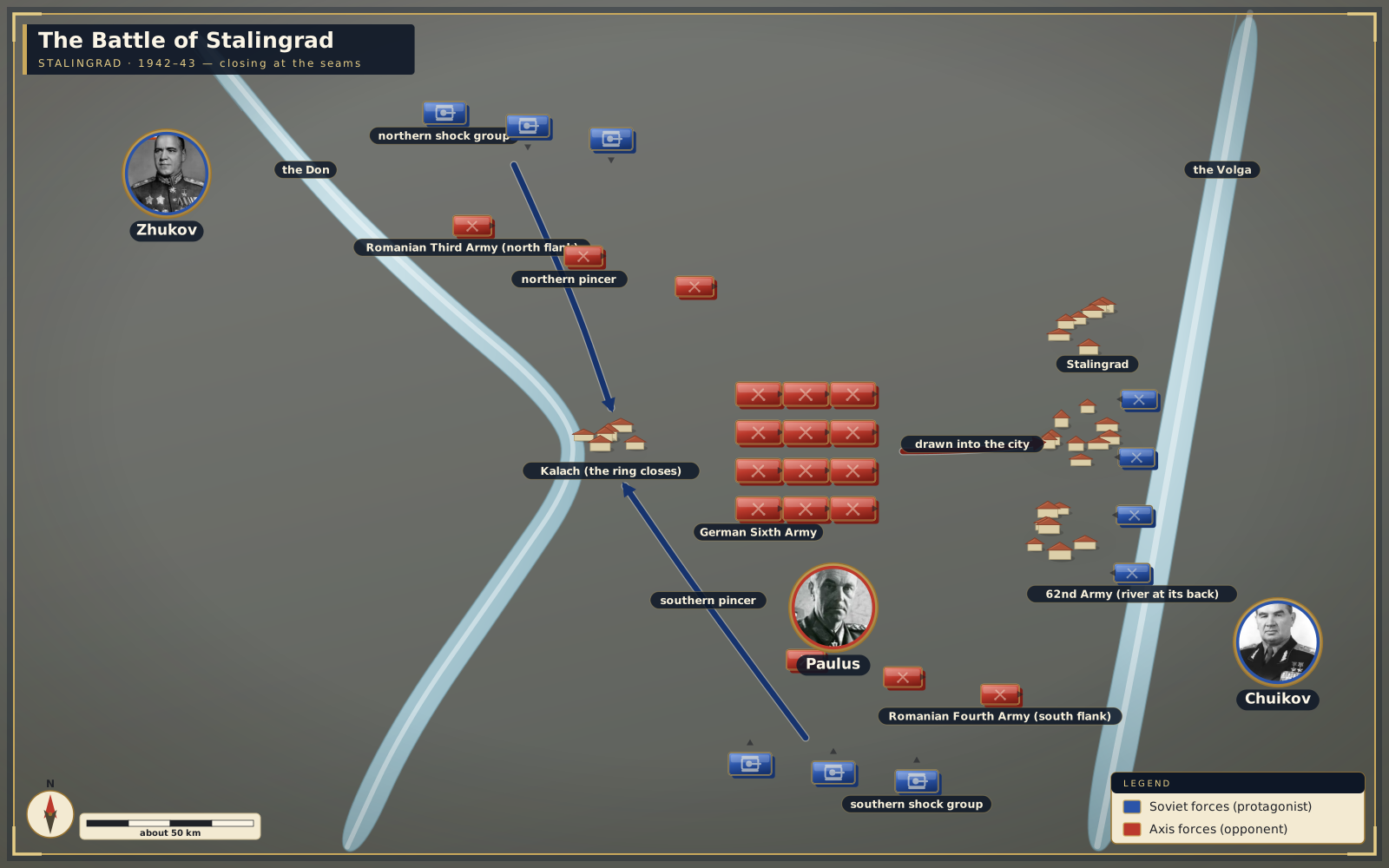
The protagonist is shown in blue, the opponent in red.
- Date
- August 23, 1942
- Place
- Stalingrad (now Volgograd, southern Russia)
- Key figures
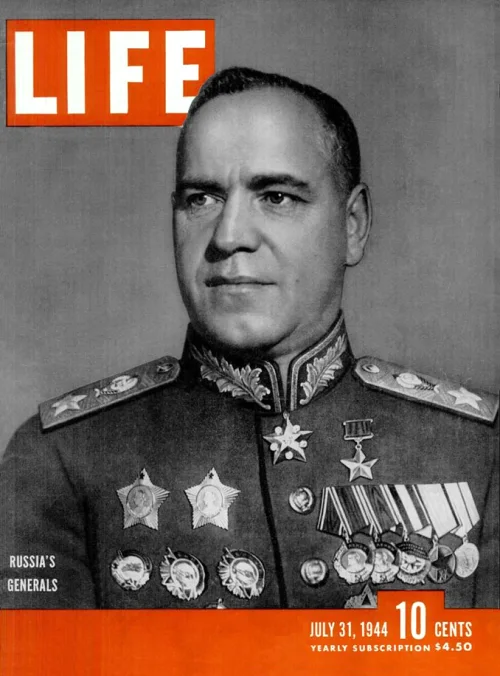
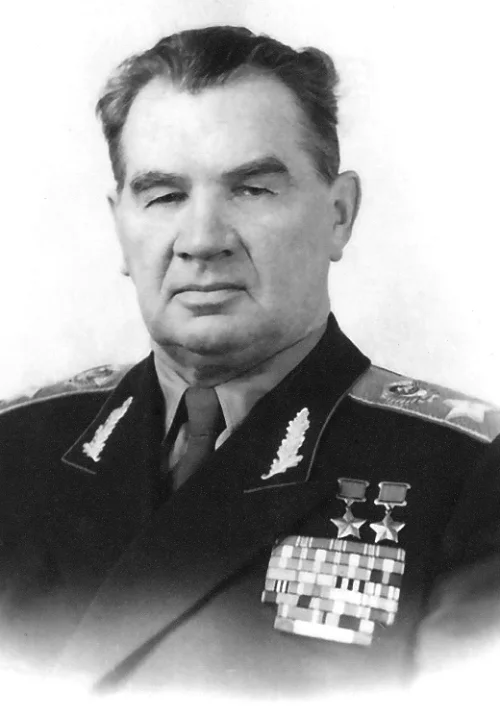
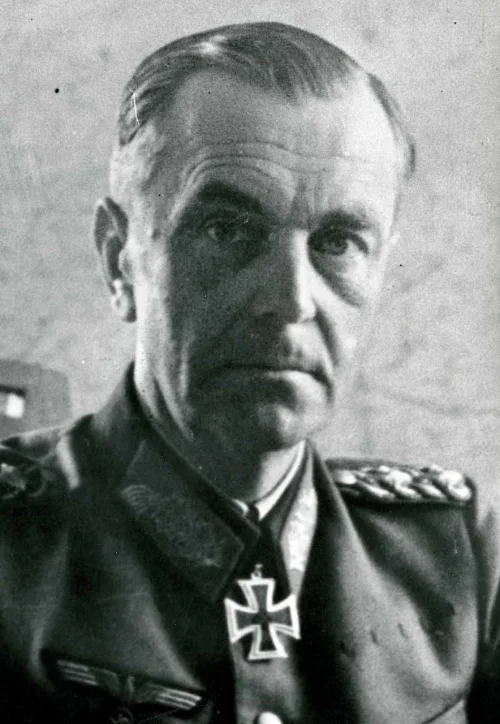
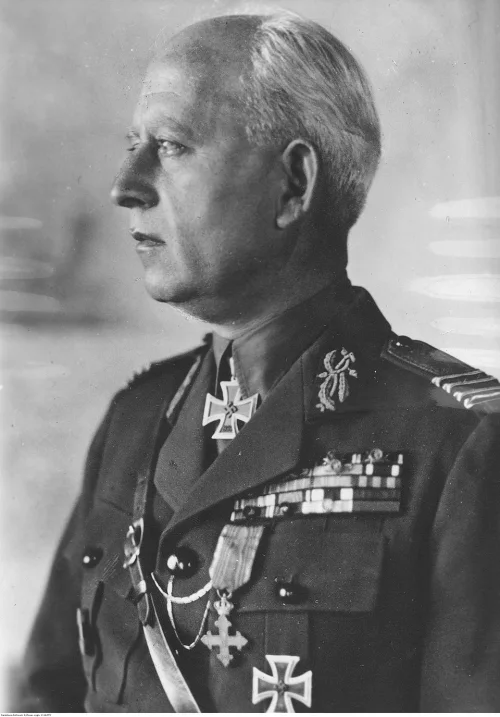
- 4
- Result
- Decisive Soviet victory (the German Sixth Army surrendered)
Contents
- Background — how a city's name became the objective
- Where the numbers changed hands
- Outcomes compared
- Deployment — a strip with a river behind it, and a flank stretched thin
- Thesis — the street fighting was not the decision but an investment in pinning
- Two layers — the surface fight and the design beneath
- The course — August 1942 to February 1943
- What actually decided it
- Why the losers were not fools
- Aftermath — the front moved, and the war went on
- The story — a photograph of a fountain, and "General Winter"
- Counterfactuals — remove one factor at a time
- What transfers — in other arenas
- In closing — what pins someone is usually inside them
Background — how a city's name became the objective
The German offensive of summer 1942 was aimed at the oilfields of southern Russia. Stalingrad was a waypoint that covered the flank of that drive, and cutting Volga traffic had value — but it was not the oil. At the outset the city was a means, not an end.14
Then, from the moment German troops reached the streets in late August and a massive air raid turned the place into rubble, the name itself began to matter. Taking a city named after the Soviet leader carried propaganda value; failing to take it carried propaganda cost. The moment the objective changed from "the road to the oil" into "a signboard you cannot climb down from", the character of the operation changed.23
Which raises the question. Why did the German army keep its best troops, for months, in the one place where German advantages counted for least? The structure of the battle is compressed into that.
The answer sits above tactics. The losses already spent, and the symbolism the name had acquired, drove up the price of withdrawal. Organisations lean toward the feeling that stopping now would waste everything paid so far. Give your opponent that feeling and he pins himself in place for you34.
Where the numbers changed hands
Look only at the fighting inside the city and the two sides seem evenly matched. But the counter-offensive that opened on 19 November committed about 1,000,000–1,100,000 men, and the encircled Axis force numbered about 250,000–300,00012. The numbers had gathered wherever the side that chose the ground wanted them.
Outcomes compared
| Soviet (protagonist) | Axis (opponent) | |
|---|---|---|
| Length of the battle | 163 days | 163 days |
| Encircled | — | c. 250,000–300,000 |
| Surrendered | — | c. 91,000 |
| Came home after the war | — | c. 5,000–6,000 |
| Casualties (whole operation) | c. 1,100,000 | — |
Figures vary by source. What matters here is not the asymmetry but the total. The winning side's casualties also ran to about 1,100,000. This is not a case about winning cheaply by being clever12.
Deployment — a strip with a river behind it, and a flank stretched thin
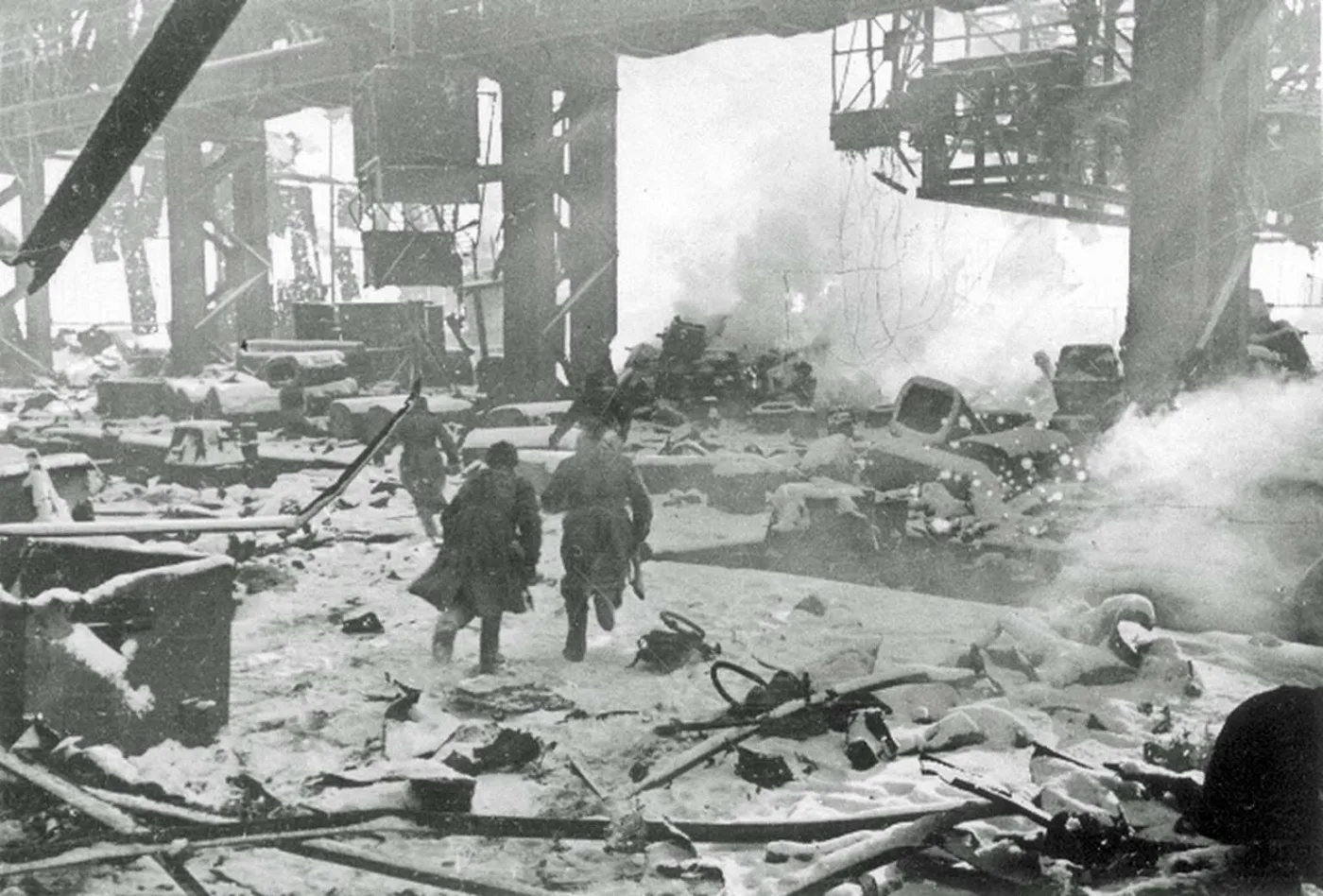
The battlefield has two parts. One is the city: an industrial strip running north–south along the west bank of the Volga, where the Soviet 62nd Army held a band with the river at its back — at its narrowest about 200 metres from the water2.
The other is the flank stretching away outside the city. Reaching the Volga had drawn the German front out long, and its northern and southern shoulders were entrusted to 4 allied armies — Romanian, Italian and Hungarian. Those formations were short of anti-tank weapons and thin on the ground124.
The German command was not unaware of this. The chief of staff, Zeitzler, repeatedly pointed to the danger of the flanks. But there was no reserve to fix it with — and there was an intelligence judgment that the Soviet Union had no large reserves left24. The risk was seen, and priced as unlikely.
That is the point of the deployment. The strongest troops were pressed into the narrowest place and the weakest were given the widest. Force was distributed according to the symbolism of the objective rather than the distribution of threat.
Thesis — the street fighting was not the decision but an investment in pinning
The battle is usually explained by heroic resistance in the streets. The resistance was ferocious — and it does not explain why the Sixth Army was encircled. However long you hold inside a city, the force that encircles it does not come out of that city.
The decision happened outside. On 19 November the Soviets attacked, without touching the city at all, the northern and southern shoulders — the fronts held by Romanian armies. The breakthroughs were fast: 4 days later the ring closed at Kalach to the west, and the Germans in the city were left inside it12.
So why was the fight for the city needed? To keep the best German troops fixed where their advantages could not be used. In rubble, tanks cannot pass, air support comes too close to friendly troops, artillery cannot identify a target. And while those troops are in the city, they are not on the flank.
What matters is that this was not a trap from the start. The defence through August and September was desperate. The concept appeared in mid-September, when Zhukov and Vasilevsky put a counter-offensive to Stalin, and from then on reinforcement into the city was deliberately rationed while the surplus was banked for the blow on the flanks12. The street fighting changed meaning partway through: from something to be defended into an investment in holding the enemy still.
And on the other side, the losses already spent and the name of the city kept driving up the price of leaving. Half the nails were driven by the Soviets and half by the Germans' own inability to let go. When your opponent is holding an objective he cannot climb down from, you do not have to pay to keep him there.
The street fighting was not the place where it was decided but an investment in keeping the enemy away from that place. The decision fell at a seam he was not holding himself.
Thesis
Two layers — the surface fight and the design beneath
Fighting over a single building went on for weeks inside the city.
The Soviets did not send the 62nd Army the reinforcements it needed.
The 19 November attack went at the Romanian fronts, not the city.
The course — August 1942 to February 1943
German troops reach the Volga and a massive air raid turns the city to rubble. From this day the battle runs 163 days2.
Street fighting building by building and factory by factory. The 62nd Army is pressed into a band with the river behind it — at the narrowest about 200 metres12.
Zhukov and Vasilevsky put to Stalin a plan to hold inside the city and counter-attack on the flanks outside. From here reinforcement into the city is deliberately rationed12.
The counter-offensive (Operation Uranus) opens. The northern shock group breaks through the Romanian Third Army1.
The southern shock group breaks through the Romanian Fourth Army. Two pincers head west1.
The arms meet at Kalach and the ring closes — 4 days from the start. About 250,000–300,000 men are inside it12.
Paulus asks for permission to break out and is refused. He is told the pocket can be sustained by air24.
A relief operation. The force advancing from the south-west halts about 48 km from the pocket. The Sixth Army is not permitted to come out to meet it2.
What actually decided it
Strike the seam
The main effort went not at the enemy's best troops but at the junction held by worse-equipped allied armies. With the same forces, changing only where you land changes the speed of the breakthrough12.
Do not reinforce the painful place
Send more into the city and it eases; the pieces for the outside blow disappear. Decide where the decision falls, and send resources nowhere else1.
Choose a range where the enemy's strength cannot reach
Cling to him in rubble and air support and artillery go unusable. A gap in equipment neutralised by the distance at which you fight2.
Why the losers were not fools
Pause here. The German command knew the flanks were weak. The chief of staff pointed at the danger repeatedly, and Dumitrescu of the Romanian Third Army reported in concrete terms that he lacked anti-tank weapons and that his frontage was too long, and asked to be strengthened24. The information was travelling upward.
The deployment did not change, for two reasons. First, no reserve actually existed to fix it with. Second, there was the judgment that the Soviet Union had no large reserves left: German Foreign Armies East badly underestimated Soviet mobilisation and the speed at which reserves could be regenerated24. The risk was recognised, and then priced as improbable.
This is not quite the story of a warning ignored. The warning was received and discounted as a question of probability — and the basis of the discount was a wrong estimate of what the opponent could do. The premise broke not in the tactics but a layer earlier, in the intelligence.
Paulus stands in the same shape. As the ring closed he asked for permission to break out and was refused; he was told from above that the pocket could be sustained by air, and when that premise collapsed the order did not change. He held the correct judgment and the option of retreat had been removed from him institutionally. Kutuzov at Austerlitz, Paullus at Cannae, Gravina at Trafalgar — the same shape repeats here.
Which is why this defeat is not someone else's problem. An organisation that knows its weak point, has received the report, and still does not change the deployment is not rare. The reason is rarely indifference; it is usually "there is no reserve" combined with "it probably will not happen".
Aftermath — the front moved, and the war went on
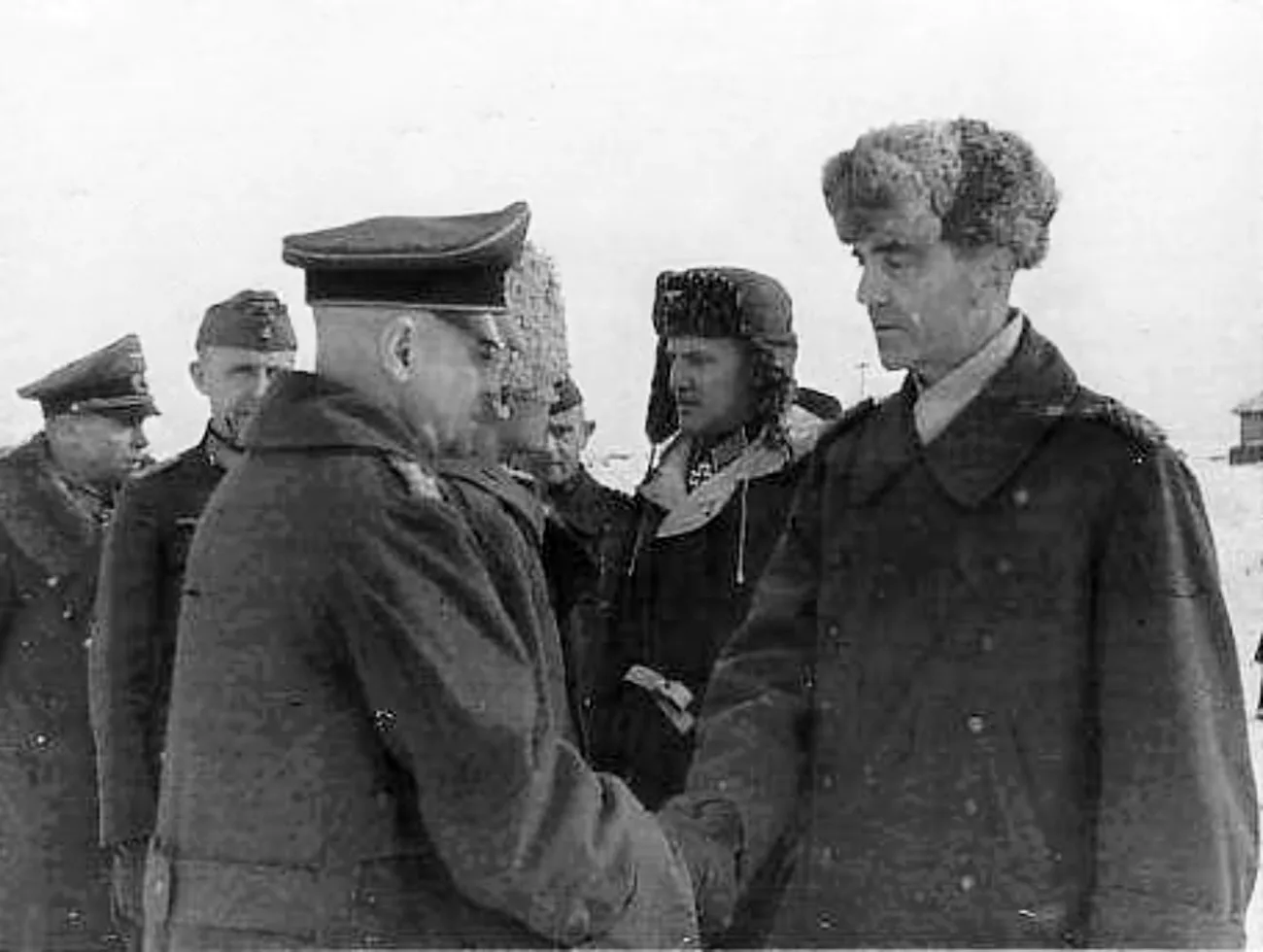
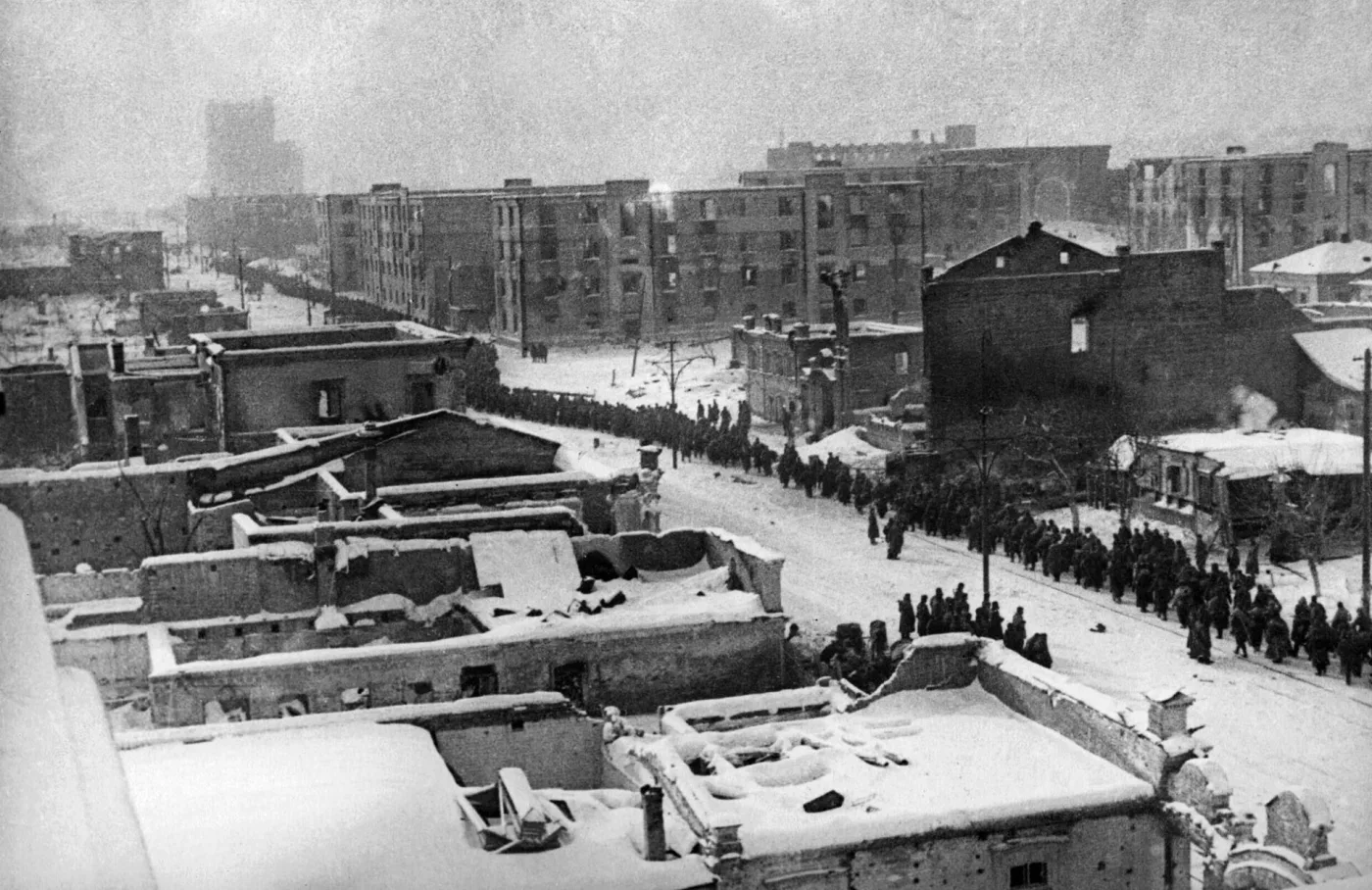
About 91,000 men went into captivity and roughly 5,000–6,000 came home after the war2. An army was not merely lost; the experience and the organisation that composed it were lost with it.
The result shifted the initiative on the Eastern Front. It did not end the war. The Germans counter-attacked successfully at Kharkov within weeks and mounted a major offensive at Kursk in July. More than two years of war remained4.
Here what Cannae and Trafalgar showed repeats for a third time. A decisive battle is decisive only inside its own arena. What Stalingrad changed was the initiative on a front; what settled the war was the continuing difference in mobilisation and production.
And the winner's losses must be looked at squarely: across the whole operation Soviet casualties ran to about 1,100,0001. This is not a case in which cleverness bought cheapness. The design decided whether it could be won, not whether it would be paid for lightly.
The story — a photograph of a fountain, and "General Winter"
Two stories here are worth checking.
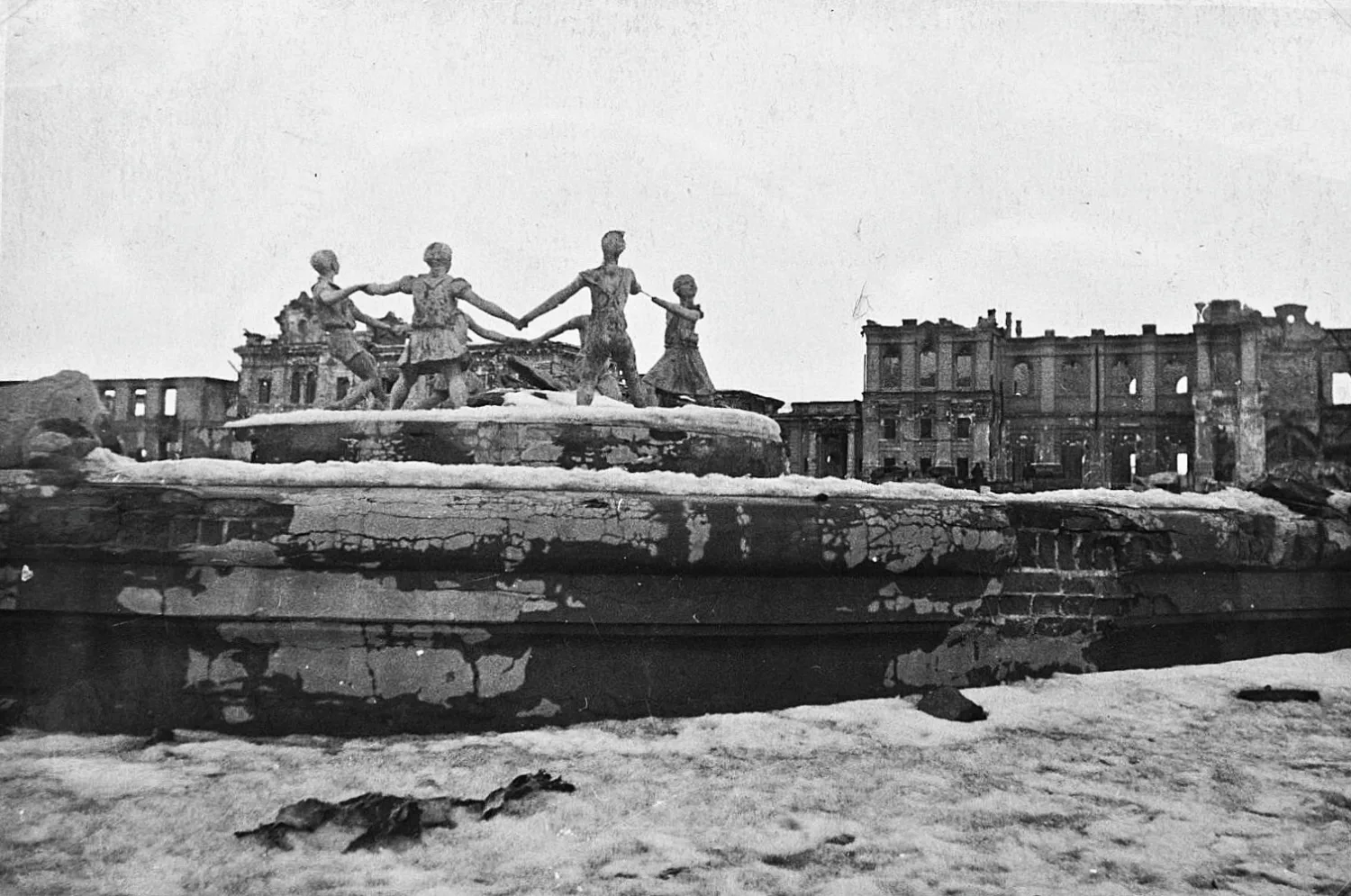
The first is the symbol. The photograph of the "Children's Round Dance" fountain at the head of this article has been reproduced endlessly as the emblem of the ruins. But what it carries is the horror of the destruction, not the reason the Sixth Army was encircled. The irony is that one of the things which tied the Germans to the city was precisely its symbolism. The symbol that pinned the enemy has become the symbol of the battle itself.
The second is the explanation that "General Winter" did it. The sequence does not work. The ring closed on 23 November, and what produced the catastrophe was not the temperature but an over-stretched flank, the absence of any reserve behind it, and an airlift promise that could not be kept. Winter made the death of the encircled army slower and more terrible; it did not create the encirclement. And both armies were fighting in the same winter24.
The correction matters not as a point about weather. "The climate decided it" pushes the things that actually decided it — the allocation of force, the intelligence judgment, and an objective nobody could climb down from — out of view. The "fateful five minutes" at Midway and "Trafalgar stopped the invasion" perform the same function; here the weather does. File a defeat under the environment and there is nothing left in it to learn.
Counterfactuals — remove one factor at a time
A: if German divisions had held the flanks. The breakthroughs slow and the ring takes longer to close. The Sixth Army gains time to break out, and the encirclement either fails or is much smaller. The quality of the seam set the speed of the whole operation.
B: if the Soviets had properly reinforced the city. The street fighting eases and the 62nd Army loses fewer men — and the force available outside shrinks, and with it the scale of the counter-offensive. The suffering inside and the decision outside were competing for the same resources.
C: if a breakout had been authorised immediately after the ring closed. The Sixth Army probably loses most of its equipment and saves a substantial part of its men. But the city is abandoned and the propaganda cost is large. What made it impossible to climb down was not military but everything outside the military.
Each is an untestable thought experiment, not a claim about what was. Only by removing a factor does its weight become visible.
What transfers — in other arenas
Competition: look at the coalition's seams, not the main force
Partnerships, subcontractors, an acquired division — wherever responsibility and resources meet, the line runs thin. Why this example: the breakthrough came at the allies' front, not the strongest one.
Organisations: decide where you will decide before you reinforce the pain
Throw everything at what is burning and nothing is left to settle the matter with. Why this example: rationing reinforcement into the city is what made the outside blow possible.
Negotiation and business: find what the other side cannot climb down from
A publicly announced target, a named programme, a project already heavily invested in — people do not leave those easily. Why this example: half the nails were driven by the enemy's own attachment.
Your own side: lower the price of retreat in advance
Set the criteria for stopping before "we have come this far" sets the decision for you. Why this example: the most expensive thing in this case was the inability to stop.
Promises: do not promise support you cannot deliver
A promise that cannot be kept is not merely useless; it increases losses by delaying the other party's decision. Why this example: the airlift promise postponed the breakout.
In closing — what pins someone is usually inside them
Summarise Stalingrad as a heroic tale of street fighting and you miss the core. The resistance inside the city was ferocious, and it was not the place where the matter was settled. The street fighting was an investment in holding the enemy's best troops where their advantages did not work, and the decision fell at a seam he was not holding himself.
And only half the nails were driven by the Soviets. The other half were the enemy's own inability to let go, produced by the losses already spent and the name of the city. While an opponent is holding an objective he cannot abandon, he pays the cost of staying there.
What this case adds to the four already here is a fifth type. Austerlitz was a design of space, Cannae a design of momentum, Midway a design of time, Trafalgar a design of command. Stalingrad is a design of attachment — make a place the enemy cannot leave, let his strength be drawn into it, and decide somewhere else.
One last thing. That the design worked and that it was cheap are different claims. The winner's casualties also ran to about 1,100,000. Reading structure is not a promise that being clever spares you pain. It is a way of seeing where the pain occurred and what that pain was buying.
Frequently asked questions
Sources
- David M. Glantz, Jonathan M. House, Armageddon in Stalingrad: September–November 1942 (The Stalingrad Trilogy, Vol. 2), University Press of Kansas (2009)
- Antony Beevor, Stalingrad: The Fateful Siege 1942–1943, Viking (1998)
- Jochen Hellbeck, Stalingrad: The City that Defeated the Third Reich, PublicAffairs (2015)
- Richard Overy, Russia's War: A History of the Soviet War Effort 1941–1945, Allen Lane (1997)
Related cases — read in comparison