Person
Georgy Zhukov
Deputy Supreme Commander (planner of the counter-offensive)
Life: 1896–1974
The commander who could treat the violent fight in front of him as the place that holds the enemy rather than the place that decides — and put the decision outside the city.
Marshal of the Soviet Union. In mid-September 1942 he and Vasilevsky put to Stalin a plan to keep grinding inside the city while counter-attacking far outside it, on the flanks. For it to work, reinforcement into the city had to be deliberately rationed — and he carried out the decision not to feed reserves into the place that was suffering. The offensive launched on 19 November encircled an army inside a city without ever attacking the city.
Strategic signature — look at the flanks, not the city
What marks Zhukov is that he could treat the violent fighting in front of him as the place that holds the enemy, not the place that decides. In mid-September he and Vasilevsky put to Stalin a plan to keep grinding inside the city while counter-attacking far outside it, on the flanks12.
For that plan to work, reinforcements into the city had to be deliberately rationed. Send more and the street fighting eases — and the pieces needed for the outside blow disappear. Declining to feed resources into the place that is suffering runs against every instinct. He did it anyway.
Recurring patterns
Do not reinforce the painful place
Spend the reserve to stop the pain in front of you and there is no reserve left to decide with. Settle in advance where the decision will fall.
Aim at the seam
Not the enemy's best troops but the junction held by allied armies with worse equipment and lower morale. Avoiding strength is not timidity; it is design.
Hide the preparation
Forces concentrated at night, radios silent. Do not disturb the enemy's belief that there are no reserves left.
Book attrition as investment
The losses in the city were not evidence of defeat but the price of pinning the enemy. The price, however, was enormous.
Strengths and weaknesses
Can separate the fight in front of him from the place where the matter is settled.
That separation means accepting, knowingly, the losses of the troops fighting inside the city. As a calculation in lives it is heavy.
Can prepare without disturbing the enemy's assumption that the reserves are gone.
Secrecy also costs coordination. If the preparation leaks, the whole concept is void — it has the character of a single throw.
Where the signature showed — Stalingrad
The counter-offensive that began on 19 November encircled an army inside a city without ever attacking the city. The matter was settled not in the streets but in a ring that closed to the west 4 days later.
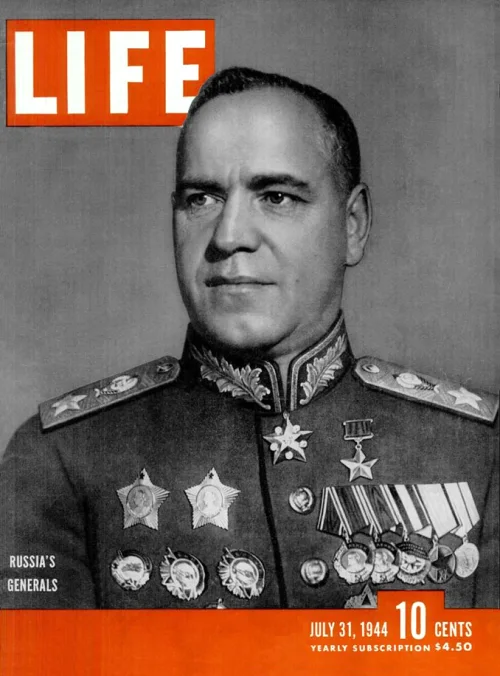
Georgy Zhukov. Photograph by Grigory Vayl, 1944. Public Domain, via Wikimedia Commons
Appears in