Waterloo — the battle that was decided the day before
18 June 1815. What gets told is a close-run day. But the armies on the field that morning were about equal, and in quality the French were if anything the better. The difference was made by two armies that were not there — one walked eighteen kilometres and arrived, the other walked the same distance the other way. Where each of them went had been settled the day before.
- The battle was decided not by the tactics of 18 June but by the Prussians falling back on the 17th to Wavre — within reach of Wellington — instead of east onto their own supply line.
- Napoleon sent a third of his army east on the rational assumption that a beaten army returns to its supply. The order told Grouchy to follow; it never told him what the following was for.
- "A near-run thing" only holds from inside the battlefield. The Prussians were closing by four in the afternoon, and from that hour the French reserve was already being cut into.
Pattern: a design of convergence →
The protagonist is shown in blue, the opponent in red.
- Date
- June 18, 1815
- Place
- Near Waterloo, Walloon Brabant, present-day Belgium
- Key figures
- 4
- Result
- Decisive Anglo-allied and Prussian victory
Contents
- Background — this campaign was about a junction from the first day
- On the field: near enough equal
- The armies that were there, and the ones that were not
- Deployment — a reverse slope, and two second armies
- Thesis — decided not on 18 June but on the 17th
- Two layers — the surface fight and the design beneath
- The course — 16 to 18 June 1815
- What actually decided it
- Why the losers were not fools
- Aftermath — a decisive defeat is also decisive only inside its arena
- The story — "a near-run thing"
- Counterfactuals — remove one factor at a time
- What transfers — in other arenas
- In closing — the troops that decide are the ones who are not there
Background — this campaign was about a junction from the first day
In March 1815 Napoleon left Elba and returned to Paris. The powers declared him an outlaw at once and set four armies in motion. The large Austrian and Russian forces were gathering towards the Rhine but were weeks away. Only two were already in Belgium — Wellington's Anglo-allied army and Blücher's Prussians13.
Napoleon's only route to a win was clear. Get between the two before they join, and beat them separately. On 16 June he did exactly that: he broke the Prussians at Ligny while Ney pinned Wellington at Quatre Bras. So far, to plan.
Which sets the question. Why did the side that succeeded in getting between them lose, two days later, to the two armies joined?
The answer is not on the field of 18 June. It is on the 17th. Which way the beaten Prussians fell back — and which way Napoleon assumed they had. The outcome of this battle was settled before it was fought.
On the field: near enough equal
In the morning the two armies were about equal, and in quality the French were if anything the better. What made the difference is two numbers that are not in this bar — the roughly 48,000 Prussians who arrived by evening, and the roughly 30,000–33,000 under Grouchy who never came12.
The armies that were there, and the ones that were not
| Allied side (protagonist) | French side (opponent) | |
|---|---|---|
| On the field in the morning | c. 67,000–73,000 | c. 69,000–74,000 |
| Second army arriving by evening | c. 48,000 (Prussians) | 0 (Grouchy had gone east) |
| Strength 18 km from the field | — | c. 30,000–33,000 |
| Killed and wounded | c. 17,000 + c. 7,000 Prussian | c. 24,000–26,000 |
| Prisoners | — | c. 6,000–7,000 |
The figures move by source. The row that matters is the third one. Both sides had a second army. One arrived and one did not123.
Deployment — a reverse slope, and two second armies
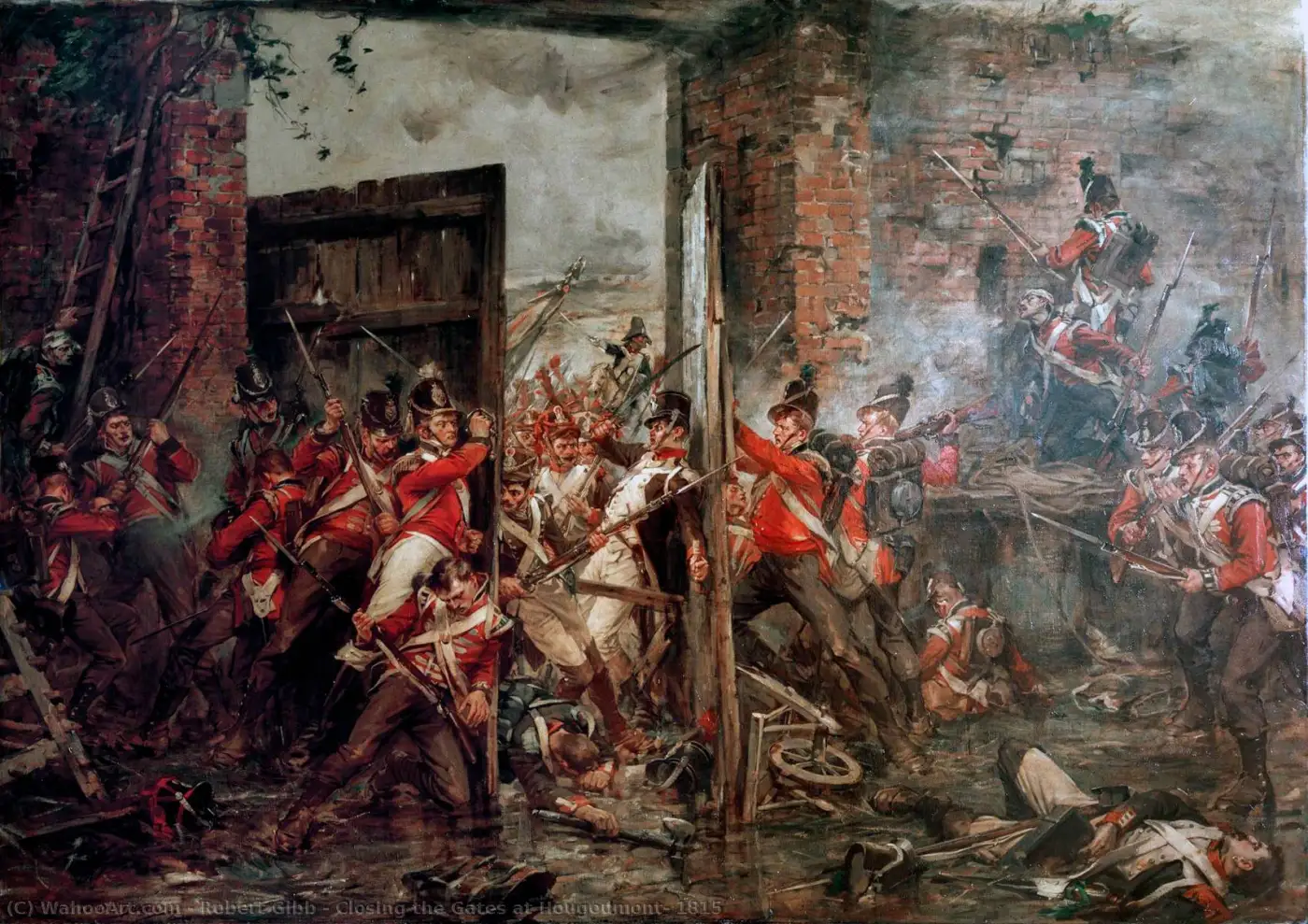
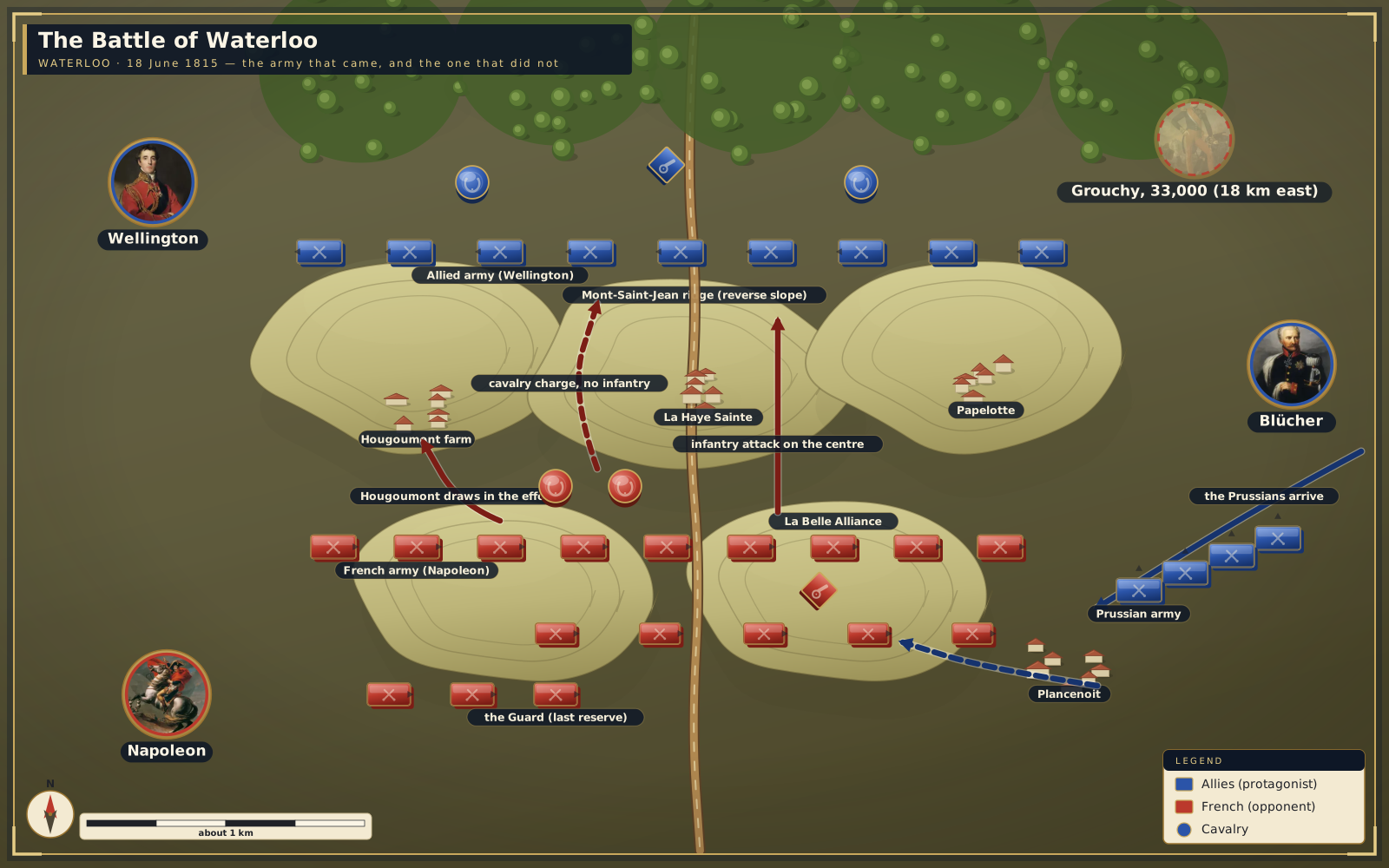
Wellington drew up on the ridge of Mont-Saint-Jean, a front of some 4 km, with much of his infantry pulled back behind the crest, out of sight of French guns and observers. Three farms — Hougoumont, La Haye Sainte, Papelotte — anchored the front24.
But the substance of the position is not the terrain. Behind him lay the forest of Soignes and a thin line of retreat if he broke. Fighting alone, there is no reason to choose this ground. That he decided to stand here on the evening of the 17th, having secured a Prussian assurance of support, is the premise of the whole deployment13.
The French formed up on the ridge of La Belle Alliance to the south. Napoleon's deployment also rests on a premise: that the Prussians will not come. On the 17th he handed Grouchy some 30,000–33,000 men and sent him after them. But the pursuit had not established where the enemy had gone, and the order did not say what the pursuit was for12.
Heavy rain overnight had softened the ground and made it hard to move guns. Napoleon waited for it to dry and opened his attack some 2–3 hours later than intended24. That delay would later be told as the cause of the defeat.
Thesis — decided not on 18 June but on the 17th
After Ligny the Prussians had two lines of retreat. East, towards Liège, put them back on their own supply line — the natural and correct choice for a beaten army. North, to Wavre, took them off supply but kept them within reach of Wellington.
They went north. Gneisenau, the chief of staff, did not trust Wellington and is held to have favoured the east; the army marched to Wavre all the same, and on the 18th Blücher decided to move west13. That single move is what allowed Wellington to stand on ground where holding was enough to win.
Napoleon stood on the opposite premise. A beaten army returns to its supply — a rational assumption. On it he sent Grouchy east, and marched a third of his own army in a direction where nothing was going to be found.
This is the core of the structure. Two armies fought at Waterloo, and the battle was decided by two armies that were not there. One walked eighteen kilometres and arrived; the other walked the same distance the other way. Which would do which had been settled not on the 18th but by a choice of retreat and the wording of an order on the 17th.
So the pattern this case carries is a design of convergence. The decision comes not from the strength on the field but from the strength that can reach it in a few hours. Which means the work to do before fighting is to build the shape in which your second army comes, and the shape in which his does not.
Both sides had a second army off the field. The battle was decided by which of the two arrived — and that had been settled the day before.
Thesis
Two layers — the surface fight and the design beneath
Wellington held the ridge for a whole day.
The fighting at Hougoumont ran all day.
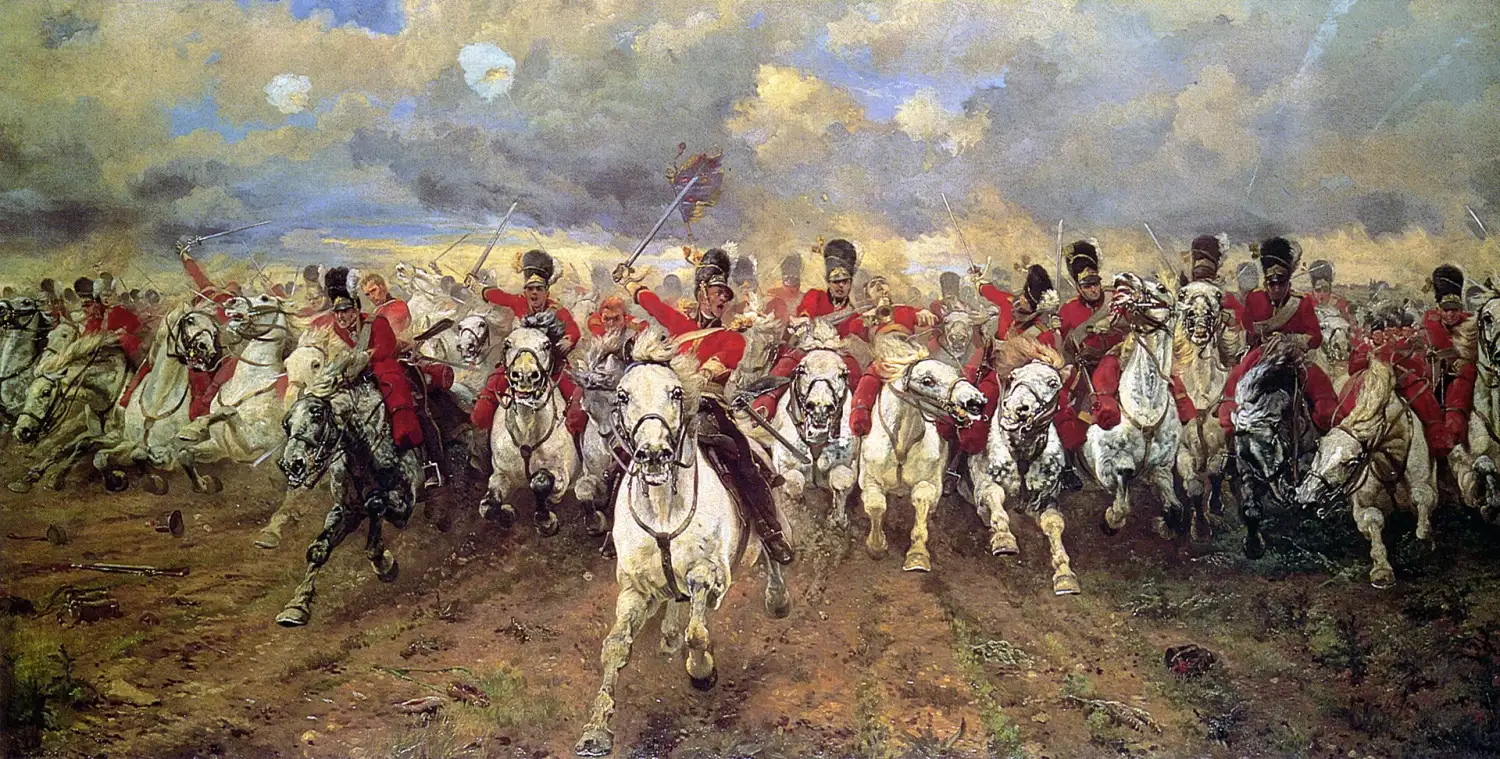
Ney's cavalry charged repeatedly and were thrown back by squares.
Charges without infantry and guns only accumulate loss. Spending the reserve early is also giving up the answer to an army that is on its way2.
The course — 16 to 18 June 1815
The Prussians are beaten at Ligny. Blücher goes down under his horse, is ridden over by his own cavalry and cannot command for hours. The same day Ney pins Wellington at Quatre Bras13.
The Prussians fall back north to Wavre — not east, where their supply lay. This day's decision decides the 18th.13
Napoleon gives Grouchy some 30,000–33,000 men and orders him to follow the Prussians. Their line of retreat has not been established, and the order states no purpose12.
Having obtained a Prussian assurance of support, Wellington decides to stand at Mont-Saint-Jean. Heavy rain that night13.
Waiting for the ground to dry, the battle opens some 2–3 hours later than intended. The attack on Hougoumont begins24.
D'Erlon's corps attacks the centre. Allied heavy cavalry drive it back, then pursue too far and are cut up2.
Unsupported cavalry charges are repeated and thrown back by squares. At about the same hour the head of the Prussian column appears from the east12.
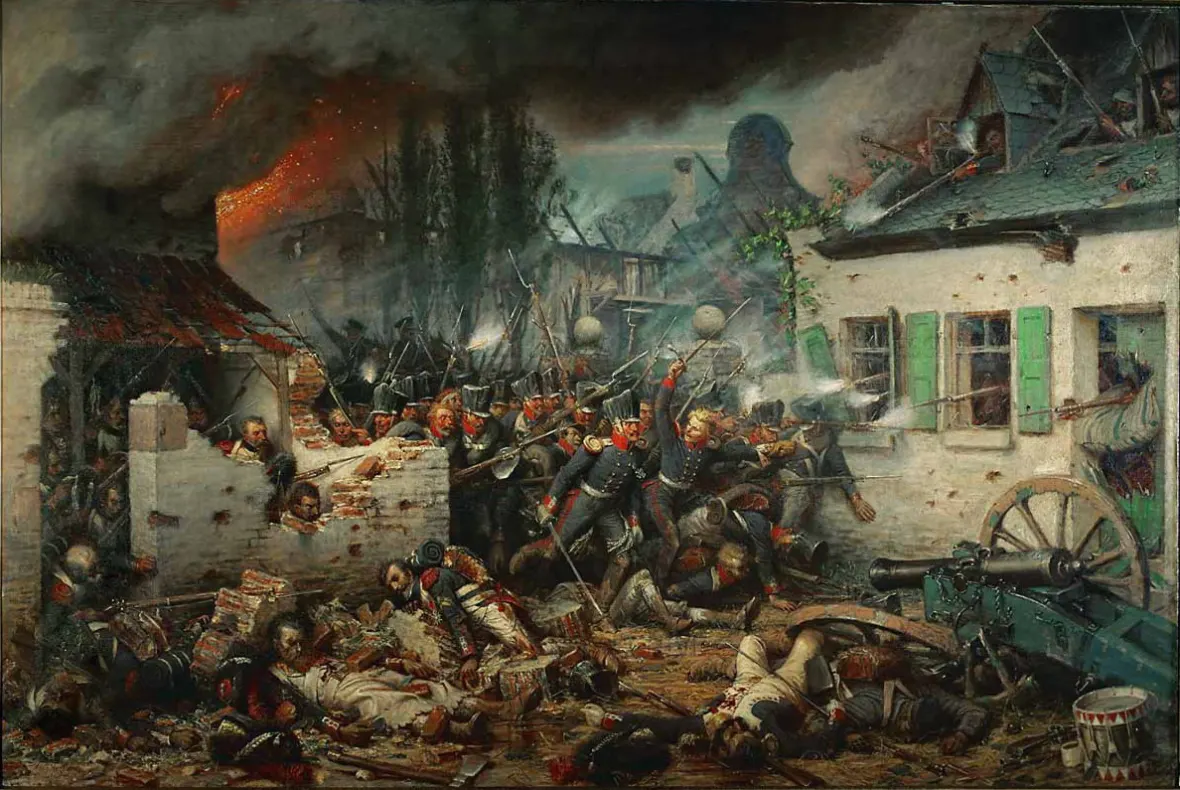
La Haye Sainte falls and the allied centre is at its most dangerous. But the French reserve is already being drawn off towards Plancenoit23.
What actually decided it
Retreat towards where you can rejoin
The day after a defeat, the Prussians fell back not east onto their supply but north, within reach of Wellington. That single move created every other premise13.
Secure the assurance, then choose the ground
Wellington stayed on ground he could not have chosen alone, having obtained a promise of support. The quality of a position depends on the quality of the assurance13.
Put things where they cannot be seen
Troops behind the crest neutralised French guns and observation. You decide what the enemy is looking at24.
Why the losers were not fools
Napoleon's campaign plan was correct. Being the weaker side, get between two armies before they join and beat them one at a time — this is what he had done his whole life, and on 16 June at Ligny it worked. It was not a foolish plan.
What broke was not the plan but its premise. "A beaten army retreats towards its supply." Rational, and usually true. Blücher did not. Napoleon had not costed in the chance that the other side would choose the less rational of the two.
The second thing is the order. Grouchy was told to follow the Prussians. Following is executable. But if the order does not say what the following is for, nobody on the spot can judge when the situation changes. At midday on the 18th Gérard, hearing the guns, urged a march to the west. The reading was right. The structure of the order would not carry it12.
Kutuzov at Austerlitz, Paullus at Cannae, Gravina at Trafalgar, Paulus at Stalingrad, Boucicaut at Agincourt — and now Gérard. A correct reading losing to a structure makes its sixth appearance on this site. This time it happened to a subordinate rather than a commander, but the shape is the same.
And the lesson of this defeat reads as the inverse of Trafalgar. Nelson deliberately created the conditions in which signals would stop working, and had distributed the intent beforehand. Napoleon distributed the procedure and not the intent. The same condition — loss of contact — produces self-propulsion on one side and a full stop on the other.
Aftermath — a decisive defeat is also decisive only inside its arena
On 22 June Napoleon abdicated for the second time. He was sent to St Helena and died there in 1821. The settlement that followed held for some forty years without a general war between the great powers13.
But one thing is worth checking. Had he won at Waterloo, would Napoleon have won the war? Almost certainly not. On the Rhine the Austrian and Russian armies were completing their mobilisation and would reach the frontier in July, and neither French population nor French finance could carry that13.
At Cannae, Trafalgar, Stalingrad and Agincourt this site has watched the rule that a decisive victory is decisive only inside its own arena. Waterloo shows the inverse. A decisive defeat is also decisive only inside its arena. The day hastened the end of the empire; it did not by itself decide it.
The story — "a near-run thing"
The strongest story about this battle is that it was very close. The phrase is attributed to Wellington himself, and ever since, the reading has been to count the things that might have reversed it: the rain, Grouchy, the last attack of the Guard.
But "close" only holds while you look inside the battlefield. Widen the frame and the picture changes. The Prussians were closing by about four in the afternoon, and from that hour the French were drawing reserves off to their right. By six, when the allied centre was at its most dangerous, the French strength meant to decide the day had already been cut into13.
Widen it further and the Austrians and Russians arrive in July. That a single day was close and that the war was close are different claims.
The other durable story is that the battle was lost because Grouchy did not come. That moves a flaw in the design onto a flaw in a man. He was faithful to his order. The problem is that the order stated no purpose, and that nobody had established where the enemy had gone12.
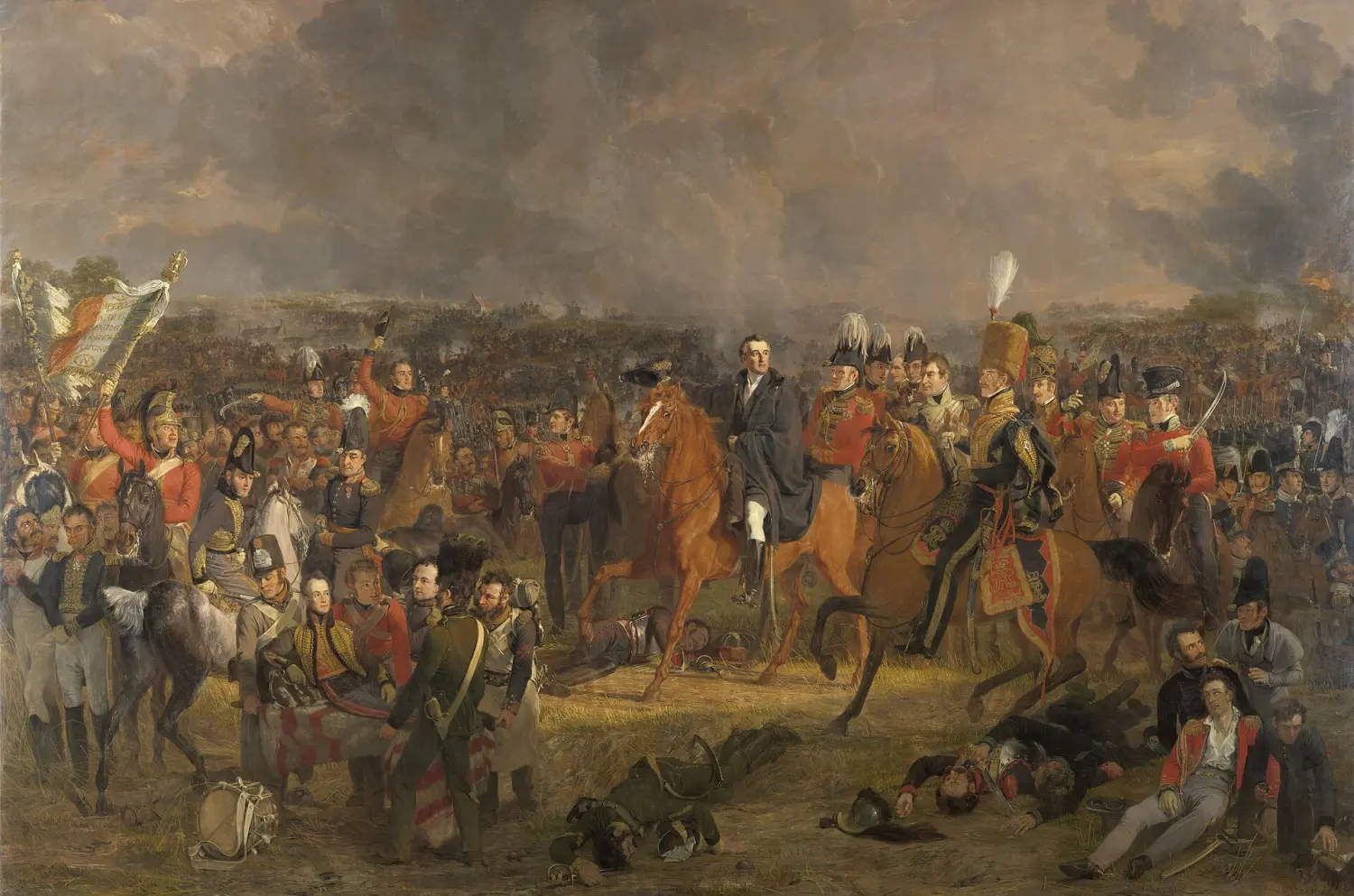
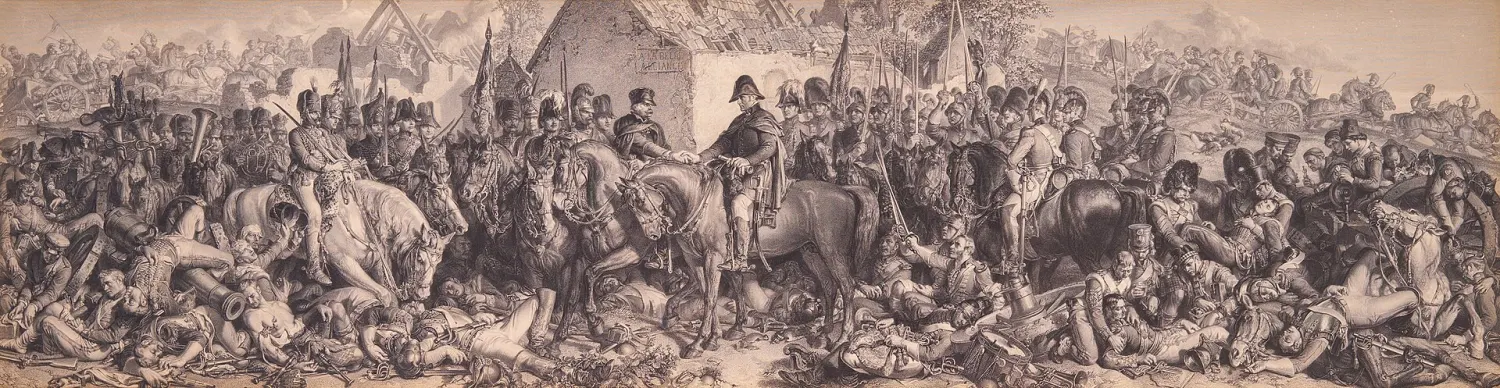
The images carry a story too. "Scotland Forever!", above, was painted sixty-six years afterwards, and the real charge did not move at that speed over that ground. The picture has propped up a reading in which courage decided the day. It performs the function of the frozen ponds at Austerlitz, the fateful five minutes at Midway and General Winter at Stalingrad. Credit one moment with everything and the several days that made that moment disappear.
Counterfactuals — remove one factor at a time
A: if the Prussians had fallen back east towards Liège. Wellington loses his reason to stand at Mont-Saint-Jean and the battle does not happen; he falls back on Brussels. What made this battle possible was the previous day's choice of retreat.
B: if Grouchy had marched to the sound of the guns. There is a case that 30,000–33,000 Frenchmen could have appeared towards Plancenoit. But he was engaged with the Prussian rearguard at Wavre, and distance and roads do not move. Even inside a "what if", marching time cannot be deleted.
C: if it had not rained the night before. The French attack probably starts 2–3 hours earlier. But the Prussians march faster on the same dry roads. Rain is not a condition that acts on one side only.
Each is an untestable thought experiment, not a claim about what was. Only by removing a factor does its weight become visible.
What transfers — in other arenas
Count the strength that can arrive, not the strength present
In a meeting or a market, real strength is not who is in the room but what can be mobilised before the deadline. Why this example: the armies on the field were equal and the difference came from outside.
If you position on a junction, get the assurance first
Before making a hard commitment that depends on another team, pin down how much they will send and when. Wellington did that before he drew up.
Do not choose a retreat for its ease
When you wind something down, fall back not towards where you came from but towards where you can rejoin the fight. That was Blücher's choice on the 17th.
Hand over intent, not procedure
Not "do this" but "do this in order to". Settle in advance what people may do when they cannot reach you. That is exactly what Grouchy was never given.
Distrust "we almost had it"
Widen the frame one step and a contest that looked close often is not. A story of narrow defeat hides the structure that needs fixing next time.
In closing — the troops that decide are the ones who are not there
Summarise Waterloo as a close-run day and you miss the core. The armies on the field were about equal and the French were if anything the better. The difference was made by two armies that were not on the field that morning. One walked eighteen kilometres and arrived; the other walked the same distance the other way.
And where each of them went was settled on the 17th, not the 18th: a beaten army falling back towards its ally rather than its supply, and an order with no stated purpose sending a third of an army in the opposite direction. A battle is sometimes only the place where conditions built the day before are executed.
What this case adds to the six already here is a seventh type. Austerlitz was a design of space, Cannae of momentum, Midway of time, Trafalgar of command, Stalingrad of attachment, Agincourt of frontage. Waterloo is a design of convergence — build the shape in which your second army comes and his does not.
One last thing. The man who made the enemy abandon the centre at Austerlitz and the man who marched a third of his own army the wrong way at Waterloo are the same man. The signature did not change. What changed were the conditions in which that signature works. Which is what it means to look at the structure rather than the person.
Protagonist side
Frequently asked questions
Sources
- John Hussey, Waterloo: The Campaign of 1815 (2 vols), Greenhill Books (2017)
- Alessandro Barbero, The Battle: A New History of Waterloo, Atlantic Books (2005)
- Peter Hofschröer, 1815: The Waterloo Campaign (2 vols), Greenhill Books (1998–1999)
- Gareth Glover, Waterloo: Myth and Reality, Pen & Sword (2014)
Related cases — read in comparison