Person
Henry V
King of England (commanding in person)
Life: 1386–1422
The king who chose ground on which the enemy's numbers could not deploy — and then made the enemy walk into it.
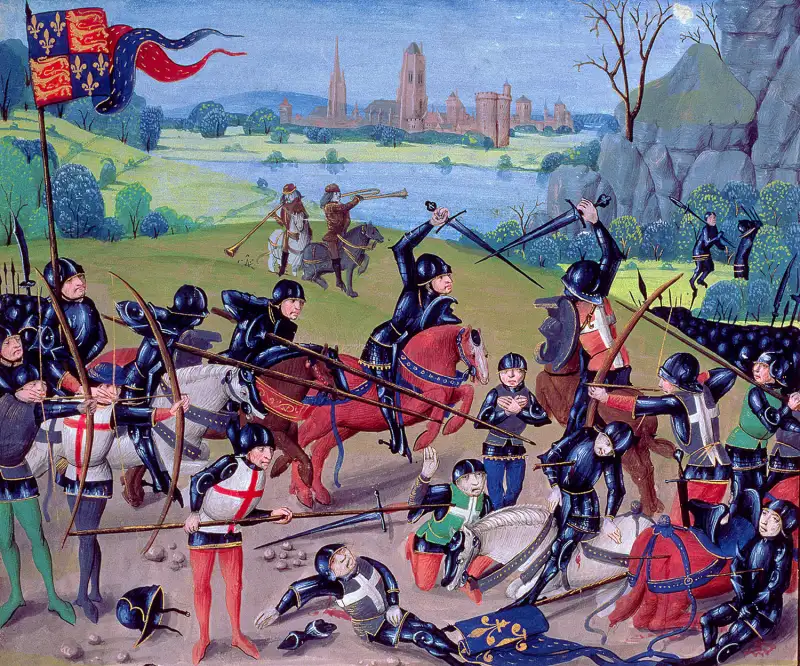
King of England. He came to Agincourt having lost men at the siege of Harfleur, more to dysentery, and the rest of his strength on the march for Calais. He could still accept battle because he could choose the dimensions of the ground: a narrow ploughed field with woods on either side. And he did not wait — he advanced into bowshot and made the other side move first. Choosing the place and then manufacturing the reason the enemy enters it is the design in this man.
Strategic signature — fix the dimensions of the ground first
Henry V was cornered. The siege had cost him men, dysentery had cost him more, and the march for Calais had worn out what was left. He could still accept battle because he could choose the dimensions of the ground. Draw up in a narrow ploughed field with woods on both sides and the enemy's numbers cannot spread.
And he did not wait. He advanced into bowshot and made the other side move first. Choosing the place is not enough; you have to manufacture the reason the enemy comes into it.
Recurring patterns
Choose the width
Stand where the enemy's numbers cannot be deployed. Superiority in numbers is only superiority once it has room.
Make him move first
Build a shape that favours the defence, then advance to provoke. Simply waiting lets the other side wait too.
Position over equipment
Stakes planted in front of the archers put them where cavalry could not reach. Not the performance of the weapon but the arrangement in which the weapon works.
See it through
Fearing a renewed attack, he ordered prisoners killed. The ruthlessness that locks in a win is part of this man.
Strengths and weaknesses
Can set the terms of the ground even from a bad position.
Those terms depend on terrain and weather. Make the same choice on an open plain and the difference in numbers simply tells.
Converted a tactical victory into a political settlement (Troyes, 1420).
The settlement depended on his own life. He died in 1422, the framework fell apart, and France eventually won.
Where the signature showed — Agincourt
The frontage was about 750–900 metres. The moment that width was chosen, the enemy's numbers had turned into "too many".
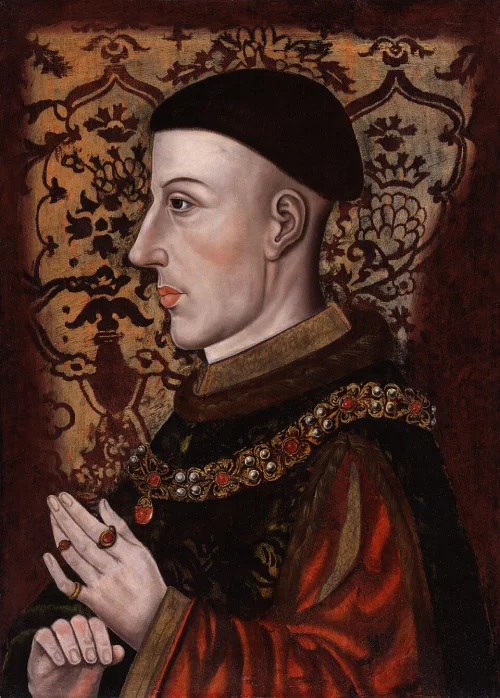
Henry V. Sixteenth-century panel, National Portrait Gallery, London — a later copy, not a contemporary likeness. Public Domain, via Wikimedia Commons
Appears in