Person
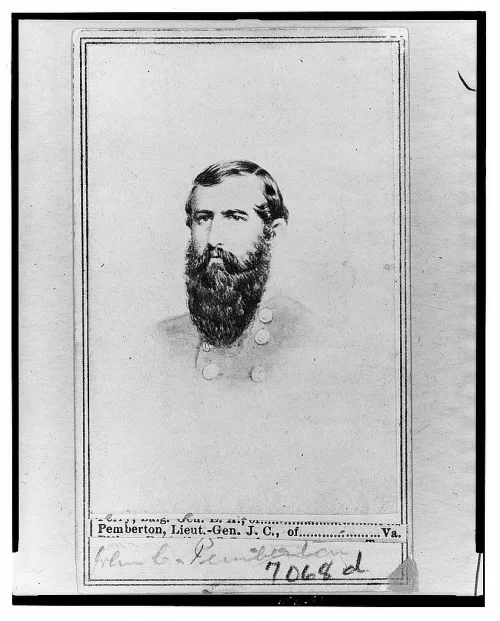
John C. Pemberton
Confederate commander, Department of Mississippi
Life: 1814–1881
The commander with two superiors who said different things, who could choose neither and lost both the town and the army.
A general caught between two contradictory instructions: Johnston, commanding the department, telling him to abandon the town, save the army and join him; President Davis telling him to hold Vicksburg. Both were superiors and both had a case. He was also Pennsylvania-born, a Confederate general under suspicion for his origins, without the political room to decide to give up a town. He took a little of each and lost both the town and the army.
Strategic signature — two superiors, two different orders
Pemberton stood between two contradictory instructions. Johnston, commanding the department, said abandon the town, save the army and join me. President Davis said hold Vicksburg. Both were superiors and both instructions made sense.14
On top of that he was Pennsylvania-born, a Confederate general whose origins were held against him. The political room to decide to abandon a town was not available to him in the first place. So he took a little of each, stayed half-committed to both the town and the army, and lost both.
Recurring patterns
Two people above you
When the chain of command forks, the man on the spot has to decide which superior to obey. That is not his job.
Where you came from narrows what you can decide
Someone already under suspicion finds it hard to choose the option (retreat) that would seem to confirm it.
Take a little of each
Caught between contradictory demands, an organisation can split the difference and lose both. Splitting the difference is not a decision.
Strengths and limits
An able manager of works and supply; he made the place last 47 days.
Lasting only means something if relief is coming. Lasting without it merely increases what is eventually lost.
Connection to Vicksburg
Civil War era photograph, Library of Congress. Public Domain, via Wikimedia Commons
Appears in