Person
Robert Nivelle
Commander, French Second Army from May 1916
Life: 1856–1924
The case in which the side that survived a contest of consumption went on to start one.
Served under Pétain at Verdun and took over the front in May 1916; Fort Douaumont was retaken under his command on 24 October. That success carried him to command of the French armies in December 1916; in 1917 he brought a plan to break through in forty-eight hours on the Chemin des Dames. It failed, and mutinies spread across much of the French army that spring. He is the heaviest evidence in this case that a design of attrition transfers to the side that endured it, not only the side that built it.
Strategic signature — the side that was consumed builds the same machine
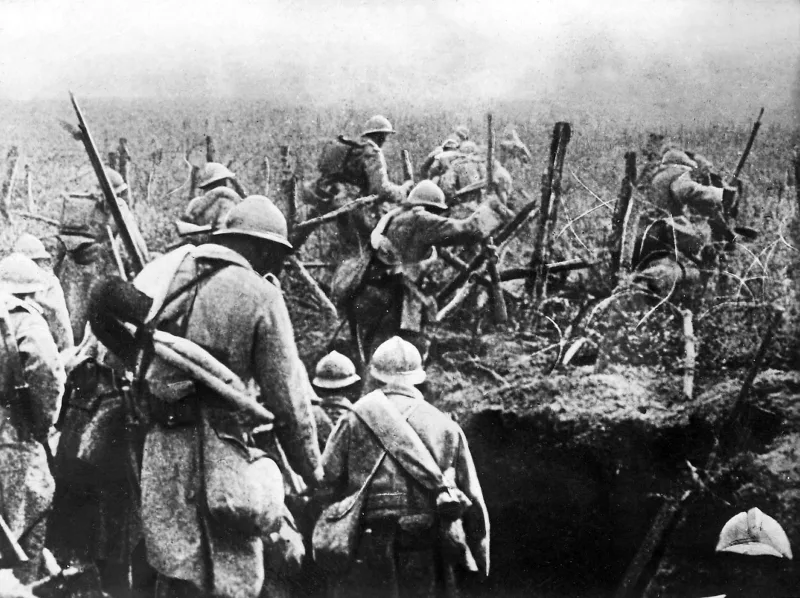
Nivelle served under Pétain at Verdun and took over the front in May 1916. On 24 October, Fort Douaumont was retaken under his command. The fort that about 100 German soldiers had walked into on 25 February took 8 months to get back.
That success carried him to command of the French armies in December 1916, and what he brought to the 1917 offensive was a plan to break through in forty-eight hours. The method that had worked at Verdun — mass the guns, push hard on a short frontage — applied at scale on the Chemin des Dames.
It failed. In the spring of 1917 mutinies spread across much of the French army. This is the heaviest connection in the whole case. A design of attrition transfers not only to the side that built it but to the side that endured it. Having survived makes "one more push and it opens" an easy reading. The organisation that lives through a contest of consumption goes on to start one of its own.
Recurring patterns
Generalise a local success
The method that retook Douaumont was scaled up onto different ground at a different size. A success does not copy across with its conditions attached.
Promise a deadline
Saying "forty-eight hours" got the plan approved and simultaneously removed anywhere to stand if it was wrong.
Surviving attrition invites more of it
An organisation that has endured consumption overestimates how well consumption works. It is a textbook failure of organisational learning.
Strengths and weaknesses
Can actually assemble artillery-infantry coordination and take limited objectives.
A procedure that worked for a limited objective rests on different premises in a general offensive. What was transplanted was the procedure, not the conditions.
Can move an organisation with a clear promise.
When the promise fails, the recoil is proportional to how far it moved. The mutinies of 1917 have that shape.
Connection to Verdun
The consequences of Verdun do not end on 18 December 1916. They run through this man into 1917.
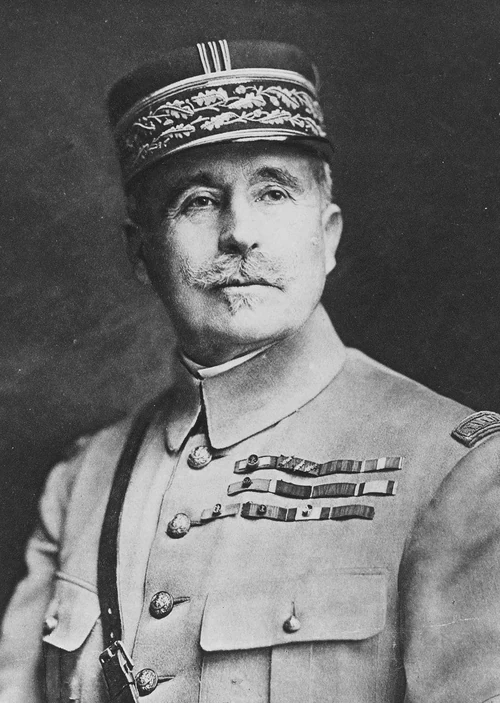
Robert Nivelle, about 1917. Public Domain, via Wikimedia Commons
Appears in