Person
Erich von Falkenhayn
Chief of the German General Staff
Life: 1861–1922
The staff chief who rewrote what winning meant, and forgot to write down when to stop.
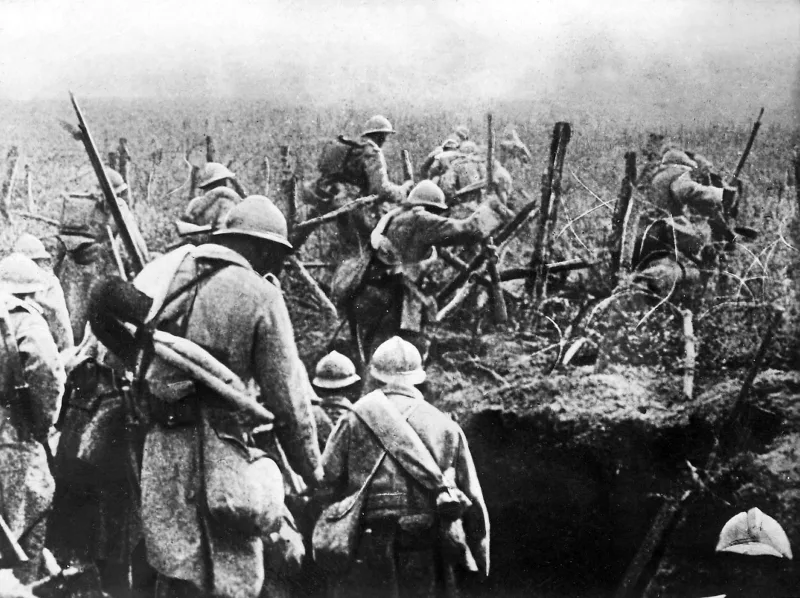
Became Chief of the General Staff in September 1914, after the failure on the Marne. He treated a static trench line as an arithmetic problem rather than a tactical one, and moved the condition of victory from breaking the enemy army to exhausting the enemy population first. Verdun is that idea implemented. The plan contained no stopping condition, so a worsening ratio produced no grounds for breaking it off. He was dismissed on 29 August 1916; the battle continued for another 111 days.
Strategic signature — when you cannot win, rewrite what winning means
Falkenhayn became Chief of the General Staff in September 1914, after the Marne. What he inherited was the war that follows the failure of a plan for a short war. The trenches did not move, and every attempt to break through killed more attackers than defenders. He treated this as an arithmetic problem rather than a tactical one23.
His answer was the exchange rate. If you cannot take ground, consume the other side. Not indiscriminately: choose a place the enemy cannot give up, and do the consuming there. If they cannot abandon it they will keep feeding men into it, and the guns can deal with whatever arrives.
The idea is genuinely sharp. It moves the condition of victory from breaking the enemy army to exhausting the enemy population first. The problem is that the definition contained no stopping condition. How many is enough? What happens if the ratio comes out worse than assumed? That line is not in the plan.
Recurring patterns
Move the definition of winning
If you cannot take it, consume it. Redefining the measure when you are stuck is a powerful move and simultaneously the most dangerous one available.
Aim at what the other side cannot give up
Value sits in the opponent's head, not on the map. A symbolic place will draw them more reliably than a militarily useful one.
Leave out the stopping condition
This is the failure pattern. If you are going to start a contest of consumption, write down when you stop before you begin. A plan without that line does not refuse to stop; nobody in it knows how.
Strengths and weaknesses
Can redesign the objective itself when conditions change.
The rewritten objective contains no way to test whether it was right. While you are measuring in ratios, a worsening ratio still reads as "a little longer".
Can put the enemy's psychological constraints into the calculation.
The same constraint grows on your own side. Partway through, Verdun became a place Germany could not give up either.
Where the signature showed — Verdun
Falkenhayn was dismissed on 29 August 1916. The battle then continued for another 111 days. The designer left and the machine kept running. That is the precise meaning of a design with no exit.
Do not confuse this with the fixation at Stalingrad. Fixation is a design for pinning the enemy so that the decision can be taken somewhere else, and it has a somewhere else. Verdun has no somewhere else. So the side that built the machine went into it too.
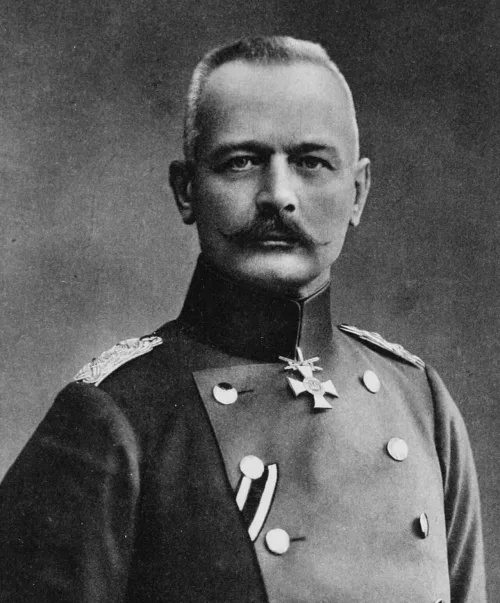
Erich von Falkenhayn, about 1913, photographed by Albert Meyer. Public Domain, via Wikimedia Commons
Appears in