Person
Philippe Pétain
Commander, French Second Army at Verdun
Life: 1856–1951
The general who designed not a way to win a contest of consumption but a way to be consumed more slowly.
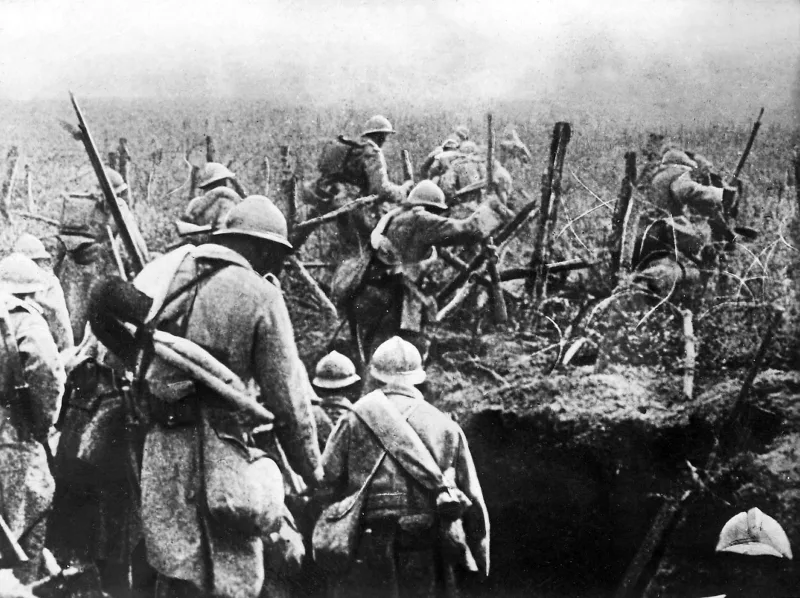
Given the Verdun front on 25 February 1916, the day Fort Douaumont fell. What he did was logistics rather than tactics: he turned the single 75-kilometre road to Bar-le-Duc into a machine that from March passed a vehicle roughly every fourteen seconds. The second device was the noria, a constant rotation of divisions through the line, through which 70 of the French army's 95 divisions passed. Losses were spread thinly and widely; no formation was destroyed, and the same memory entered the entire army.
Strategic signature — design throughput, not men
On 25 February 1916, the day Fort Douaumont fell, Pétain was given the Verdun front. What he did was logistics, not tactics.
The railway into Verdun was under German guns. What remained was a single road of 75 kilometres running to Bar-le-Duc. He turned that one road into a machine. Units were assigned to the road itself; broken-down lorries were pushed straight onto the verge; gangs stayed permanently on it spreading crushed stone. From March a vehicle passed roughly every 14 seconds, carrying about 90,000 men and 50,000 tonnes a week14. It was later called the Voie Sacrée.
The second device was the noria — the word means a chain of water buckets. Divisions were not left in the line at Verdun; they were rotated through it quickly and repeatedly. In the end 70 of the French army's 95 divisions passed through14.
The design has a price. Almost the whole French army experienced Verdun. Losses were distributed thinly and widely; no formation was destroyed, and in exchange the same memory entered the entire army. The mutinies of 1917 are partly the consequence of that distribution.
Recurring patterns
If there is only one route, make the route a machine
When there is no alternative road, the answer is not to look for one but to redesign the capacity of the one you have.
Rotate rather than hold
The noria spreads damage thinly. No unit breaks, and the same fatigue enters the whole organisation.
Substitute firepower for people
Pétain concentrated the artillery and refused to fill gaps with infantry assaults. Inside a contest of consumption, this was the available way of slowing the rate at which you are consumed.
Strengths and weaknesses
Can treat a front as throughput and build a supply line that does not break.
A throughput design assumes the flow continues. The decision to stop lies outside it.
Can distribute damage and avoid the destruction of formations.
Distributed damage soaks into the whole organisation. The mutinies of 1917 are the invoice.
Where the signature showed — Verdun
Pétain's design was not a way of winning a contest of consumption. It was a way of being consumed more slowly. The same structure that decided Vicksburg through supply is used here not to win but to last until the thing ends.
What this man chose after 1940 is outside the scope of this case. It is worth noting only that the design at Verdun and the choice of 1940 come out of the same question: how much can be consumed before an organisation loses the point of continuing?
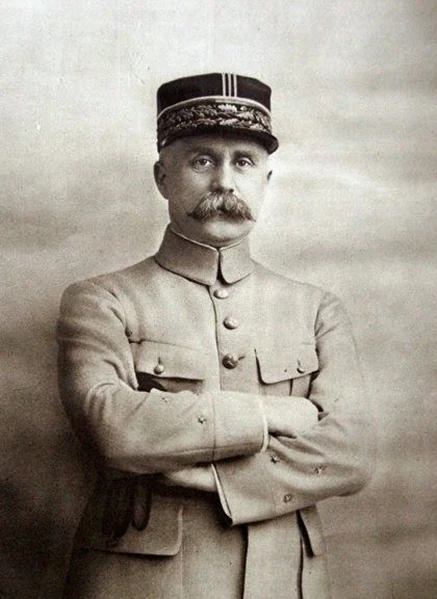
Philippe Pétain, before 1918, photographed by Henri Manuel. Public Domain, via Wikimedia Commons
Appears in