Person
Gerd von Rundstedt
Commander-in-Chief West
Life: 1875–1953
The commander whose doctrine was correct and whose inputs were manufactured by the enemy.
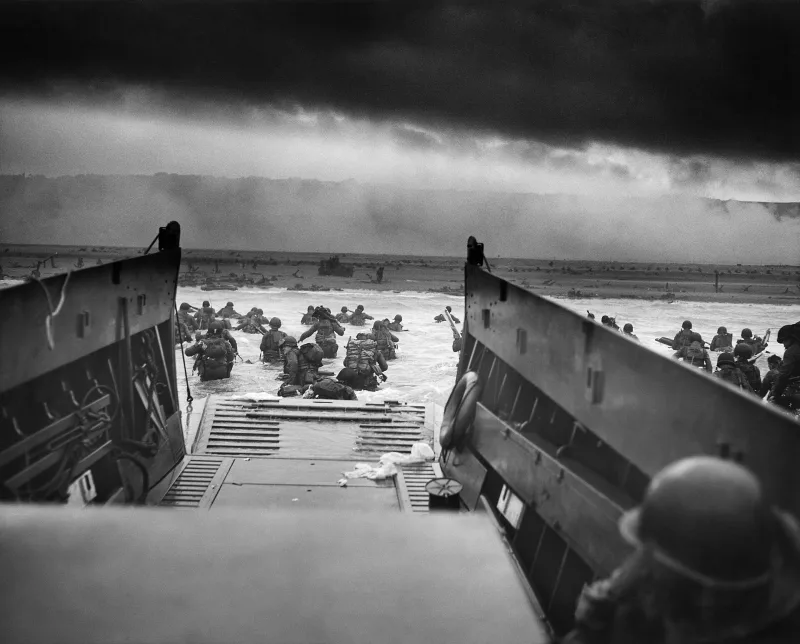
He held to the militarily sound doctrine of keeping the armoured reserve concentrated inland and committing it once the main landing was identified. The difficulty was that identification was something the enemy controlled. While reports kept arriving that Normandy was the diversion, a correct rule kept producing the answer "not yet". He shows what happens when a sound rule is fed a manufactured input.
Strategic signature — never split the reserve, and so never use it
As Commander-in-Chief West, Rundstedt held to a classically correct doctrine: keep the armoured reserve concentrated inland and strike once the main landing is identified. Until it is identified, it does not move.
The trouble was that the premise — that it would be identified — was in enemy hands. While reports kept arriving that Normandy was the diversion, his doctrine kept producing the output "not yet". A sound rule fed a false input produces the worst possible answer.
Recurring patterns
Do not commit the reserve until the main effort is known
Militarily right. But when knowing is something the enemy controls, the rule becomes a machine for waiting forever.
Wait for release from above
Part of the armoured reserve could not move without Hitler's authority. Holding the right judgement is not the same as holding the button.
Try to hold the whole coast
Defending everywhere approaches defending nowhere. The problem of frontage appears here in the same shape as at Agincourt.
Strengths and limits
Avoids feeding strength in piecemeal; saves it for the decisive point.
When the enemy decides which point looks decisive, the reserve is not fed in piecemeal either — it simply never moves.
Connection to Normandy
Paullus at Cannae, Pemberton at Vicksburg, Mitsunari at Sekigahara. A correct reading losing to a structure makes its ninth appearance here, in the variant "the input to the judgement was manufactured by the enemy".
The same signature, in the same shape, four years earlier
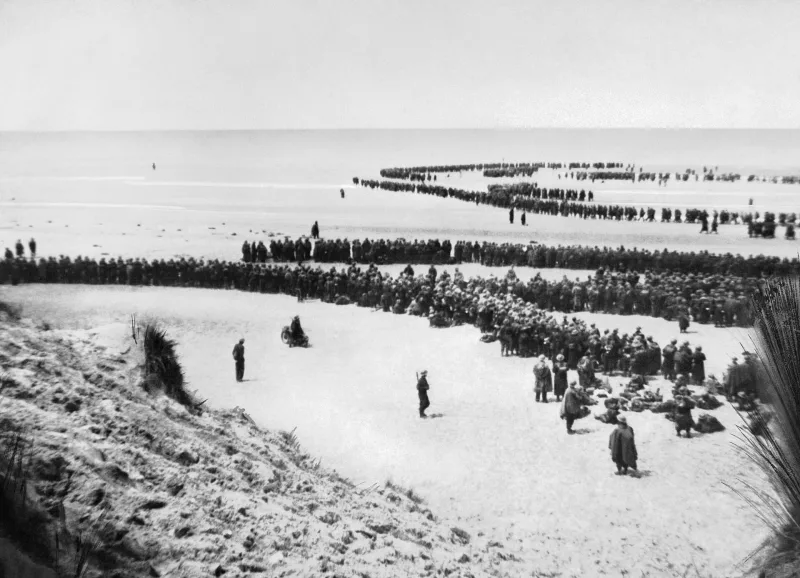
This man appears twice on this site. The first time is Dunkirk, in May 1940.
Commanding Army Group A, he ordered the armour closing on the coast to halt on 24 May. The reasons have almost exactly the shape of the later ones — tank serviceability, ground unsuited to armour, stretched flanks, infantry still far behind. Conserve the armour for the decisive moment. As a judgement at the time it holds together, and historians still do not write it up as folly.
The result was that the Allies got the time to build a perimeter and a third of a million men crossed the water. What he misjudged in 1940 was not the judgement but how long it could be afforded. What he misjudged in 1944 was the input to it.
The same signature loses twice, for different reasons. This is exactly the situation this site means when it says it looks at conditions rather than at people. His rule itself was right in both years.
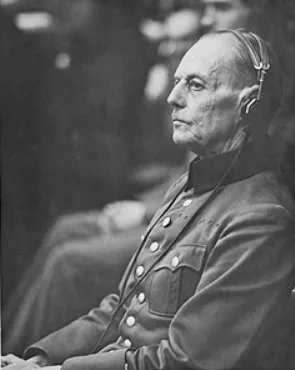
Gerd von Rundstedt, Nuremberg, 1945. Taken after his capture. Public Domain, via Wikimedia Commons
Appears in