Dunkirk: they saved the soldiers and left the army
In the 9 days to 4 June 1940, 338,226 men crossed the water. But something did not come home. 2,472 guns, about 64,000 vehicles, 445 tanks — an army's worth of equipment. That is not a loss column. The ships could carry men or matériel, and they carried men.
- Not a miracle but a choice: almost all the equipment was abandoned and only trained people were carried home. Factories can make guns and tanks; they cannot make NCOs and officers.
- The remembered beaches and little ships account for under a third. More than two thirds went out along a mooring breakwater that was reinterpreted as a walkway.
- The choice was available because others could not choose. 40,000 French troops at Lille held seven German divisions for four days, and the Dunkirk rearguard stayed to the end and surrendered.
Pattern: a design of what to lose →
The protagonist is shown in blue, the opponent in red.
- Date
- May 26, 1940
- Place
- Dunkirk and its perimeter, northern France (Nord)
- Key figures
- 4
- Result
- The evacuation succeeded; the campaign was lost
Contents
- Background: the plan for losing started on the day the plan for winning died
- Where they embarked
- Dunkirk in numbers
- Deployment: a shrinking pocket and two exits
- The claim: they saved the soldiers and left the army
- Two layers: what happened, and what was designed
- How it went: 1940
- The armour that stopped — time that was given, not made
- What actually did the work
- The losing side was not stupid
- The side that could not choose
- Result: equipment came back in a year, men would not have
- The story: the little ships — and the work the story did
- Counterfactuals: remove one element at a time
- What carries over: on other ground
- In closing: losing can be designed too
Background: the plan for losing started on the day the plan for winning died
Ten days after the German offensive opened on 10 May 1940, the shape of the campaign was settled. The armoured divisions came through the Ardennes, ran west and reached the Channel on 20 May. The Anglo-French main force in Belgium and northern France was cut off from behind.
The overlap of dates is the thing to hold onto. On that same 20 May, in the tunnels under Dover Castle, Admiral Ramsay convened the first meeting about how an evacuation would be run12.
No evacuation had been decided. A plan to break south and join the French was still alive. Which means the procedure for losing was being built in parallel with a plan for winning that had not yet been abandoned.
The eleven cases on this site so far are all either the design of a winner or the structural failure of a loser. This is the only one where the losing side is the protagonist and its design worked.
Where they embarked
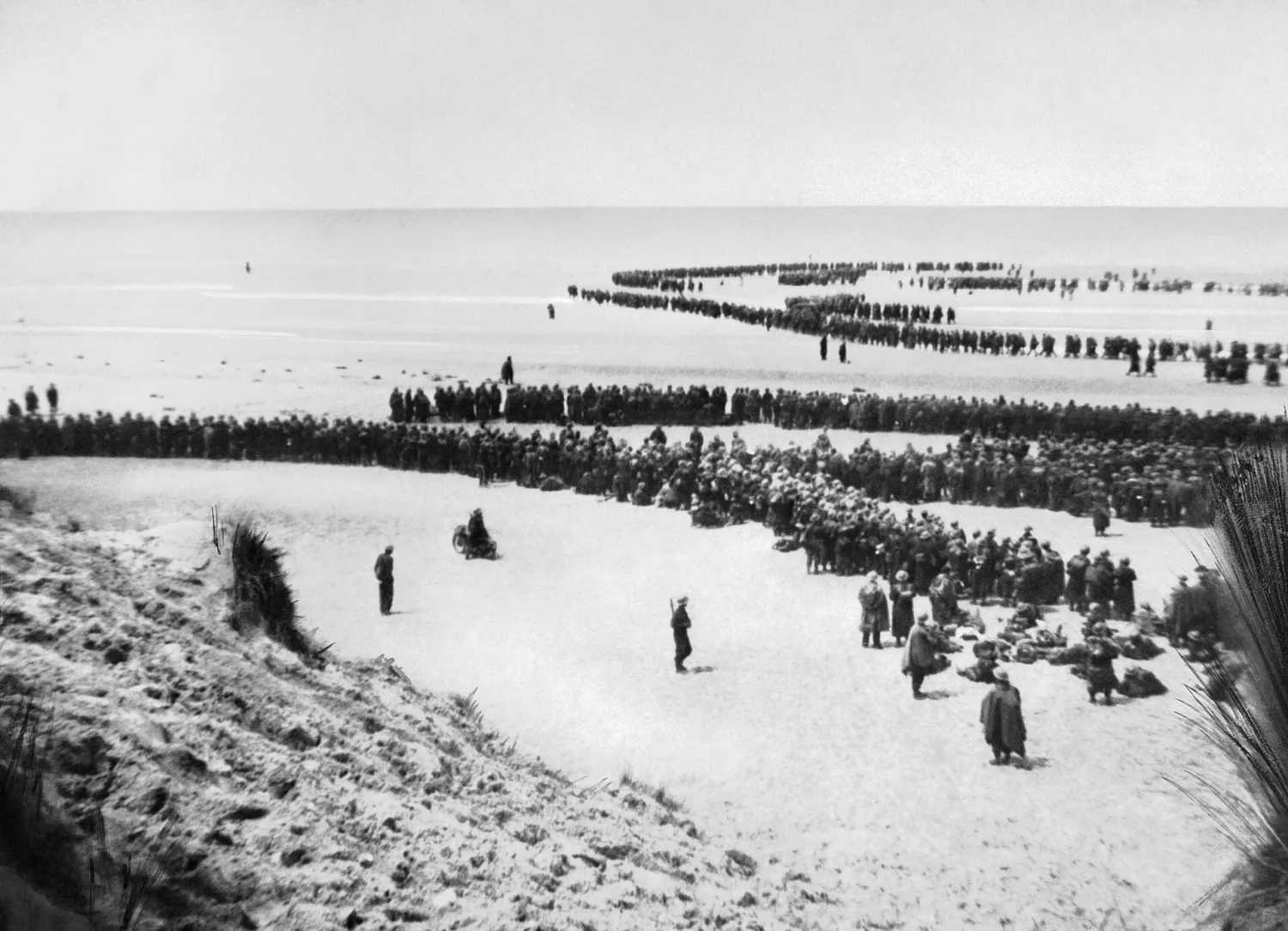
The story remembers the lower bar. Small boats lifting men off a beach makes a strong picture. What actually carried two thirds of this operation was reading a mooring breakwater as a walkway for human beings12.
Dunkirk in numbers
| Brought home | Left behind | |
|---|---|---|
| Men | 338,226 (198,229 British, 139,997 French) | BEF casualties about 68,000 |
| Guns | — | 2,472 |
| Vehicles | — | about 64,000 |
| Tanks | — | 445 |
| Stores and ammunition | — | 416,000 tons of stores, 75,000 tons of ammunition |
| Ships | about 861 took part | about 243 sunk |
| Duration | 9 days (26 May – 4 June) | — |
The right-hand column is not a loss column. It is a choice. The ships could carry men or matériel, and they carried men14.
Deployment: a shrinking pocket and two exits
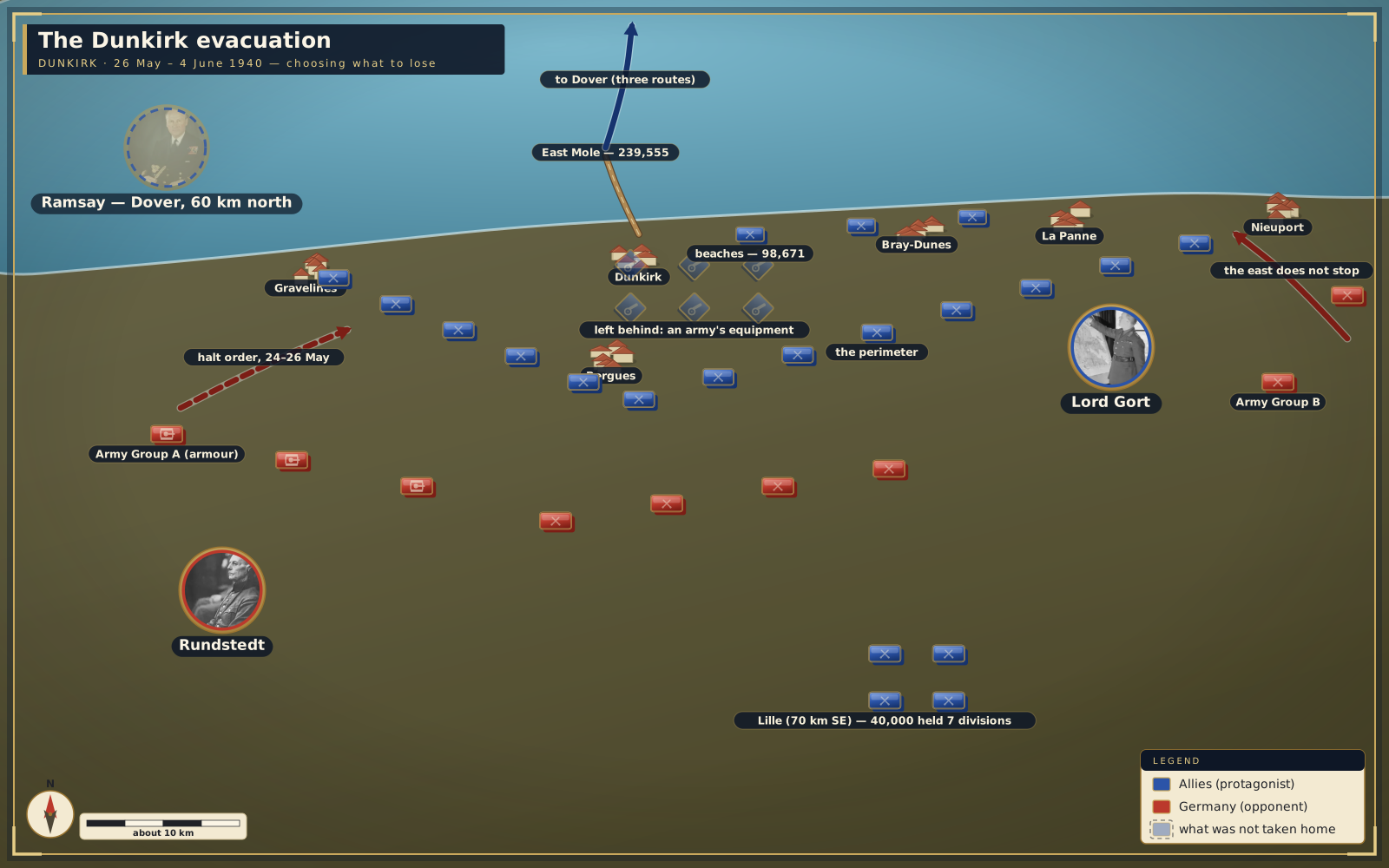
Several hundred thousand British and French troops were inside the pocket. The defensive perimeter ran from Gravelines through Bergues to Nieuport, using the canals and waterways. It was not a line for winning. It was a line for buying time.
There were two exits: the East Mole at Dunkirk harbour, and the beaches running east from it.
The beaches are shallow; destroyers and large ships cannot come alongside. Men had to be ferried out by small craft, which caps the number per hour. 98,671 left that way.
The East Mole was a breakwater built to protect the harbour water, not a pier. But it had depth alongside. Planking was laid, men were queued in single file, and destroyers came alongside to load them directly. 239,555 left that way — more than two thirds of the total12.
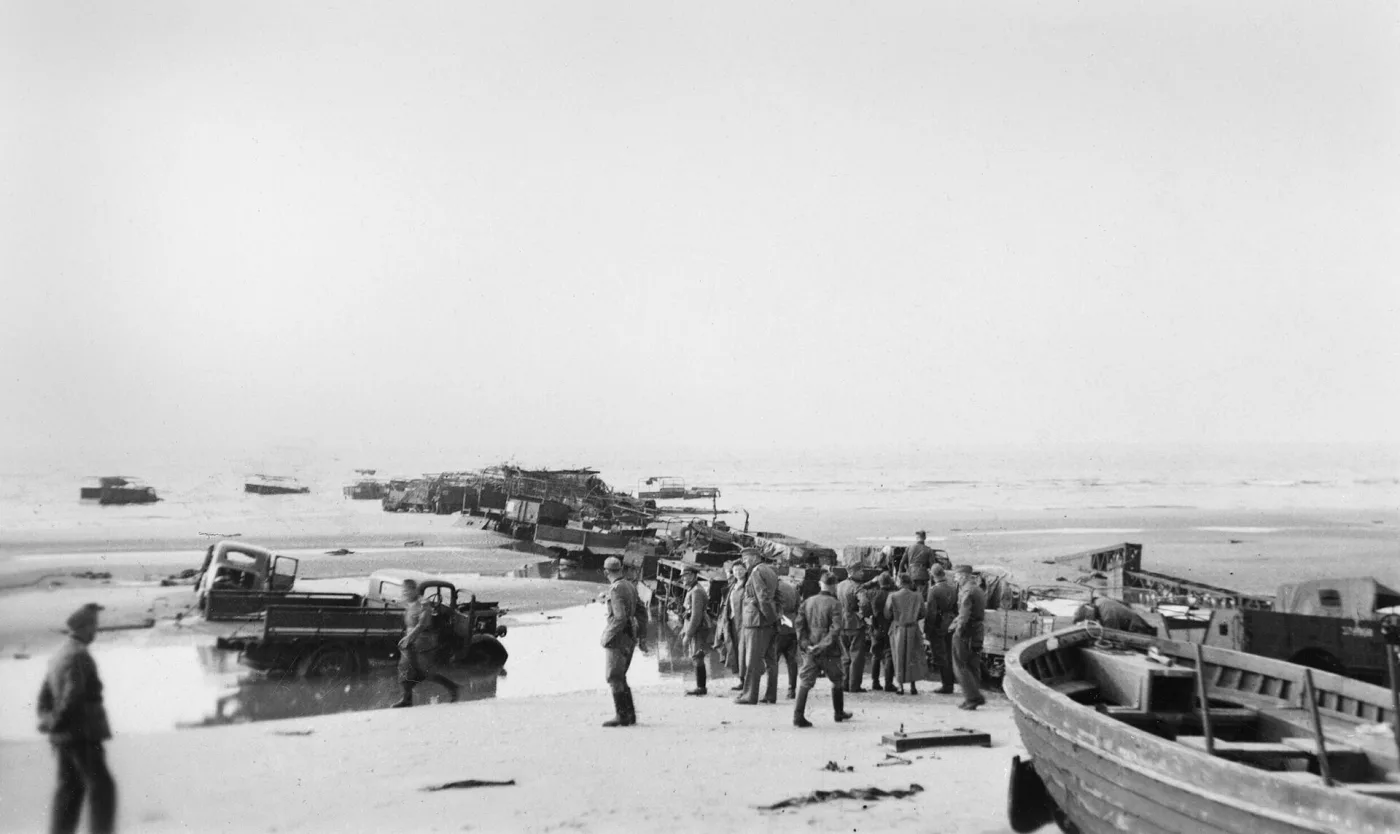
On the beaches, what was not coming home stayed. In places lorries were driven into the sea at low tide and lashed together into an improvised jetty. The equipment they had decided to abandon became the structure that carried them off.
The claim: they saved the soldiers and left the army
Read Dunkirk as a miraculous escape and the centre of it disappears. They did not escape. They chose what to lose.
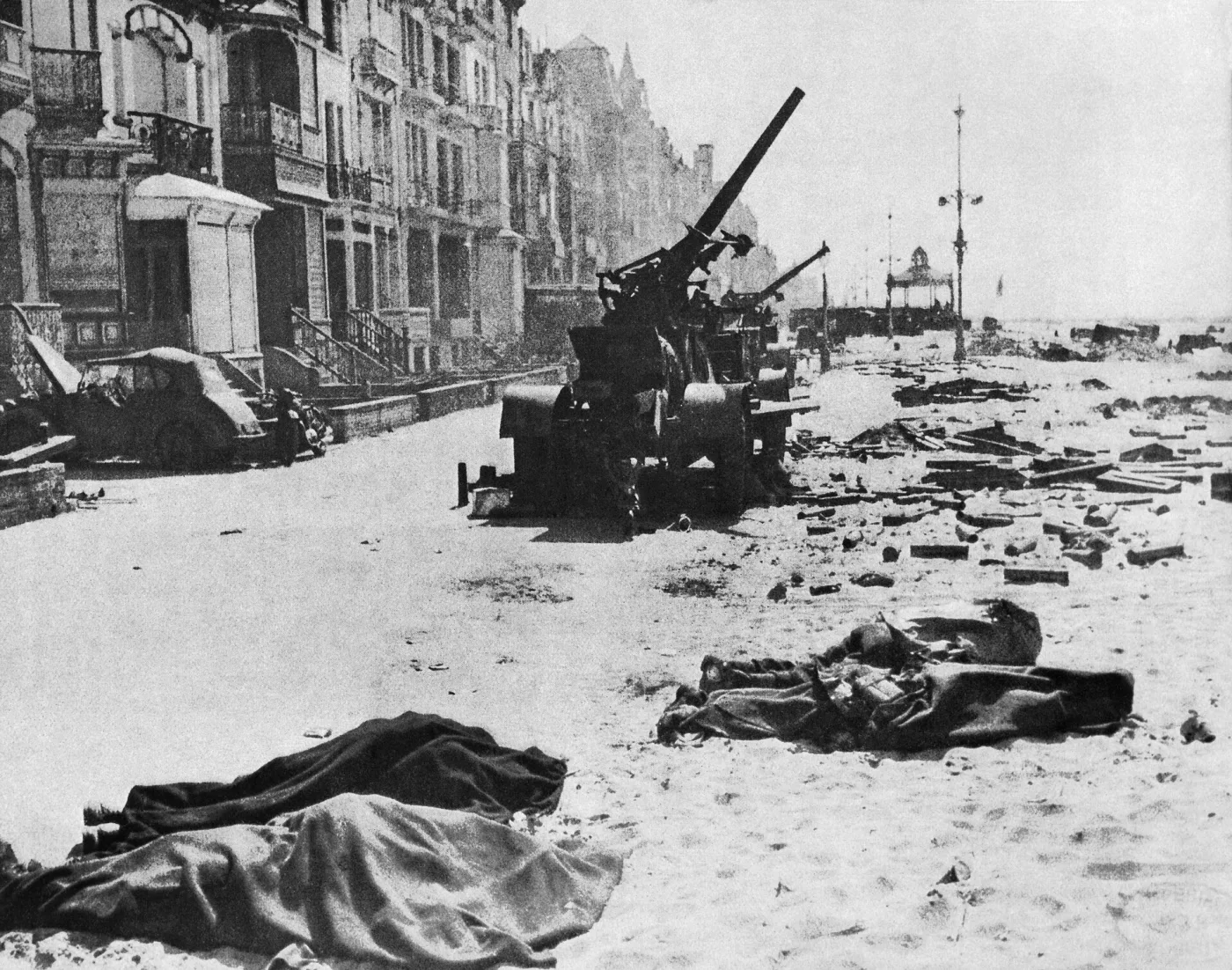
Home came 338,226 men. Left behind were 2,472 guns, about 64,000 vehicles, 445 tanks and 416,000 tons of stores. Britain lost almost everything it would have needed to defend itself on the ground. In the summer of 1940 there was no equipment with which to meet an invader in a straight fight.
The trade works anyway, because one side of it can be remade and the other cannot. Guns and vehicles and tanks come out of factories. Trained soldiers — above all the NCOs and officers — do not. What Britain carried home were the people who would train the army it had not built yet.
Here is the twelfth type: a design of what to lose — when you are losing, abandon what can be remade and carry home what cannot.
Do not confuse it with supply at Vicksburg or convergence at Waterloo. Those are designs for winning. What is designed here is the procedure for losing, and the objective is not victory but being in a condition to play again.
They saved the soldiers and left the army. They abandoned what could be remade and carried home what could not.
The claim
Two layers: what happened, and what was designed
On 20 May German armour reached the sea.
On 25 May Gort did not attack southwards.
That is the moment the objective was rewritten from winning to keeping the army. Unless somebody makes that switch out loud, an organisation disappears still assuming victory.4
Almost all the equipment was left.
The ships could carry men or matériel. What was abandoned was what factories can make; what came home was what factories cannot.
From 24 May the armour did not advance.
Those 2–3 days became the time in which the perimeter was built. But this was not Allied design. It was time given by the other side's judgement.
How it went: 1940
The German offensive in the west begins. On the same day Churchill becomes Prime Minister.
German armour reaches the Channel and cuts the Allied main force off from behind. The same day, the first meeting at Dover on the procedure for an evacuation12.
Rundstedt's halt order, endorsed by Hitler. The armour does not advance for about 2–3 days4.
Gort declines the attack southwards and swings two divisions north to hold the corridor to the coast14.
Operation Dynamo begins. From that day to the 28th the War Cabinet in London meets 9 times in three days. The question was whether to explore terms3.
At Lille about 40,000 men of the French First Army hold 7 German divisions for 4 days before surrendering. The Germans accorded them the honours of war14.
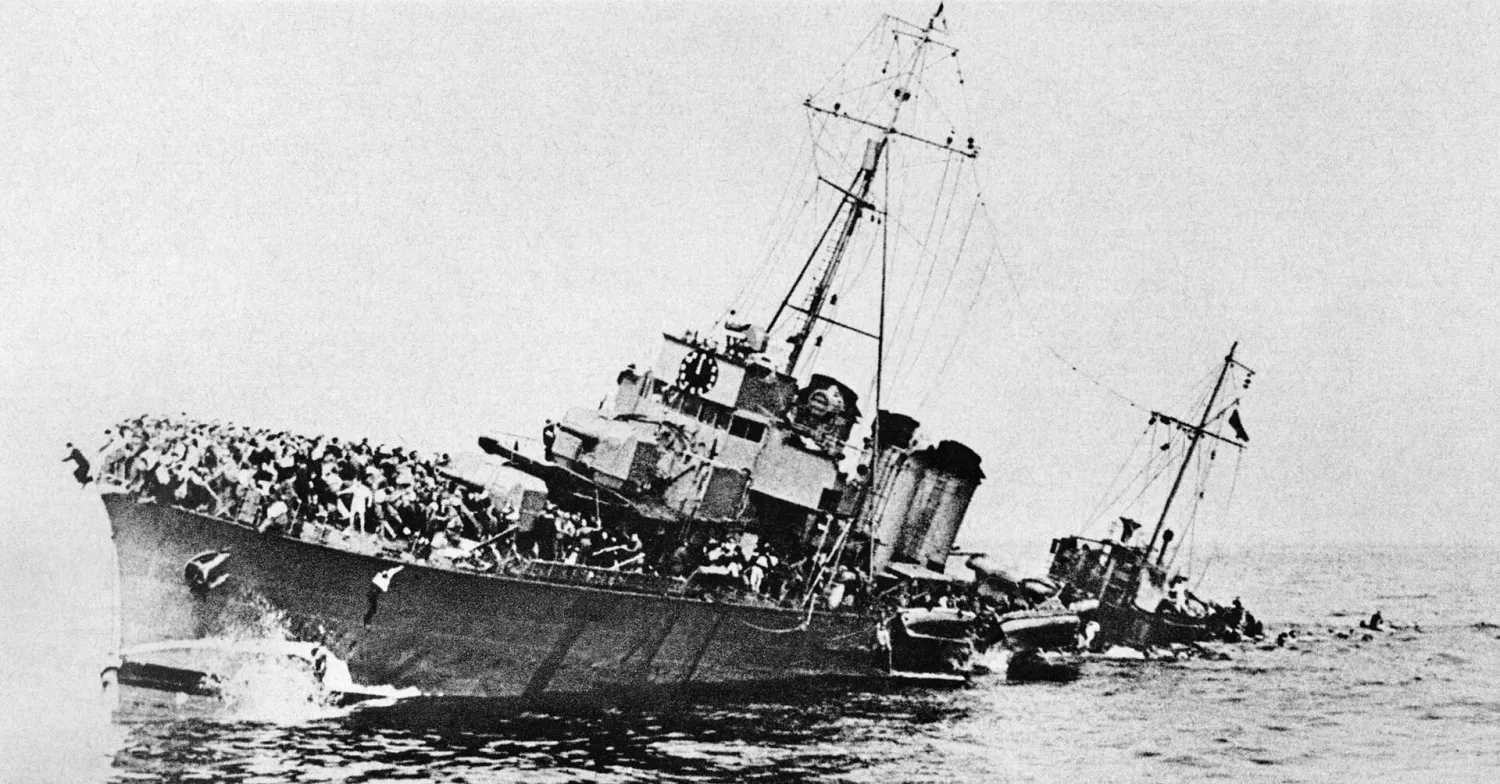
Loading from the East Mole reaches full rate. Ships are lost continuously to air attack and shelling.
Gort leaves, under direct orders from home.
Dynamo ends: 338,226 men in total. The French rearguard of about 40,000 men, who had stayed to the last, surrendered.
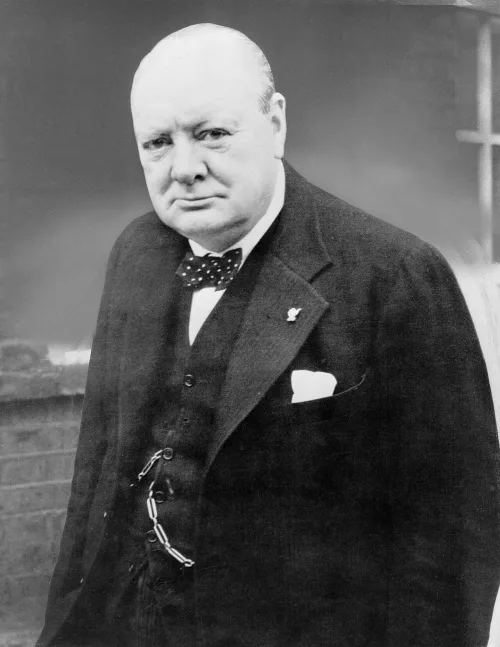
Churchill speaks in the House of Commons. "Wars are not won by evacuations" — and then declares that Britain will fight on5.
The armour that stopped — time that was given, not made
On 24 May Rundstedt, commanding Army Group A, ordered the armour to halt, and Hitler endorsed it. The advance resumed on the 26th, and many units took longer still to move4. Those 2–3 days became the time in which the perimeter was built and the ships were gathered.
The explanation that Hitler deliberately let the British go is persistent and is not supported by the scholarship. The reasons given for the halt are more prosaic14.
The armoured divisions had run hundreds of kilometres in ten days and their serviceability had fallen. The ground in Flanders is cut by canals and waterways and is poor tank country. The infantry was still far behind. The flanks were stretched. "Conserve the tanks for the next operation" was, at that moment, a reasonable judgement.
Which is the point. These 2–3 days were not an Allied design. They were time that the other side's reasonable judgement happened to hand over. A design of what to lose cannot make time. It can only build the shape that is ready when time arrives.
What actually did the work
Write the losing procedure before you are losing
Dynamo was in preparation before any evacuation was decided. Start after the defeat and the time to build the procedure has already gone.
Rewrite the objective out loud
From winning to keeping the army. Unless somebody says it, the organisation keeps acting on the assumption of victory right up to its disappearance.
Abandon in order of what can be remade
Guns and vehicles come out of factories. Trained officers and NCOs do not. Set the order of abandonment by replaceability, not by cost.
Reinterpret what infrastructure is for
Turning a mooring breakwater into a walkway carried two thirds of the operation. What is short is usually not the resource but the reinterpretation of it.
Name the rearguard explicitly
Somebody has to stay or nobody gets out. This is both an effective factor and the ethical price of the whole type.
The losing side was not stupid
There are two losers in this case.
One is Rundstedt. The halt order let the British get away, but as a judgement at the time it holds together. Tank serviceability, ground, stretched flanks, infantry still coming up — all of those constraints were real. What he got wrong here was not the judgement but the estimate of how long it could be afforded. At Normandy he held the equally correct rule of not committing the reserve until the main landing was identified. The same man, with the same signature, loses again four years later.
The other is Lord Halifax. In the War Cabinet of 26–28 May he argued for exploring terms through Italian mediation3. The BEF was in a pocket, nobody knew how many would come out, and the equipment was certain to be lost. Seeking terms was not, in that moment, an absurd position.
A correct reading losing to a structure has appeared eleven times on this site. This one is different. Halifax's reading did not lose to a structure; it lost to another reading. And which was right can never be tested on the side of the option that was closed. That is a weakness of this type, not a strength.
The side that could not choose
You can choose how to lose because somebody who cannot is paying for it. In this case the bill fell mainly on the French army.
At Lille, about 40,000 men of the French First Army held 7 German divisions for 4 days before food and ammunition ran out. Those four days go directly into the completion of the perimeter and the start-up of Dynamo. The Germans accorded them the honours of war at the surrender14.
At Dunkirk itself, the French rearguard of about 40,000 men surrendered on 4 June. The last ships left because they stayed.
Of the 338,226 brought home, 139,997 were French. Most were returned to France and became prisoners weeks later at the surrender. The same ship, a different place to get off, a different outcome.
Anyone reading this as a well-managed withdrawal should not skip this section. Only the side that can post a rearguard gets to design its defeat.
Result: equipment came back in a year, men would not have
Immediately after the evacuation Britain did not have the equipment for a serious ground battle at home. Had Germany been able to land in the summer of 1940, this case would read very differently. That it could not was a matter of air and sea, not a credit to Dunkirk.
But the equipment came back — from the factories and later from American supply. And the officers and NCOs who had been carried home became the people who trained the enormous army built after 1940. The difference between those two recovery times is the whole of this type.
The other result is in the alliance. The sense that the British had left first stayed with the French for a long time. The order in which people withdraw becomes the price of the relationship afterwards. A design of what to lose includes how it looks from your own side.
The story: the little ships — and the work the story did
The popular memory is a miracle in which small civilian boats lifted an army off a beach.
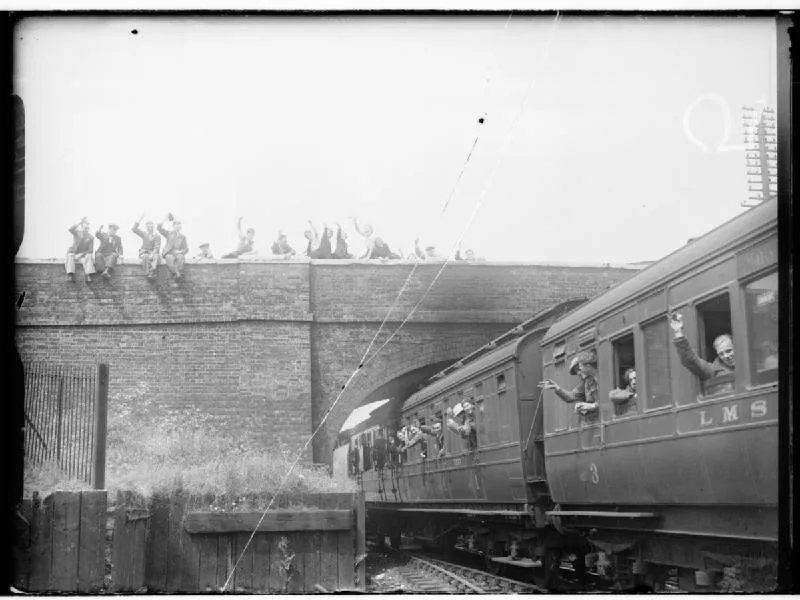
The numbers say otherwise. 98,671 left from the beaches and 239,555 from the East Mole — more than two thirds from the harbour. The lifting was done mainly by destroyers and other large ships. The little ships ferried men from the sand out to those ships, which was indispensable and was not the main act12.
Nor was it a miracle. Preparation began on 20 May, routes were surveyed, a breakwater was converted, and loading rates per hour were calculated. Most of what is called the miracle is procedure and clerical work.
So far this is the site's familiar substituted correction — the same shape as the rubber tanks at Normandy, where a photogenic cause takes the memory slot of the effective one. What is new here is not the kind but the question that survives the correction.
What was that story for? What Britain needed in the summer of 1940 was not equipment and not manpower but a reason that would hold up the decision not to stop. The telling of the miracle supplied exactly that. Churchill knew it, which is why the same speech carries "wars are not won by evacuations". A story can be inaccurate and still be doing real work.
So the correction does not end at the correction. After "that is not what happened", write "then what was that shape for". Stop at the debunking and the facts get more accurate while why they were forgotten stays invisible.
Counterfactuals: remove one element at a time
A: if the East Mole had been unusable. Bomb it down and only the beaches remain. The rate per hour falls by a large factor, and the number brought home is plausibly around a hundred thousand. Two thirds of this operation hung on one breakwater.
B: without the halt order. The time to build the perimeter disappears. This type cannot make time. It only prepares the shape; the time itself is handed over by the enemy or by circumstance.
C: if the War Cabinet had decided to explore terms. The meaning of the 338,226 men changes entirely. A design of what to lose is only that if it comes with the intention to play again; otherwise it is simply survival.
These are unverifiable thought experiments, not claims about what happened. Removing one element is how you see what it weighed.
What carries over: on other ground
Write the wind-down before the wind-down is decided
For a business or a project it is the same: the day you decide to close is too late to start thinking about how. Writing the procedure does not contradict the intention to continue.
Order the abandonment by replaceability
Plant, inventory and cash can be rebuilt. People, and the procedural memory they carry, cannot. Protect in order of book value and you will usually be wrong.
Say the objective has changed
Unless somebody declares the switch from winning to keeping, the people doing the work go on acting as though victory is still the plan.
Name the rearguard
Every withdrawal has people who stay to the end. A withdrawal plan that does not name them is not a plan; it is a comfortable story.
Separate what a story does from whether it is true
An inaccurate story really can hold an organisation together. Correct it — and then carry forward whatever it was holding up.
In closing: losing can be designed too
Read Dunkirk as a miracle and the centre goes. They did not escape; they chose what to lose. And they could choose because the procedure had been written before the defeat was settled, because somebody rewrote the objective, and because other people stayed to the end.
That makes twelve. Austerlitz — space; Cannae — momentum; Midway — time; Trafalgar — command; Stalingrad — fixation; Agincourt — frontage; Waterloo — junction; Vicksburg — supply; Sekigahara — defection; Normandy — deception; Tet — the verdict. Dunkirk shows a design of what to lose: when losing, abandon what can be remade and carry home what cannot.
What separates this type from the other eleven is that the occasion for using it is certain to come. Few people will ever design space or deception. But a withdrawal comes to every organisation and every person. What is asked for then is not courage but whether the order of abandonment was decided in advance.
Frequently asked questions
Sources
- Hugh Sebag-Montefiore, Dunkirk: Fight to the Last Man, Viking (2006)
- Walter Lord, The Miracle of Dunkirk, Viking (1982)
- John Lukacs, Five Days in London: May 1940, Yale University Press (1999)
- Julian Jackson, The Fall of France: The Nazi Invasion of 1940, Oxford University Press (2003)
- Winston S. Churchill, The Second World War, Volume II: Their Finest Hour, Cassell (1949)
Related cases — read in comparison